A glacier in Nevada.
Trees older than the pyramids.
And alpine wilderness rising out of the desert like it accidentally ended up in the wrong state.
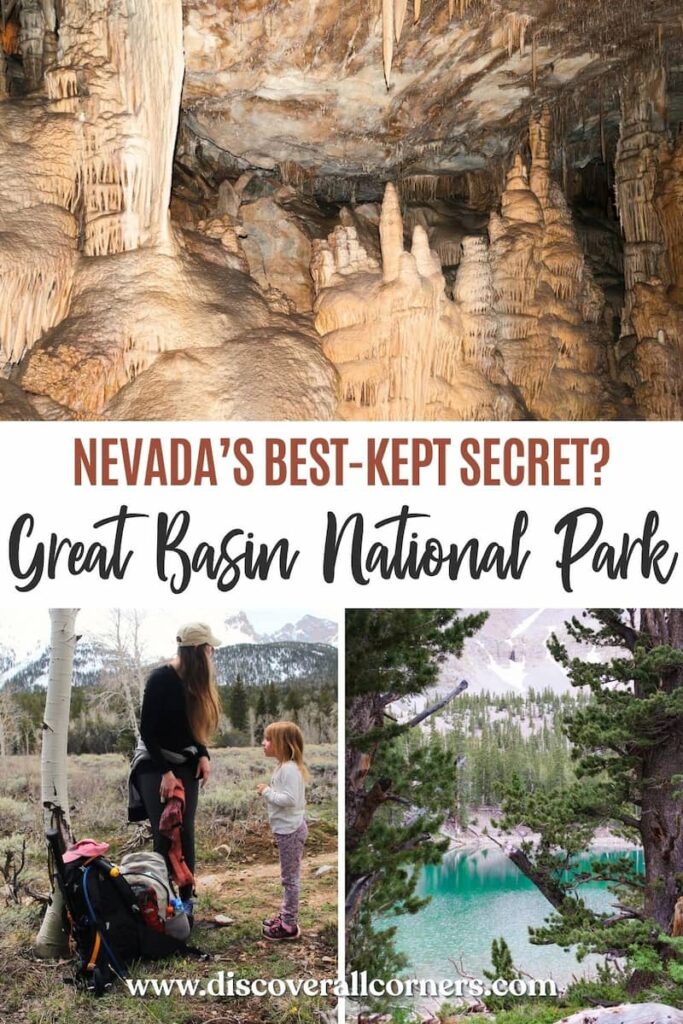
Great Basin National Park might just be the most underrated national park in America. (And also one of the strangest… in the best possible way.)
Most people drive right past this remote corner of eastern Nevada, and to be honest, when I first looked at the map, I almost skipped it too. But I’m glad I didn’t! The park isn’t very large, and the main visitor hub is remarkably compact, but what hides within that small footprint is a concentrated collection of absolute rarities, along with enough solitude to make you wonder why more people aren’t talking about it.
And the wildest part? You don’t need to be an extreme hiker or hardcore adventurer to experience most of it.
Here’s what makes Great Basin National Park so unique, plus a few tips to help you plan your visit.
Quick links
Epic things to do in Great Basin National Park:
Planning your visit:
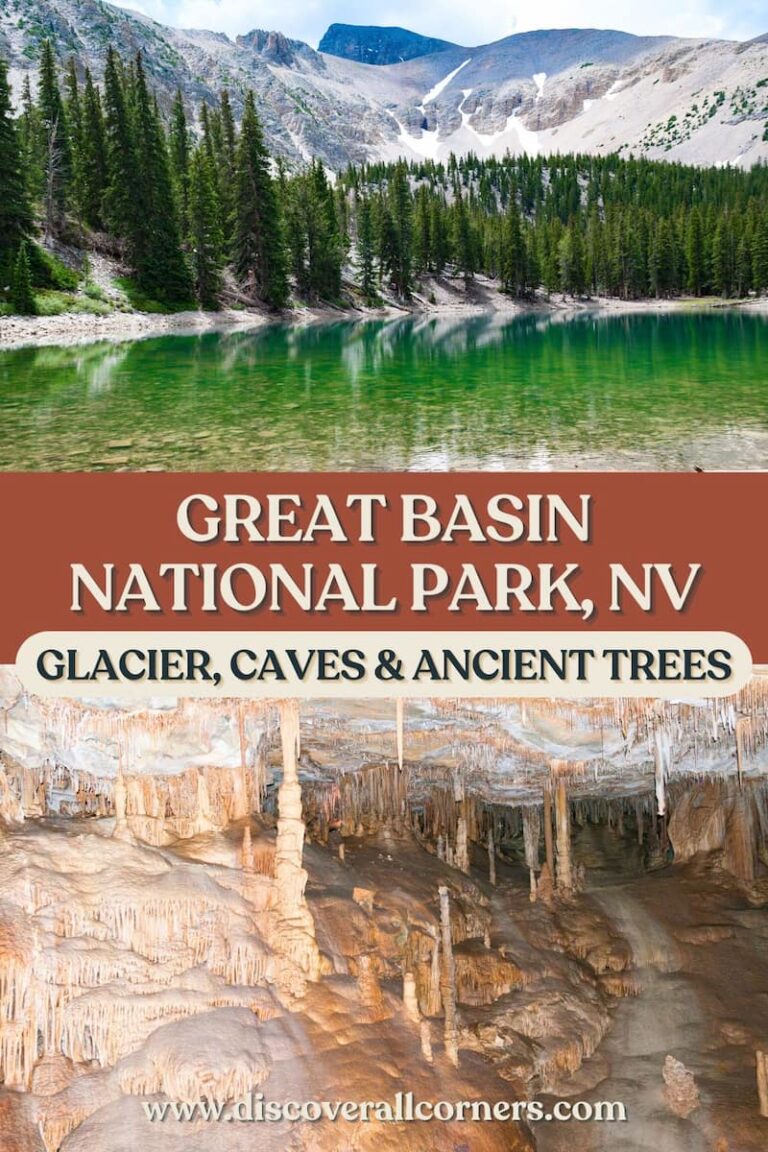
5 incredible experiences in Great Basin National Park
1. Walk among ancient bristlecone pines
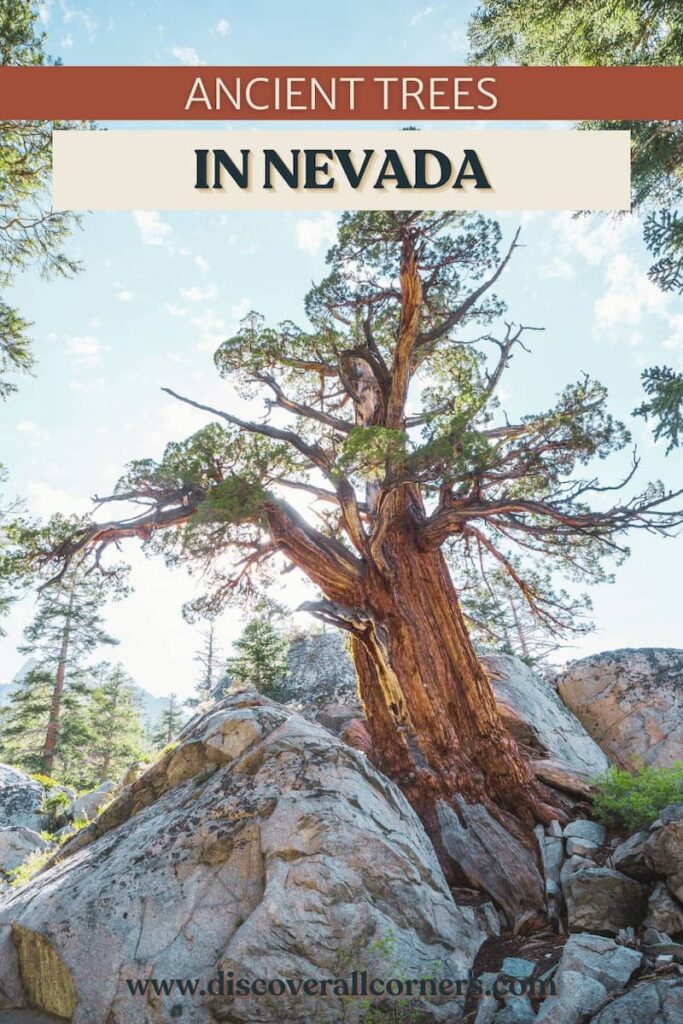
One of the most thought-provoking things to do in Great Basin National Park is standing among Great Basin bristlecone pines, which are some of the oldest living trees on Earth.
These ancient trees hold the title of the world’s oldest non-clonal tree species, meaning each tree grows from a seed, rather than cloning itself through a shared root system.
You can find close relatives in other parts of the U.S., like the Rocky Mountain bristlecone pine or the foxtail pine, but none live quite to the legendary ages that Great Basin bristlecone pines can.
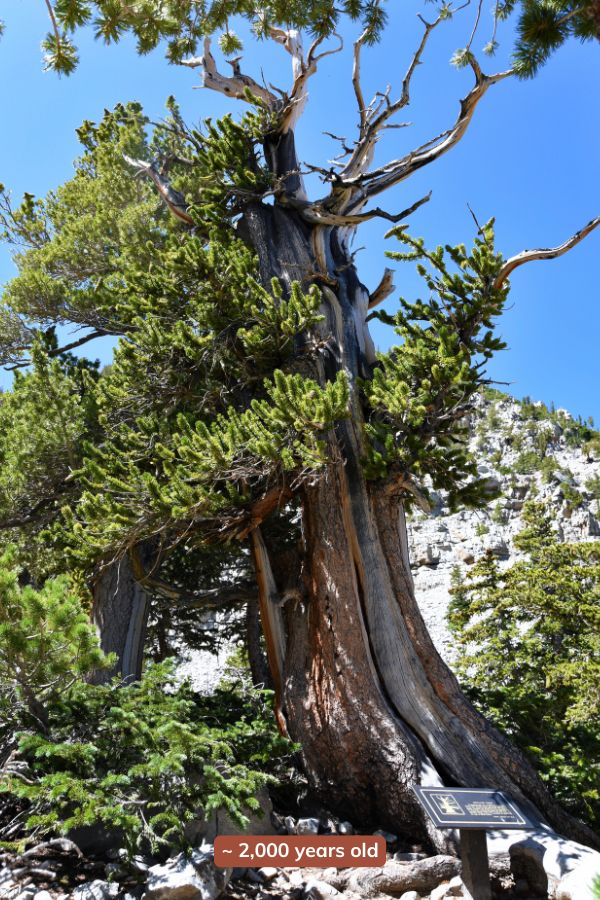
These rare high-elevation trees grow only in select parts of Nevada, Utah, and California, surviving in harsh alpine conditions where few other plants can.
Rooted in rocky slopes and exposed to relentless winds, minimal rainfall, and brutal winters, bristlecones grow extremely slowly, some years adding barely any growth. Yet somehow, that struggle is exactly what helps them survive for thousands of years. In fact, the more hostile the environment, the longer they live. Bristlecones that grow in gentler, lower-elevation environments grow faster but don’t live nearly as long.
The most famous tree once found in the park, known as the Prometheus Tree, was estimated to be nearly 4,900 years old when it was cut down in 1964 during scientific research. That’s older than the Great Pyramid of Giza!
The trees may not look majestic in the traditional sense. Many appear half-dead, weathered, or frozen in time, but that’s actually part of what makes them unforgettable.
Today, visitors can see bristlecone pines in several areas throughout the park, ranging from accessible alpine trails to remote wilderness terrain.
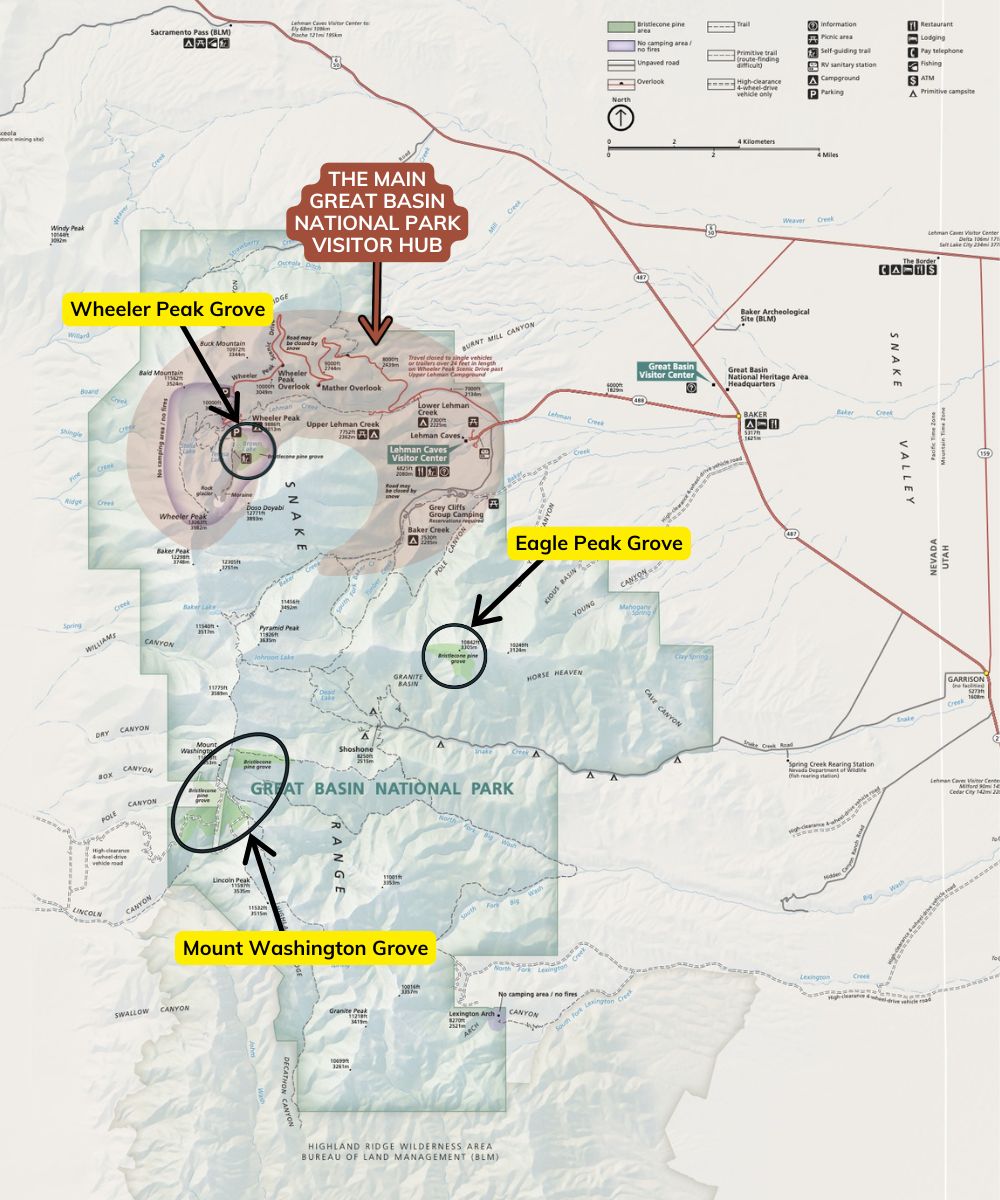
There are three known bristlecone groves in Great Basin National Park:
- Wheeler Peak Grove (easiest access)
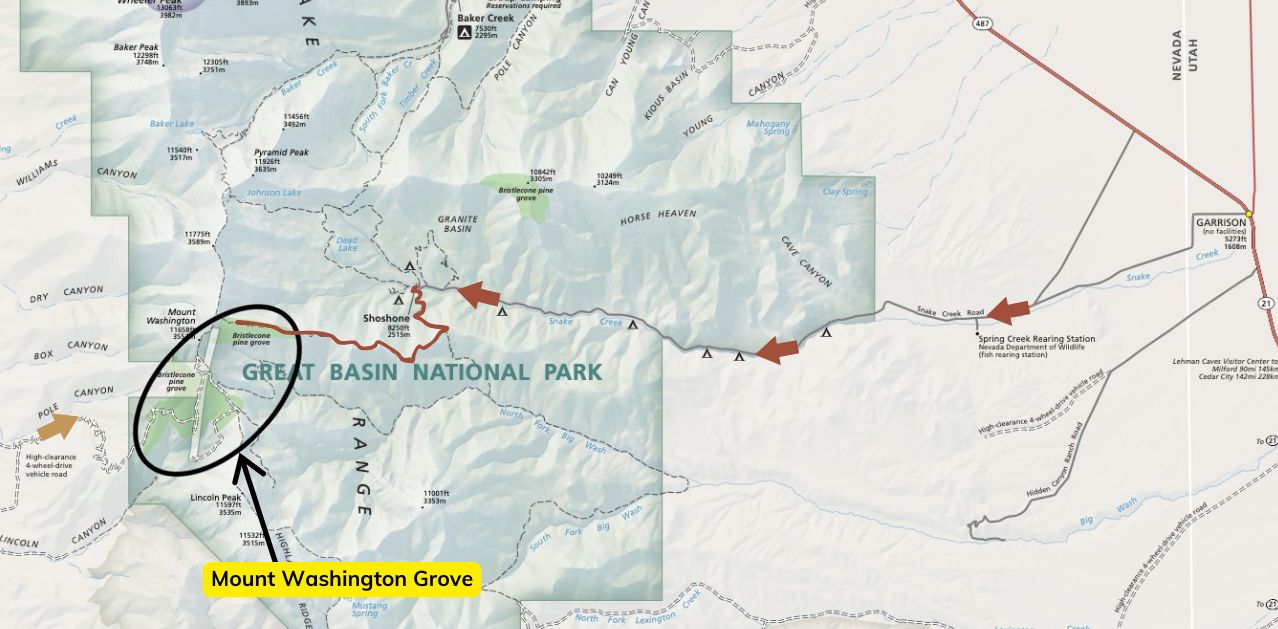
- Mount Washington Grove (largest grove in the park)
- Eagle Peak Grove (difficult route-finding required)
Most visitors head to the Wheeler Peak Grove at the end of the Wheeler Peak Scenic Drive. The trail is about 3 miles round trip (including an optional short loop at the end) and gains roughly 600 feet of elevation. It’s a manageable hike for most visitors, especially those acclimated to the altitude, though you’ll definitely feel the climb. The best time to visit is typically June through September, when the Scenic Drive is fully open.
The Mount Washington Grove (sometimes called the “Magic Grove”) is the largest bristlecone grove in the park, but it’s also much harder to reach. The road is steep, narrow, and rough in sections, and not suitable for standard vehicles. High clearance and 4WD are essential, and a shorter wheelbase helps with the tight switchbacks. Another option is accessing it from the east side via the Snake Divide Trail, a challenging 12-mile backcountry hike starting in the Snake Creek section of the park.
The Eagle Peak Grove is the most remote of the three. There is no maintained trail, and reaching it requires strong route-finding skills and comfort with steep, rugged terrain.
2. Get face-to-face with Nevada’s almost-tallest peak
Great Basin National Park is home to the second-highest mountain in Nevada and one of its most photographed landmarks — Wheeler Peak.
Rising to 13,063 feet, Wheeler Peak falls just 84 feet short of Boundary Peak, Nevada’s official tallest summit. That’s roughly five giraffes stacked head-to-toe. A very close battle for mountain bragging rights.
And just next to Wheeler Peak stands Doso Doyabi, formerly known as Jeff Davis Peak, which happens to be Nevada’s third-highest peak.
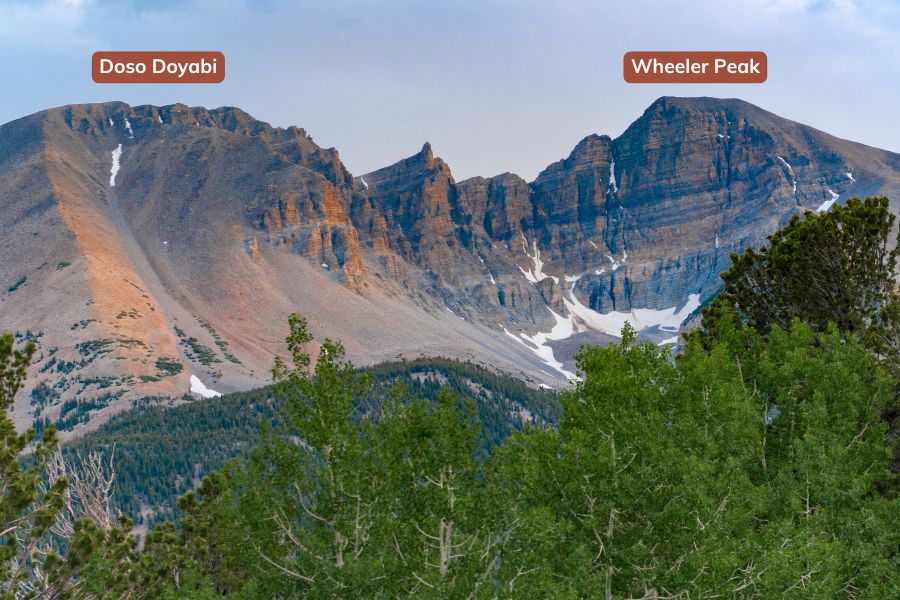
The easiest way to see Wheeler Peak from up close is via the Wheeler Peak Scenic Drive, which climbs high into the alpine zone beneath the mountain with multiple viewpoints along the way. The road ends at the Wheeler Peak Day Use Area, which also offers some of the most direct and wide-open views of the peak.
For hikers looking for a challenge, the Wheeler Peak Trail beings at the end of the scenic drive and climbs all the way to the summit in an 8.6-mile round trip hike with roughly 3,000 feet of elevation gain.
The Scenic Drive is typically open from late May through October depending on snowfall levels. If you visit before it opens for the season, you can still hike beyond the seasonal closure via the Lehman Creek Trail, which connects to the Wheeler Peak Day Use Area at the end of the drive.
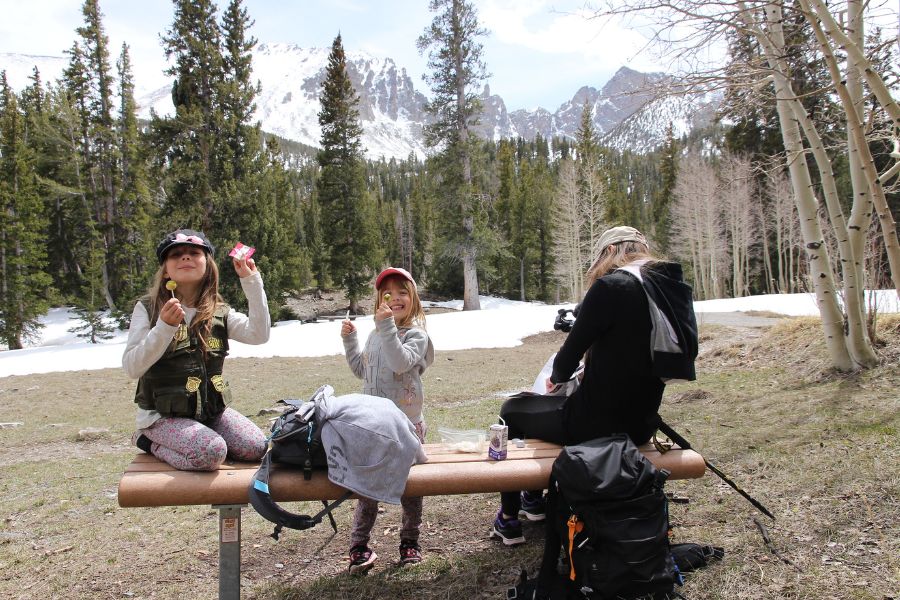
We visited in early May when the Wheeler Peak Scenic Drive was still closed, so we took the Lehman Creek Trail up. Higher sections of the trail still had moderate snow cover, and while our shoes did get wet, we didn’t need any special gear to reach the Wheeler Peak area at end of the scenic drive. The snow actually made the hike even more memorable, and the contrast with the Nevada desert at the lower section of the trail felt surreal! The hike is fairly challenging, but we did it with our kids, so it’s definitely doable for families with some hiking experience.
3. See Nevada’s only glacier
A glacier in Nevada sounds impossible.
And a glacier less than five hours from Las Vegas sounds even more ridiculous.
But it’s real!
Great Basin National Park is home to the only glacier in the state and one of the southernmost glaciers in the United States: the Wheeler Peak Glacier, a small alpine rock glacier tucked into a steep cirque beneath Wheeler Peak at around 11,500 feet.
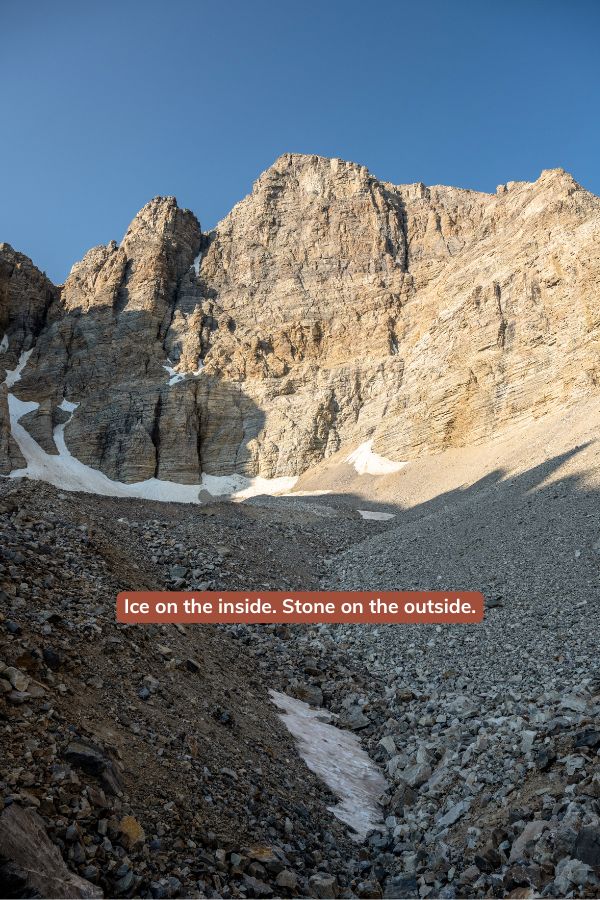
Since this is a rock glacier, it doesn’t look quite like the massive blue glaciers people often picture in Alaska or Iceland. Most of it is covered in rock and debris, which actually helps keep the ice beneath from melting. So don’t be fooled by the surface… this is a true alpine glacier hiding under a shield of mountain stone.
The Glacier Trail will bring you closer, and it’s one of the park’s best hikes, combining ancient bristlecone pines, alpine scenery, and glacier views into one unforgettable route. The hike covers roughly 4.8 miles round trip with about 1,000 feet of elevation gain and typically takes between 2–4 hours depending on conditions.
Summer is the prime season for navigating the Glacier Trail safely. However, if you aren’t up for the high-altitude trek, you can easily view it from your car. The Wheeler Peak Overlook along the scenic drive offers a spectacular, effortless view of Nevada’s only glacier tucked into the cliffs above.
Sadly, the glacier continues shrinking over time, and researchers believe it may eventually disappear altogether. So if seeing a glacier in the Nevada desert sounds like something you’d regret missing later, now is probably the time!
4. From desert to alpine wilderness on the Wheeler Peak Scenic Drive
One of the main attractions in Great Basin National Park is the Wheeler Peak Scenic Drive, a steep 12-mile paved road that climbs from roughly 6,700 feet to 10,000 feet in elevation and passes through multiple ecosystems along the way.
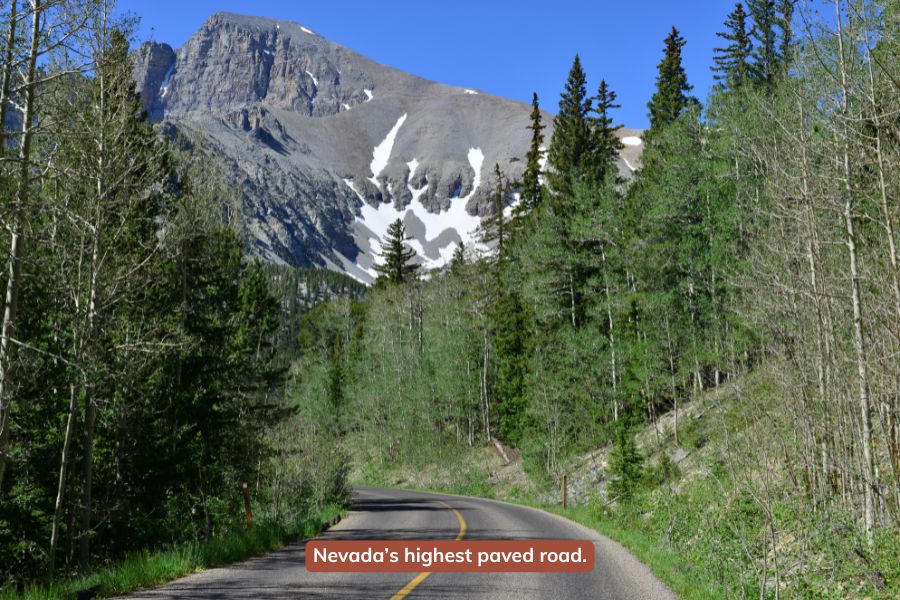
As you climb higher, the landscape transforms from dry desert terrain into alpine forest and subalpine wilderness that feels wildly out of place for Nevada. Interestingly, making this short climb is roughly the equivalent of traveling from the Nevada desert all the way to the frozen Yukon! Along the way, the road passes mountain viewpoints, dense forests, and rugged glacial scenery before ending at the Wheeler Peak Day Use Area.
The drive takes about 30 minutes one way, plus any time spent at scenic pullouts.
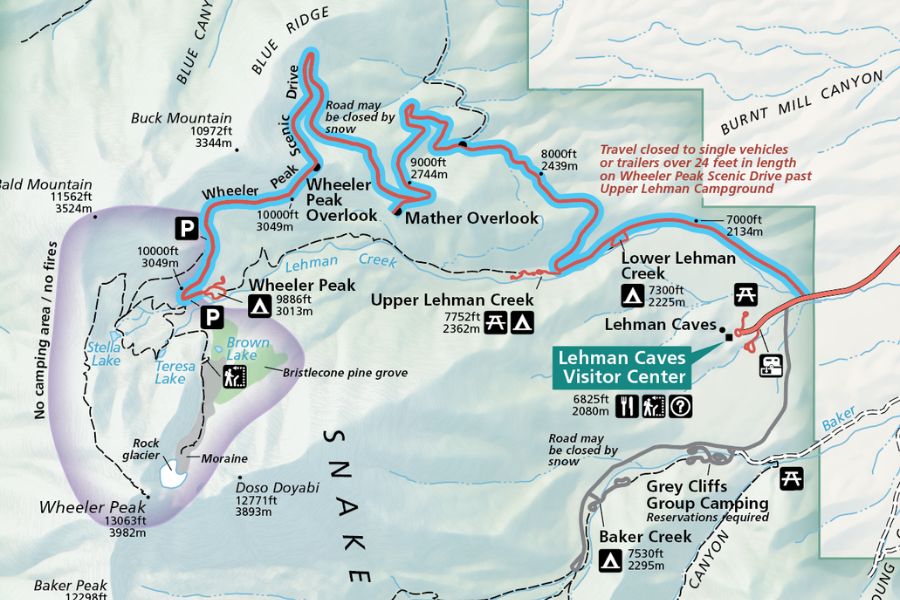
Several of the park’s best hiking trails begin from the upper parking area, including:
- Alpine Lakes Loop – an easy, highly scenic 2.7-mile loop past two pristine alpine lakes (Stella and Teresa Lakes), with Wheeler Peak towering in the background
- Bristlecone Trail – a moderate 2.8-mile hike through a grove of ancient Great Basin Bristlecone Pines
- Glacier Trail – a moderate 4.8-mile hike that continues past the bristlecones to the base of Wheeler Peak Glacier
- Wheeler Peak Trail – a strenuous, rugged, 8.6-mile summit hike climbing 3,000 feet
- Sky Island Forest Trail – a short ADA-accessible interpretive trail
If you visit in late spring or early summer, you may experience warm desert temperatures at the park entrance and snowbanks near the top of the drive on the very same day. That contrast is part of what makes Great Basin National Park so memorable.
The Scenic Drive is typically open from late May through October depending on snowfall (you can check the current road status here). Outside of that season, the Wheeler Peak area can still be reached via the Lehman Creek Trail.
Due to how narrow the road is, vehicles and trailers longer than 24 feet are not allowed on the scenic drive beyond the Upper Lehman Creek Campground.
5. Explore Lehman Caves
One of the most fascinating places in Great Basin National Park actually lies underground.
Lehman Caves is a stunning limestone cave system filled with intricate formations, twisting passages, delicate helictites, flowstone, stalactites, stalagmites, and rare cave shields, with the surrounding limestone dating back roughly 550–600 million years.
Stretching more than 2 miles in length, it also happens to be the longest cave system in Nevada.
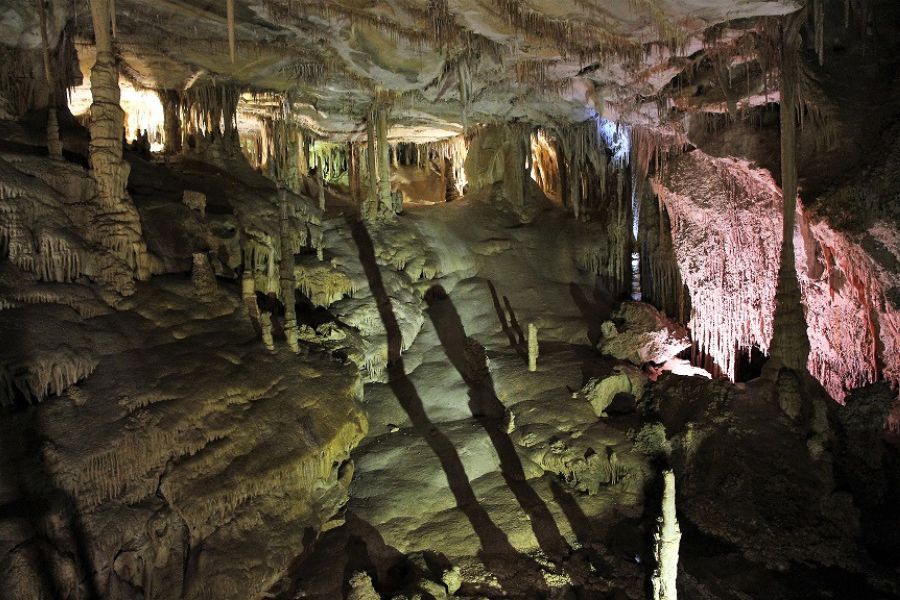
Guided cave tours operate year-round except during major holidays, though tour availability varies seasonally.
- The most popular option is the moderately strenuous Grand Palace Tour, which covers many of the cave’s most impressive formations over approximately 90 minutes. Kids are allowed on this tour but must be ages 5 and older.
- For families with younger children, the Lodge Room Tour offers a shorter alternative while still showcasing many of the cave’s main features.
- An easier Gothic Palace Tour that covers the first two rooms of the cave is also available and works well for visitors looking for a shorter experience.
- Additionally, visitors with impaired mobility are offered a tour of the first room of the cave along the main route.
Tour availability changes depending on the season, so be sure to check the park’s calendar for current cave tour offerings. It’s a good idea to reserve tickets in advance, especially during summer when tours frequently sell out.
Don’t forget to bring a light layer, since the cave stays around 52°F year-round.
Planning your visit
Best time to visit Great Basin National Park
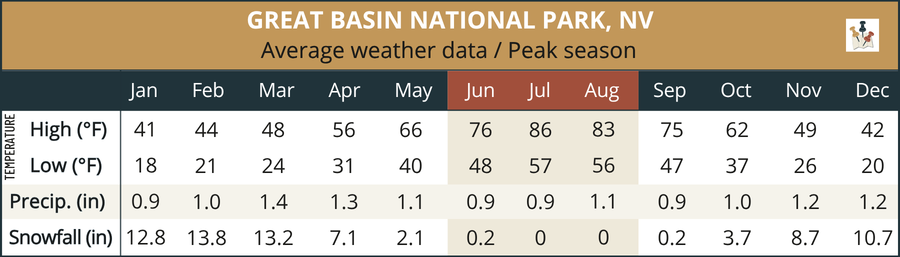
Summer is generally the best time to visit Great Basin National Park. From roughly Memorial Day through Labor Day, most of the park’s major attractions — including the Wheeler Peak Scenic Drive, high-elevation hiking trails, campgrounds, and cave tours — are fully accessible. Temperatures are pleasant at higher elevations, though afternoon thunderstorms are common during summer months.
Spring offers quieter conditions and lingering snow in the mountains, but portions of the park may still be closed depending on weather. We visited in early May and loved it. The upper mountain still held snow, crowds were nearly nonexistent, and Wheeler Peak looked incredible from the day use area even though we had to hike up because the scenic drive was still closed.
Fall brings cooler temperatures, changing colors, and fewer visitors. (Plus you can gather pine nuts in the park!)
Winter transforms the park into a peaceful snow-covered landscape popular with snowshoeing enthusiasts.
Because elevation changes dramatically throughout the park, temperatures can vary significantly depending on where you are. Conditions near Wheeler Peak may feel completely different from the desert valleys below, and it can snow at high elevations any month of the year.
How to spend 1 day in Great Basin National Park
Even with just one day in the park, you can still experience a surprising amount.
- Start by reserving Lehman Caves tour tickets if exploring the caves is high on your priority list.
- From there, spend the remainder of your day exploring the Wheeler Peak Scenic Drive if it’s open, and choosing a hike based on your available time and energy level. The Bristlecone Trail and Glacier Trail offer some of the park’s best scenery without requiring an all-day commitment.
- If you’re visiting during spring or shoulder season closures, the Lehman Creek Trail provides access to the Wheeler Peak area even when the Scenic Drive remains closed. Depending on snow levels, it may also be possible to continue farther toward the bristlecone grove and alpine lakes.
Pet-friendly activities in Great Basin National Park
Like many national parks, Great Basin is not especially pet-friendly once you move beyond developed areas and campgrounds.
Pets are not allowed on the park’s main hiking trails, inside Lehman Caves, or in sensitive backcountry areas, which unfortunately eliminates most of the park’s main attractions for visitors traveling with dogs. One exception is the remote Lexington Arch Trail on the outskirts of the park, where leashed dogs are allowed.
Camping with dogs is allowed in developed campgrounds, and there are nearby national forest and public land areas outside the park boundaries where pets have more freedom.
If you’re road tripping with a dog, Great Basin can still work as a scenic stop or overnight camping destination, but it’s honestly not the ideal national park to prioritize if hiking and exploring with your dog is the goal.
Know before you go
- Entrance fee: Great Basin National Park does not charge an entrance fee, but Lehman Caves tours DO require paid tickets.
- The park is open year-round, but conditions are seasonal: Certain roads, trails, and higher elevation areas may close periodically due to ice and snow, especially outside the summer season.
- There are two visitor centers: The main visitor center near Lehman Caves is open year-round, while the smaller center in Baker typically closes during winter.
- This park is extremely remote: The tiny town of Baker near the park entrance has very limited services and only one gas station, so stock up on essentials before arriving. For additional restaurants, groceries, and supplies, Ely is about an hour west of the park. There is also a small seasonal cafe inside the park, typically open during the busier months.
- Weather changes fast: Temperatures vary dramatically by elevation, and conditions can shift quickly in the mountains. Even during summer, nighttime temperatures can become surprisingly cold, and snow is possible above 10,000 feet at any time of year.
- Bring sun protection and layers: The high-elevation sun in Great Basin is no joke. Bring sunscreen, water, layers, and a hat, especially if you plan to hike.
- Camping is one of the best ways to experience the park: Because Great Basin is so remote, lodging options near the park are limited, and many visitors choose to camp instead. Fortunately, the park and surrounding area offer a surprisingly large variety of camping options (paid and free), whether you’re tent camping, truck camping, or traveling with an RV.
- Don’t rush this park: Great Basin National Park isn’t the kind of park that reveals itself all at once. The slower you move, the more you’ll discover.


Hi, I’m Marketa!
Mom of two, Malinois wrangler, and the voice behind this blog. I share places worth the detour across the U.S., from remote backroads to favorite Chicago-area finds. Always chasing good views, great memories, and dog-friendly stops. More about us →