If you’re looking for a short hike near Great Sand Dunes National Park and Preserve in southern Colorado that’s a little different from your typical “walk to a viewpoint and call it a day,” Zapata Falls might surprise you.
This isn’t your standard waterfall hike.
You won’t see the falls from the trail.
You won’t even hear them until the very end.
And getting there? That’s the whole point.
Zapata Falls is a 25-foot waterfall hidden inside a narrow rock crevice, and reaching it means walking straight through a cold mountain stream.

👉 Planning your trip to Zapata Falls? Jump to what you need:
- Quick trail overview
- Why this hike is so different
- What to expect on the trail
- Do you have to get wet?
- Best time to visit
- Parking and crowds
- Tips for visiting
- Visiting with dogs
Quick trail overview
Type: Out-and-back
Distance: ~1-mile round trip (most of the hike is dry)
Difficulty: Easy/Moderate
Elevation gain: ~200 feet
Trailhead: Near Mosca, Colorado
Fee: No
Dog-friendly: Yes (leashed)
Here’s a quick look at where Zapata Falls sits in relation to Great Sand Dunes National Park:
What makes Zapata Falls so unique
Most waterfall hikes build anticipation. You hear the water, catch glimpses, and eventually arrive.
Zapata Falls does the opposite.
You hike to what feels like a dead end (in this case, a creek) and then realize that the trail continues straight through it.

The waterfall itself is tucked inside a cave-like opening in the rock a short distance upstream, completely hidden from view until you’re basically standing right in front of it.
And to get there?
You’ll either tackle water so cold your feet go numb in seconds, or in colder months, slick ice.
This hike is unique, a little chaotic, and very memorable.
Zapata Falls Trailhead
The trailhead is located east of Mosca and just south of Great Sand Dunes National Park and Preserve, about 12 miles from the park entrance.
The biggest recent change?
The access road is now paved.
What used to be a slow, bumpy crawl over washboard gravel is now an easy drive for most vehicles, making this hike far more accessible than it used to be.
 Old road
 New paved road
What to expect on the trail
The hike breaks down into two very distinct parts.
Part 1: Easy trail to the creek
The first section is a wide, rocky path with a gentle incline. It’s straightforward, not particularly scenic, and over pretty quickly.
Think of it as the warm-up.

Part 2: Creek scramble to the falls
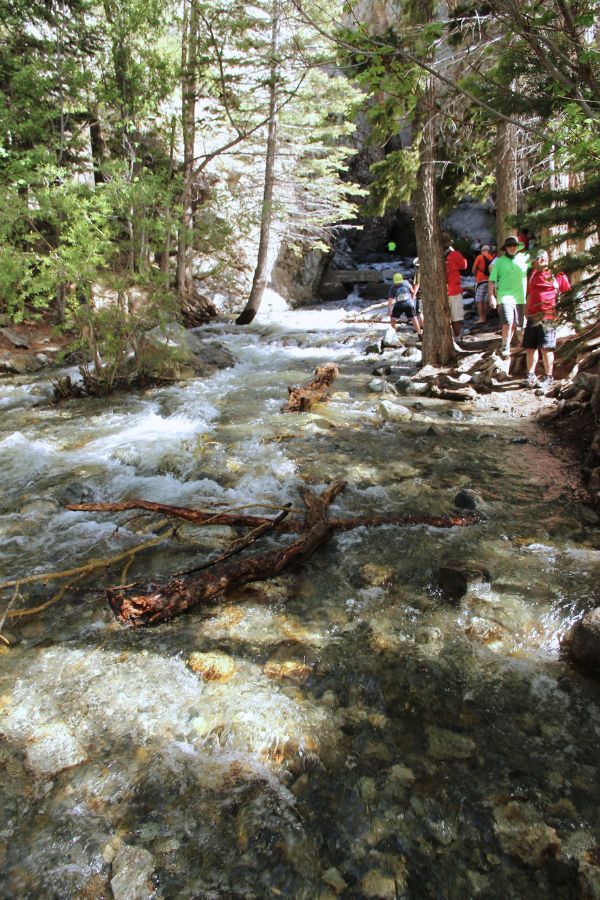
Once you reach South Zapata Creek, the trail basically disappears.
From here, you’ll:
- Continue through the creek
- Step across slippery rocks
- Navigate uneven terrain
- Get at least a little wet (likely more)
The waterfall is only a short distance upstream, but it’s not visible until you’re right there.


There is a rough social semi-dry path skirting the creek edge initially, but it doesn’t last long. Fortunately, the creek scramble itself is fairly short.
Do you have to get wet?
Short answer:
Yes — most of the time.
Longer answer: it depends on the season and water levels.
In spring and early summer, expect:
- Cold water
- Strong flow
- Limited dry footing
By late summer or early fall, you might be able to rock-hop your way upstream, but even then, dry feet aren’t guaranteed.
And in spring?
You’re not staying dry. Not even close.
🎥 Want to see what the hike actually feels like? Here’s a quick look at the creek crossing and the final approach to the falls (filmed before the road was paved):
👉 I happily volunteered to stay dry while my husband powered through the creek to the falls, because the late spring water levels and temperature were no joke. Watching from the sidelines, I saw plenty of people attempt it… and just as many turn back the second their feet hit the water. It’s one of those “looks easy, feels extreme” kind of moments...
Best time to visit Zapata Falls
Spring
- Highest water levels
- Cold, fast-moving creek
- Most challenging conditions
Summer
- Still cold water
- Popular with visitors coming from the dunes
- Great for cooling off
Late summer / fall
- Lower water levels
- Easier access to the falls
- Best balance overall
Winter
- Frozen waterfall (very cool visually)
- Slippery conditions
- Road access may be limited

Parking + crowds at Zapata Falls
Zapata Falls is not only a Colorado bucket list hike on its own but also a popular add-on to visits to Great Sand Dunes National Park and Preserve, especially during late spring when the park is at its busiest. And now that the road is paved, more people are making the trip.
You’ll find:
- ~20–25 designated spots in the main parking lot
- Additional roadside parking just past the main lot (the road dead-ends with a loop)
- Overflow parking along the campground road (just ahead of the main lot)

The lot isn’t huge, but turnover is fairly quick since the hike is short.
Still:
- Midday = busiest
- Early morning or later afternoon = better experience
Is Zapata Falls worth it?
Let’s be honest.
The trail to the creek? Meh.
The waterfall itself? Not massive.
And yet…
This hike sticks with people.
Because it’s not as much about the waterfall as it is about the experience of getting there.
It’s cold. It’s uncomfortable. And it’s definitely unusual.
And that’s exactly why people remember it.
Plus, the views of the dune field from the trailhead parking lot are incredible (arguably even better than what you’ll see from inside the park itself!).

Tips for visiting Zapata Falls
- Wear shoes that can get wet (and keep them on)
- Bring a towel and a change of socks and shoes if possible
- Use caution on slippery rocks
- Watch for sudden water increases after storms
- Be aware of falling rocks in the crevice (rare but possible)
- Bring bug spray in warmer months
- Restrooms are available at the parking lot
Camping nearby: Zapata Falls Campground (BLM) is located just down the road if you’re interested. It’s reservable ahead with 23 sites, open year-round, and includes vault toilets (no water).
Visiting Zapata Falls with dogs
The entire stretch of the Zapata Falls Trail is dog-friendly (leash laws apply), but this one depends heavily on your dog.
Consider:
- Cold, fast-moving water
- Slippery rocks
- Tight, uneven terrain

Some dogs will love it. Others will absolutely not.
If you’re exploring the area with your dog, you’ll find more relaxed options nearby, especially around Medano Creek when it’s flowing.
Nearby: Great Sand Dunes National Park
Zapata Falls is just a short drive from Great Sand Dunes National Park and Preserve, making it an easy add-on to your visit.
Pair it with:
- Medano Creek (seasonal)
- High Dune hike
- Sandboarding or sledding
Final thoughts
Zapata Falls isn’t the most scenic hike in Colorado, but it might be one of the most memorable short ones for sure!
It’s a little unpredictable, and just unusual enough to stand out.
If you’re already visiting the dunes, it’s absolutely worth the detour.


Hi, I’m Marketa!
Mom of two, Malinois wrangler, and the voice behind this blog. I share places worth the detour across the U.S., from remote backroads to favorite Chicago-area finds. Always chasing good views, great memories, and dog-friendly stops. More about us →