If you read my last post on what it’s actually like to live with a Belgian Malinois, you know these dogs are beautiful contradictions. Today, we’re talking about the heavy-duty tools that keep them safe, contained, and happy.
Just so we’re clear — I’m not here to push a specific training philosophy on anyone, and I’m definitely not claiming to have it all perfectly figured out. But after four years of navigating Athena’s exceptionally high prey drive, her stubborn streaks, and her absolute zest for life, we’ve figured out what tools keep her in check, give her the freedom to actually be a Malinois, AND save our sanity.
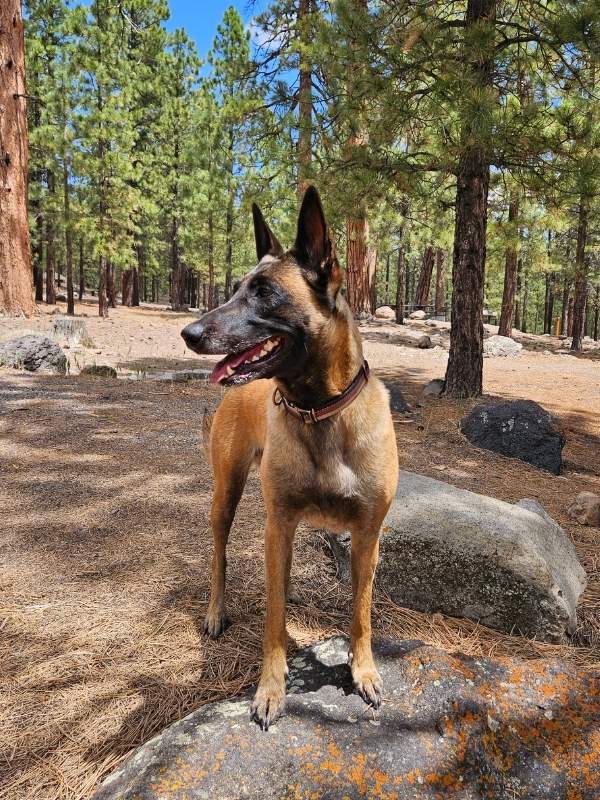
We don’t separate our gear into clinical categories; we group them by the exact job they do for us in the real world. Every single tool listed below is a permanent fixture in our lifestyle — whether it’s an everyday household workhorse, a rugged outdoor travel staple, or a critical backup safety net. Use the quick links below to jump straight to any specific category in our Malinois household toolkit:
- Collars and leashes
- The direct communication kit
- Athletic gear
- First aid & health tools
- The grooming battlefield
- Safe containment
- Malinois-proof toys
- Daily life & utility gear
- Things I don’t bother buying
This website uses referral links. Please read our disclosure policy for more information.
Collars and leashes: The baseline connection
A flat collar we can rely on
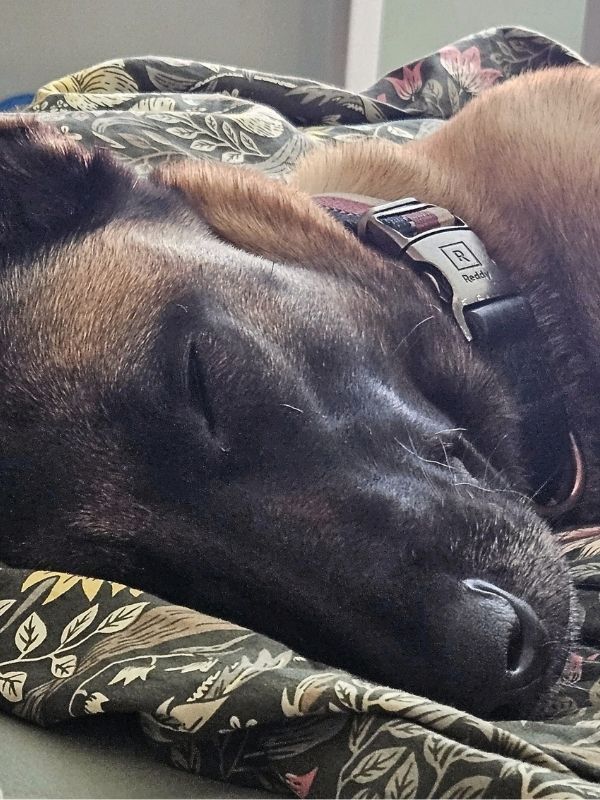
To be completely honest, I’m still genuinely surprised that we are utilizing average retail collars from Petco on our fully-grown Belgian Malinois. We bought our first Petco Reddy flat collar and leash set right after we brought Athena home as a puppy and then got a second identical set in a different color when she was still little. To this day, the Reddy flat collar is our everyday utility collar (unless we’re breaking out her fancy gear). The collar buckle is made of heavy-duty metal and stands up to her shenanigans with no problem, and having two sets is a total lifesaver when one is wet from the beach or just completely missing somewhere in the house Matrix.
The matching Reddy leashes don’t see regular action much anymore because we utilize other gear for our everyday walks, but the leash fabric and its practical swivel bolt snap clip are still incredibly solid for a pet store shelf product. If you’re looking for a baseline puppy kit or simple, budget-friendly backup lines that can handle heavy abuse and messy conditions, check out your local Petco or current availability on Amazon. They just plain work and won’t break the bank.
Custom wide collar & leash
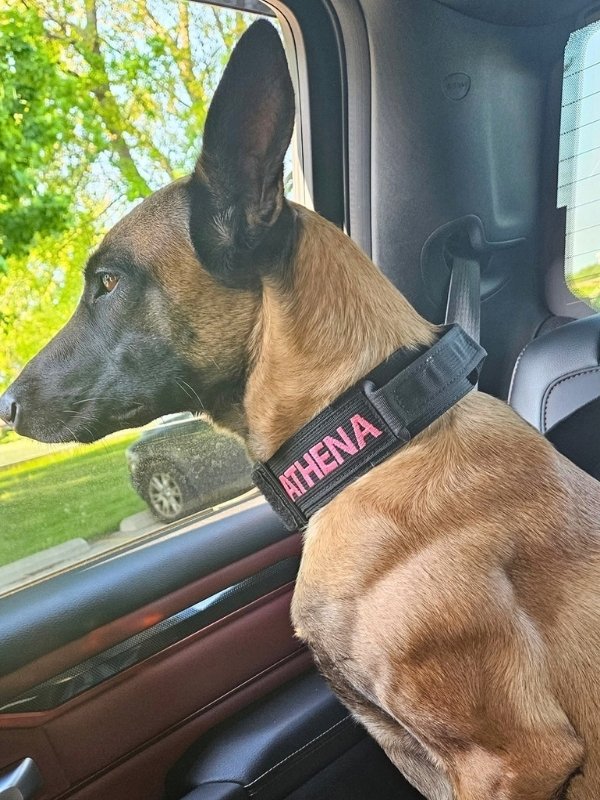
Our basic Petco setup was completely fine for a few months, but as Athena grew and her inner crackhead fully awakened, we realized that a standard retail nylon strap wasn’t cut for daily life with a working breed. Mals are extra. They are incredibly strong and intelligently stubborn, even as puppies. If you’re running a Malinois on a thin collar, an explosive launch at full speed means all that kinetic force goes directly into their throat, creating a dangerous choking hazard and risking serious trachea injury.
To fix that, we upgraded to a heavy-duty flat collar from Tactipup. Their gear is proudly made in the USA and specifically engineered to withstand sudden, explosive loads without fraying. The handcrafted, 2-inch-wide tactical collar distributes even pressure across her neck, giving us way more defensive control without risking an injury. Plus, you can have custom phrases embroidered onto it (I often see fellow Mal owners rocking words like “Loco” or “Asshole” on these as an inside joke 😆). The only downside is that it’s a bit bulky for the sweltering summer months and considerably heavier than our basic flat collar.
We threw the matching Tactipup 6-foot leash into the cart as well but skipped on the swivel upgrade to save a few bucks, and I do regret it sometimes because her scatterbrained physical energy easily twists the static line into a knotted mess the second she starts moving. The only accidental silver lining is that with no rotating hardware to absorb movement, leash communication is completely immediate with zero delay during directional corrections. Still, next time, I’m paying extra for the swivel upgrade!
Retractable tape leash

I know the internet loves to hate retractable lines, especially for high drive dogs, but this heavy-duty FLEXI retractable tape leash serves as our absolute daily, all-purpose leash because it gives Athena the freedom to actually be a Malinois. It allows her the physical distance to sniff and explore instead of being permanently glued to my hip, providing the perfect distance buffer to drill commands like heeling, stops, left, right, spins, and her release break. We use the 16-foot version in a size Large, which is rated for dogs up to 110 lbs. FLEXI makes an even longer version, but that’s almost impractical for our suburban lifestyle.
After four years of heavy daily use, we’re only on our second one. BUT… here is the crucial caveat: if I attached this retractable line directly to a standard flat collar and Athena sprinted into a full-speed apex predator launch, the internal spring would snap faster than a cheap plastic fork at a barbecue. The only reason this setup survives our daily routine is because it’s almost always paired together with a prong collar to keep that impulse control in check.
A long line
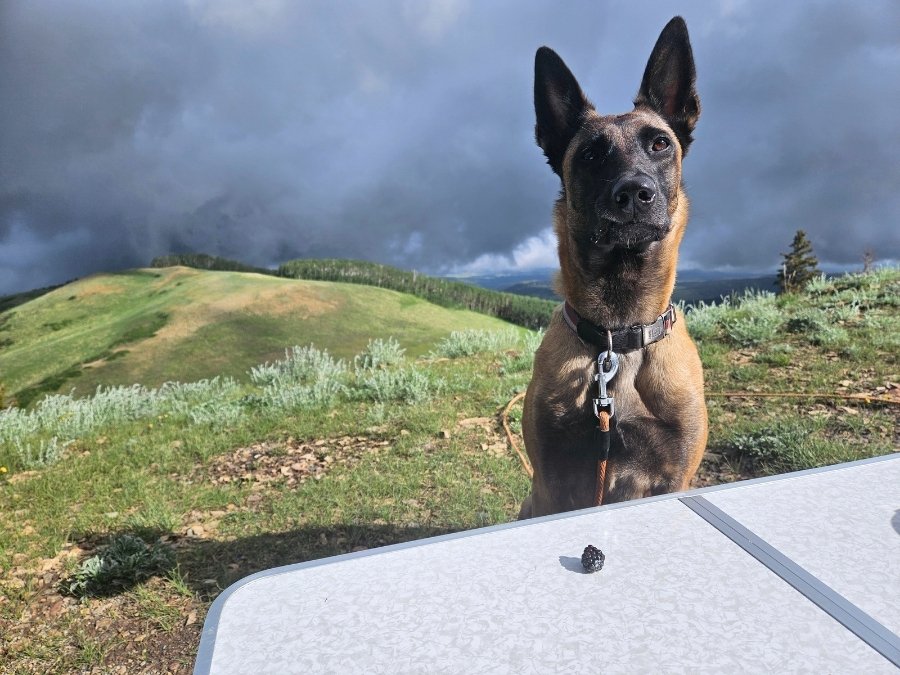
A heavy-duty long line is a basic training necessity when you own a dog with a high prey drive because you can’t create a bulletproof recall on a dog that’s permanently stuck six feet from your hip. This 30-foot cord leash gives Athena the structural freedom to roam a good distance while ensuring we maintain absolute mechanical control. It’s a must for drilling distance commands, emergency stops, and recalls in wide-open spaces.
Today, it’s a vital part of our road trip logistics. When we’re camping, we loop this long lead around the truck’s wheel hub to anchor her, which gives her plenty of real estate to stretch her legs and investigate the perimeter while keeping her safe and contained.
The direct communication kit
Herm Sprenger prong collar
On mainstream pet forums, dog training tools like prong collars are heavily demonized by vocal critics. To that I say — to each their own. Proper, high-quality prongs like the German-made Herm Sprenger are designed with completely blunt edges that simply distribute even, safe pressure. It’s not a torture device or an ego trip. And yeah, we absolutely tested it on our own necks first!
Why do we use it? Personally, I think a prong collar is the absolute best tool to teach strong, stubborn dogs loose-leash walking, but I still use it well beyond that stage. Because our 55-pound Malinois is capable of generating a terrifying amount of explosive kinetic force in a single split second and I like giving her the freedom to be a dog through the FLEXI leash out here in suburbia, a prong collar is my ultimate insurance policy. A retractable leash alone wouldn’t stand up to her raw drive and distractions that exist around us. Pairing them together keeps her trachea safe because she’s quick to self-correct the moment she feels that passive resistance, and my arms stay attached to my body. A win-win if you ask me.

How does it work? Think of a prong collar exactly like steering a horse through passive tension. It works by applying steady, uniform, painless resistance. If Athena lingers at a bush and I keep walking, the leash creates a gentle pressure that prompts her to follow my lead. If she chooses to ignore that steady tension or does something silly, a quick manual snap functions exactly like a quick tug on your sleeve to say, “Hey, focus up, girl.” It’s the ultimate tool for direct, clear communication.
We originally bought the Small size (2.25mm x 16in) in a black finish, which nicely blends into her dark muzzle. We started using it around six months old when her stubborn streak kicked in, removing links when she was small and adding them back as she grew into her adult frame. Remarkably, that same collar still fits her frame today. (Note: You can grab the Herm Sprenger Matte Stainless Steel Prong on Amazon in the same size if you prefer a non-coated metal look, or choose from larger sizes in a variety of finishes.)
🚨 Proper alignment is everything when fitting a prong collar. A prong collar must be secured snugly high up on the neck, sitting tight right below the ears. When it sags loosely around the neck, it completely neutralizes the mechanics while actively risking your dog’s windpipe. Athena’s collar does occasionally slide down because she is a total nutcase who never stops moving, but I do my best to keep it positioned right.
Have I received remarks and side-eyes from other dog owners? Of course. I heard a sarcastic “Oooohhhhh nice collarrrrr” not too long ago at our local forest preserve from a woman we were passing. So my well-behaved dog on a prong collar is somehow a problem, but your ballistic pooch at the end of a taut line that’s nearly choking itself to death is supposed to be the proof that you love your dog? Funny how that works.
🚨 Handler safety guidelines are non-negotiable when running balanced tools. When using a prong collar, it should always be attached to a flat collar through a simple, cheap connector line. The flat collar acts as a vital backup to your leash connection if the links randomly pop apart (it happens!). Also, always remove the prong collar when your dog is playing with other animals so their teeth don’t catch on the steel, and NEVER leave a prong collar on inside the house. It can easily snag on household objects and cause severe harm.

If you’ve seen Athena wearing a prong in my YouTube videos or shorts during a quick warm-up or cool-down session, it’s just because I didn’t bother taking it off. She truly couldn’t care less. In fact, she regularly rolls in the dirt with it on, snorting like a happy pig, completely unbothered. Go ahead and look at the channel if you don’t believe me!
Dogtra E-collar
I’m not here to convince you that every Malinois owner needs an e-collar, all right? I’m just here to share why we use it and why most vocal critics simply don’t understand this tool.
Let’s shatter the biggest dog training internet misconception right out front: using a remote collar does NOT mean you’re blindly frying your dog (unless you’re a complete asshole). And for the Karens in the back — the “e” stands for electronic, not electric. A high-quality model like the Dogtra Tom Davis Edition E-Collar that we use is a highly sophisticated communication system built around micro-adjustments, not a chamber of terror.
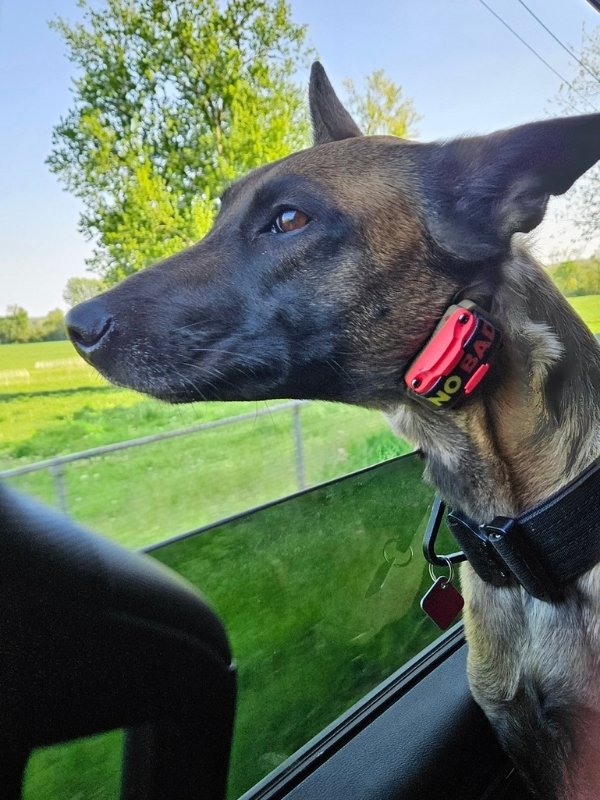
Why do we use it? While the prong collar handles our close-range suburban boundary safety, real-world off-leash freedom requires an invisible line. The e-collar is basically a high-tech safety net that grants a working breed the real estate to actually explore the world. It actively protects her life as well as the wildlife around us. Because let’s be completely honest: even the best-trained dogs can act like total assholes sometimes, even more so when that dog is a selectively smart breed like the Belgian Malinois. There are days when Athena gets so deeply invested in investigating the grass that she will straight-up pretend she can’t hear me calling her name.
How does it work? On our standard outings, we live exclusively on levels 4 to 6 out of 127. This level is so faint that a human can barely feel it on their skin (and yes, we absolutely tried it on ourselves to much higher levels than 6). These low-stim levels serve as a gentle, wireless nudge. I also rely heavily on the pager vibrate function, which carries zero physical stimulation. Both features act exactly like a physical tap on the shoulder to instantly break her hyper-focus when she gets absentmindedly lost in a scent or sight. If her crackhead switch flips to ignore a gentle impulse, I’m forced to manually dial up or hit the Boost button to get her attention. Yes, she will occasionally yelp from the surprise on higher emergency settings, but a heavy off-leash remote correction is fundamentally no different from delivering a sharp physical correction on a leash when a dog is about to bolt into danger. These dogs are incredibly powerful but also deeply sensitive — they feel everything with multiplied intensity.
🚨 The golden e-collar training rule: An e-collar is not a remote control punishment device, and it’s absolutely NOT the right tool to teach new commands. You should only utilize an e-collar for established behaviors that your dog already knows inside and out. It’s a tool for reinforcing accountability, not an educational shortcut.
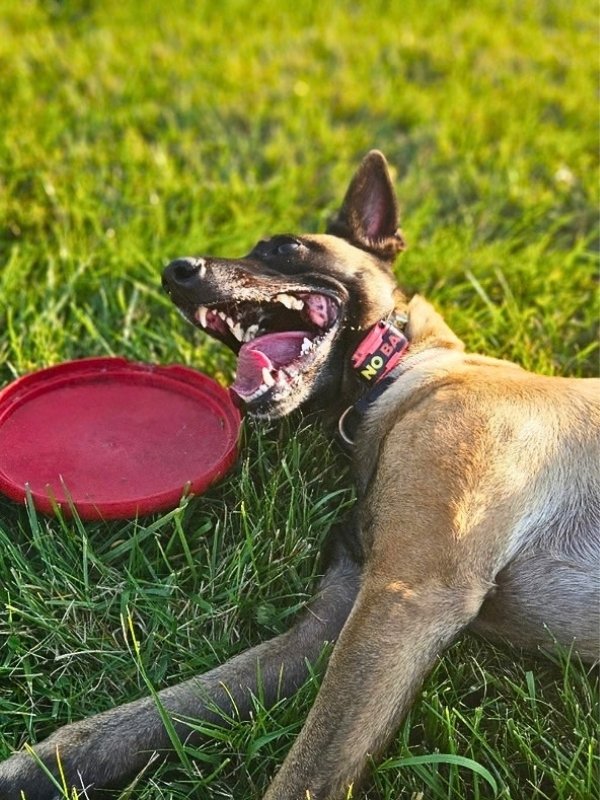
That said, we’re still working on deer. When she spots a deer, even a static one, and she is aware that she’s off-leash, her body pumps with so much raw adrenaline and primal genetic drive that she literally doesn’t process any settings. She’ll blow past any correction, even if it’s delivered promptly ahead of her taking off.
Please note: We own the older, original orange version of the Dogtra Tom Davis 280C E-Collar. We’ve used it heavily for four years, and while the battery is finally starting to give out, the hardware lifespan has been incredible. If you’re looking to buy this setup today, you can choose between the older orange edition or an updated green 2.0 version which features a new audible beep function and a quick-release plastic buckle strap. Both versions are waterproof, go up to 127 levels, and cover a 1/2-mile radius. I personally prefer the original orange system without the plastic buckle because Athena rolls in the dirt every chance she gets, so I’ll probably buy that one while I still can. If I do end up grabbing the newer upgraded version, I’ll let you know how they compare!
Muzzle
Muzzles are tricky to buy online due to strict snout-size parameters, but somehow, we lucked out. We bought the Mayerzon rubber basket muzzle on Amazon in a size Medium ahead of our road trip to New York City, since local ordinances state that dogs must be securely muzzled to board the Staten Island Ferry, which we planned on taking. And while Athena absolutely hated having her snout in jail during the conditioning phase (I don’t blame her!), the soft, lightweight, hollow-out design is brilliant. It allows maximum ventilation for panting and makes it easy to pop high-value training treats right through the grid. Ironically, we didn’t end up using it on that trip or ever since, but I think it’s a great tool to have on standby with a high-drive breed. The Medium size fits her perfectly, and it’s a permanent staple in our travel gear.
Athletic gear
Running harness
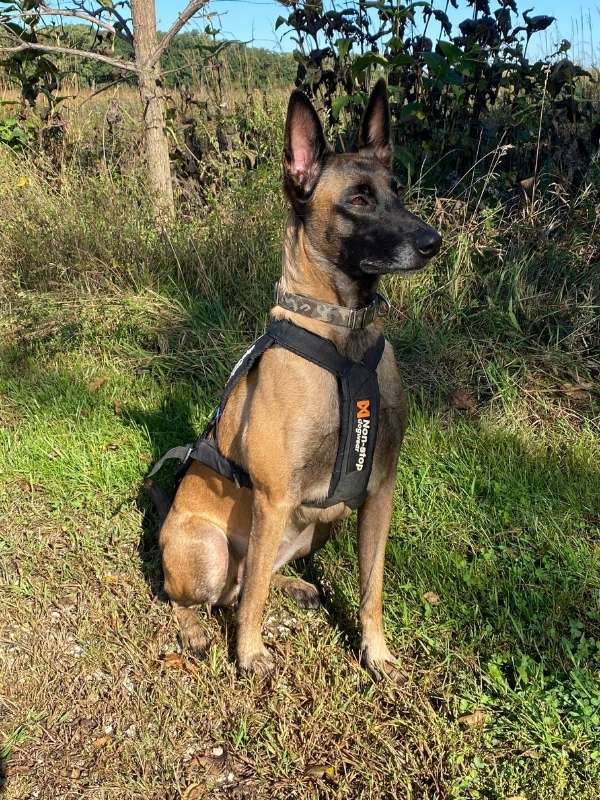
For canicross and heavy trail runs with my husband, Athena wears a specialized, high-performance Non-stop Dogwear harness designed specifically for canine athletes (we have the ‘Freemotion’ version). Because dog body shapes vary wildly and a poor fit will cause shoulder chafing or restrict their lungs, my husband purposely went into a physical specialty store to purchase the harness so that he could try multiple models and sizes on her frame. While you can browse their different options online, I highly recommend visiting a local retail shop to physically test the fit on your dog before buying. Also, keep in mind that the running belt for the human body does not come included; you have to purchase that hip belt separately.
Bungee leash

For my own short-distance jogs, I prefer using a simple bungee leash. This waist-worn, hands-free leash uses an elastic core that stretches and contracts as she moves to absorb any sudden shocks, giving both of us a smooth, comfortable stride without sacrificing physical control. The only thing is, we currently have the shorter 5.5′-7′ size that we got when she was much smaller, and I think it’s time to invest into the longer 7.3′-11′ version now that she’s fully grown. Because running inside such a tight space directly behind a high-drive maniac like Athena means I’m actively asking to land on my face any of these days!
Action camera harness
My husband loves utilizing this dog chest camera mount for his trail runs with Athena. It features heavy-duty camera attachments on the back, allowing you to capture high-velocity footage directly from your dog’s perspective. I have to admit — it’s fun to watch the world through Athena’s POV while she’s running and investigating the terrain. The mount system is completely universal, working flawlessly with both GoPro and DJI action cameras, as well as Insta360 models, and the vest frame is made of breathable air mesh, features quick-snap buckles for easy adjustments, and has 3M reflective trim for night safety.
Dog first aid & health tools
Dog first aid

Living with a Belgian Malinois means you’re constantly supervising an adrenaline junkie who has zero self-preservation instincts, so Athena’s medical kit is always ready. When she inevitably clips herself or scrapes her leg on a stray branch, our absolute go-to healing combo is a colloidal silver spray and manuka honey ointment to stop germs on contact and promote wound healing. Because Athena is an absolute honey-junkie, we always wrap the wound in a standard medical gauze bandage first, followed immediately by a self-adhesive vet wrap to keep her from licking the treatment off.
In a pinch, we also have this antibacterial ointment on hand, which is a medical-grade mixture of Manuka honey and micro-sized pure silver particles. While I don’t love all of the ingredients in this ointment, it does work!
This simple bundle is honestly all we need for immediate care. And believe me, I’ve treated some incredibly gnarly puncture wounds with these exact basics, including a deep chest laceration she mysteriously walked away with while mountain biking with my husband.
A tick remover
If you hike, camp, or live anywhere near wooded paths, green belts, or basic suburban lawns in the United States, a dedicated tick remover tool is likely a non-negotiable item in your household dog kit. When you spot an embedded tick on your dog, you don’t want to be clumsily fishing around with regular household tweezers and taking too long or accidentally leaving the head embedded in your dog’s skin.
This cheap little plastic tool is absolutely amazing. It’s small, feather-light, and slides right under the tick to pop it out cleanly in one slow twist. The pack comes with two different sizes depending on the size of the tick, and believe me, we use both heavily. During the peak spring season, we use this little device virtually every single day to pull multiple ticks off her skin. Gross, I know, but definitely more manageable with this handy tool.
Dog booties
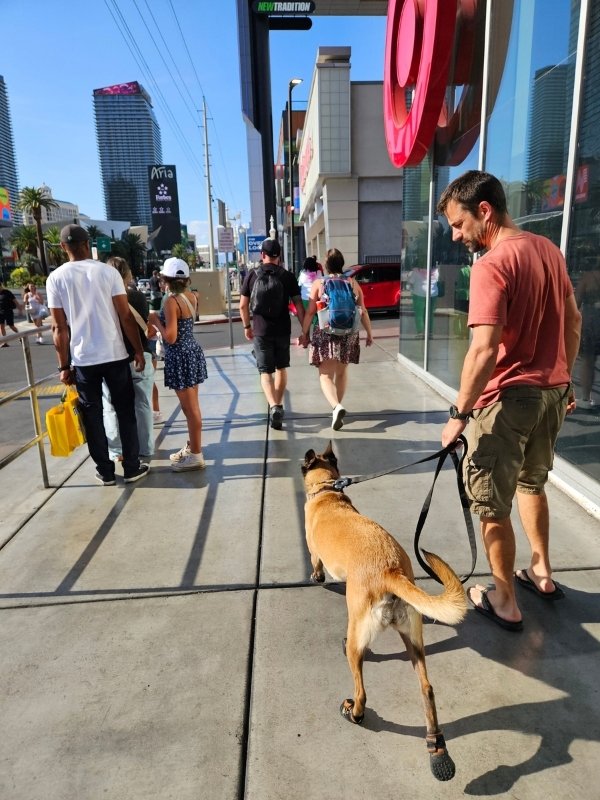
We don’t buy fancy canine fashion shoes, but owning a set of durable, protective rubber dog booties has saved our butts a few times already. We use the exact same reliable dog booties over and over again whenever we are navigating sizzling summer asphalt in the Southwest or hot Midwest sand, and we deployed a single boot that one time she sliced her entire paw pad open while being naughty and chasing a deer in the woods.
Athena is never too thrilled to wear her booties, but it beats dealing with injuries or exposing her injured paws to the elements. If you live in an area heavily treated with harsh, ice-melting winter chemicals, these can also be a wintertime lifesaver.
Paw wax
Dogs that spend a massive amount of time working outdoors can occasionally irritate and dry out their paw pads. When Athena was little, we bought a simple paw pad balm stick to create a protective barrier between her feet and the elements whenever her pads looked dry or cracked. In the wintertime especially, her paws were getting a beating from all the surface chemicals.
But ever since switching her over to a fully raw-fed diet, her paw pads have become incredibly healthy and have never become dry or irritated again. We still keep the old stick around though, because with a high-drive breed, you just never know!
The grooming battlefield
Grooming brushes

Because Athena is on a strict raw-food diet, her system is incredibly clean. Her stomach pH is highly acidic, her digestion is immaculate, and as a welcomed side effect, she now only heavy-sheds twice a year during the seasonal spring and fall coat blows. The rest of the year is a breeze, but when the shedding hits, our house turns into a total barbershop.
We alternate between two very specific brushes that each excel at their own distinct jobs.
For regular maintenance during late winter and early fall, we use a simple undercoat rake brush. It’s cheap and pulls dead fur out by the bucketfuls.
We also use the classic FURminator brush since Belgian Malinois are double-coated. You just have to be extra careful with the FURminator because that metal edge inside the tool is incredibly sharp. If you push too hard or use it too often, you can damage their coat and irritate their skin. But when used correctly, it works wonders on that thick undercoat without pulling or snagging. And — hands down — the FURminator is THE absolute number-one tool I turn to whenever I suspect Athena has fleas! The precise, tight teeth easily comb the tiny invaders right out from her neck, back, and sides where they usually like to lurk.
A rubber carpet scraper
Malinois hair has a bizarre, needle-like texture that weaves itself permanently into fabric. While we have bamboo floors throughout the entire house, we do have several area rugs, and the reality is, our expensive vacuum cleaner is completely useless at pulling her fur out of our synthetic rug in the living room. The only tool that actually works is a simple, cheap rubber carpet hair scraper. You just drag it across the fabric and it pulls up giant, hidden tumbleweeds of friction-locked fur that the vacuum misses completely (it’s gross and equally impressive at the same time). It’s a bit of a pain in the ass to use because it’s so small and cleaning just one rug is a full physical workout and takes forever, but you can get a full-size carpet rake as well to sweep your rugs while standing up — I might try that next myself!
Nail clippers and a Dremel grinder

Athena absolutely detests having her paws touched, so nail day is always a dramatic, high-stakes theatrical production in our house, complete with her growling and showing teeth. To get the job done as quickly as possible, I have to use a tag-team strategy. First, I use a simple, mechanical dog nail clipper to safely snip the length down and carve out little pieces until I get to the edge of the quick. Then, I follow it up with a rotary Dremel grinder tool from the hardware store to buzz down the sharp edges so she doesn’t slice up our floors. She hates both parts, so there are no winners here.
Ear cleaner & bath time
We keep a basic, soothing ear cleaner on hand that I occasionally use if I remember (which is hardly ever, if we’re being completely honest). As for her coat, Athena has her own dedicated dog shampoo, but I’m not gonna lie: if I run out, I will absolutely just use our normal human shampoo on her instead. She survives the shortcut just fine.
Safe containment: Crate time and the 4-year bed search
Heavy-duty crate

Athena eats every single one of her meals inside her Dakota G3 kennel unless I’m feeding her outside. Otherwise, she would carry her raw bones around the house, and that’s no bueno for me. Feeding her in the crate keeps our house clean and builds a massive, positive association with her “den.” We utilize a simple “crate” command to seamlessly send her to her crate whenever it’s meal time or a repairman enters the house. Otherwise, she free-roams the house when we step out and has never caused real damage (aside from eating a single pencil sharpener once, and a few utility bills and store receipts. Oh, and the roof of a CHOCOLATE gingerbread house just recently, which did cause some toxicity, but that’s a story for another day…).
Because her crate is her safe zone, she’ll also randomly pop inside whenever she feels like decompressing. Her absolute favorite pastime is laying flat on her side inside the kennel and mock-running with all four paws actively kicking against the durable plastic side walls — classic Malinois shenanigans! But because she is a powerful breed, a heavy-duty crate is a non-negotiable investment for the rare times she actually needs to be locked in. If a high-drive dog ever experiences a sudden moment of frustration inside a cheap metal crate, they can easily chew or manipulate their way out, which introduces a massive hazard for broken teeth.
If you need an escape-proof crate for your dog, you can check out the current availability for the Dakota 283 Kennels on Amazon. We are utilizing the size Medium, which is barely cutting it for her adult frame, but because we have a small spatial footprint in our house and she is rarely left inside, we’re making it work.
The best dog bed

To be completely honest, we are still looking for the perfect manufactured dog bed four years later. When Athena was a puppy, she systematically shredded every expensive orthopedic foam cushion we bought. When she got older, she officially commandeered my younger daughter’s bedroom bean bag chair and slept there for years. It was her absolute favorite spot, but it turned into a sanitation nightmare because the outer cover wasn’t removable. She eventually stank it up so badly that it’s currently airing out in the garage and most certainly heading straight to the landfill.
She has another, stiffer bean bag chair in the living room that I packed tightly with old clothes and blankets. It holds its shape, and best of all, I can easily throw old cotton sheets over it and rip them off for a fast wash every week. This is her daily perching spot, but she refuses to sleep there at night.
At one point I laid out her large, fluffy Ikea pet pillow, which has become a nighttime staple for our truck camper layout. She loves to sleep curled up on it in the camper, but ironically steps right over it in the house. No luck there either.
Back in our bedroom, she has a classic, cozy, washable dog bed that she likes but doesn’t love. I bypass the polyester cover on it and layer it with old cotton sheets for breathability and warm winter blankets for comfort when needed. But even with all the modifications, this girl isn’t a huge fan. If she could choose for herself, she would always opt for a permanent sleep pile right in the middle of our bed. Is she just manipulating me?
A folding cot
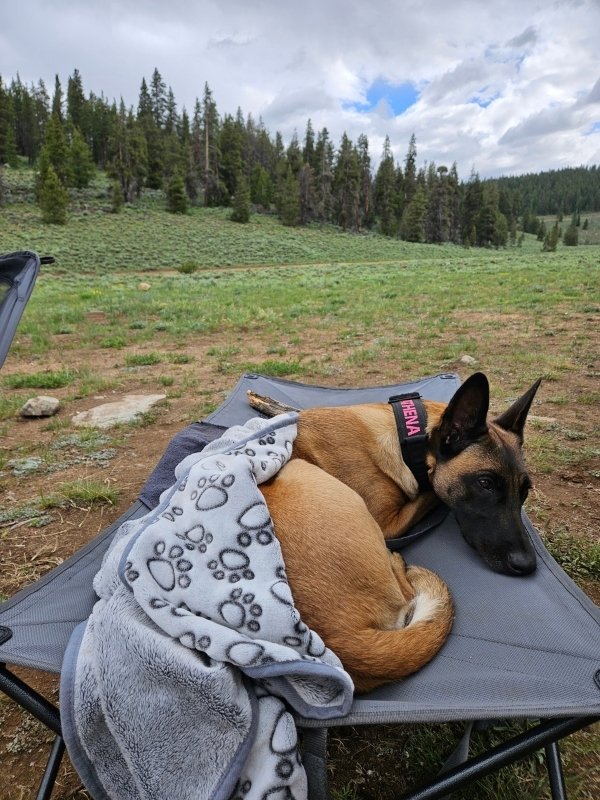
We also bought a simple, portable camping cot for Athena at Cabela’s years ago. We bring this folding mesh platform along on all of our road trips, and I will occasionally pop it open in the backyard as a quick sunbathing station for her. It’s a fantastic, breathable utility layer that keeps her body comfortably elevated off the ground and away from crawling bugs, and she does truly like it, especially on a cold night by the campfire when we add a cozy blanket. It beats the cold, hard ground every single time!
While I can’t find that exact model on the Cabela’s site anymore, you can grab a virtually identical, highly rated folding travel dog bed on Amazon that packs down small, handles their weight effortlessly, and functions exactly the same way. It’s honestly an absolute non-negotiable for our campsite layout.
Malinois-proof toys

If you own a Malinois, you know that standard plushies and basic pet-store rubber are an absolute financial scam. Athena doesn’t play with toys so much as she conducts high-velocity quality-control testing on them. Because her strategic toy teardowns are a complete saga of their own, I’m spinning our favorite playtime tools out into their own dedicated guide. Keep an eye out for that standalone post — Belgian Malinois Toys That Actually Survive — to see our absolute holy grail toy recommendations and enrichment gear that doesn’t last forever but we will happily buy again.
Daily life and utility gear
- Stainless steel bowls – We avoid plastic bowls because they easily harbor bacteria, and decorative ceramic dishes because, well, a Belgian Malinois isn’t exactly a gentle creature by default. Simple, heavy-duty stainless steel bowls for her food and water stations survive the daily impact of a high-drive feeder, and I can throw them in the dishwasher if needed (don’t get any crazy ideas, that doesn’t happen very often).
- Silicone floor mat – Belgian Malinois don’t drink water like normal animals. They attack it. Athena leaves a literal ocean behind every single time she visits her water station. While keeping a raised-edge silicone mat under her bowl doesn’t contain the raging waters she produces, every contained puddle helps.
- Heavy-duty poop bags – We stopped buying random brands years ago and exclusively buy the Amazon Basics dog poop bags in bulk boxes because they’re cheap, thick, and tear-resistant. There is nothing worse than reaching for your dog’s fresh warm pile and having the end that should be sealed shut give up on you. Grab a box of these to keep your hands clean.
- Sanitizing wipes – Field training sessions mean lots of thick drool. Add some high-value treats to that, and you have a real sticky mess. I usually keep a travel pack inside my training pouch and in my car, although I typically need one the most when I happen to just be out.
- A collapsible pocket bowl – We own several and use them somewhat, but this small collapsible bowl is my favorite for quick outings because it fits inside my small treat bag or jacket pocket. I only bring it if I know it’s a long hike or a sweltering summer walk with zero natural water access. Otherwise, she just drinks from clean rivers and ponds along our route.
- Disposable dog diapers – Leaving a female dog intact is controversial on the internet, and honestly, I don’t care. I grew up in Europe where fixing dogs was (and still is) pretty rare, and keeping her hormones intact is vital for her adult health, proper structural development, and long-term, whole-body cancer prevention. And yup, I know the signs of pyometra, I’m not an idiot. When she’s in heat, we rely on disposable dog diapers. After raising two kids in cloth diapers, I deserve a break, and she’s only in diapers for the worst few days.
- Lint rollers – I keep these stashed all throughout the house and ideally in the car as well. When she blows her coat twice a year, a lint roller is an absolute must-have unless you plan on walking into the grocery store looking like a Sasquatch bride.
- Natural bug spray for dogs – I avoid using harsh chemicals around our household, so I stick to natural bug sprays for both us and Athena on our outdoor activities, even if they admittedly don’t work quite as well as the toxic alternatives (sigh, they don’t).
Things I don’t bother buying
- Scented poop bags – I’m not adding synthetic chemicals into the landfill for a few seconds of fake floral scent. Besides, Athena is a raw-fed dog, which means her stools are naturally small, compact, and don’t stink. But even if that wasn’t the case, no thanks.
- Dog clothing – We completely skip dog jackets and raincoats. Even when it’s freezing outside, she runs so hot that her internal engine typically warms her up in seconds. On the rare occasions that she starts lifting her paws, we execute a lightning-fast bathroom break. If it’s pouring, a raincoat is useless anyway because she absolutely despises rain and is perfectly willing to negotiate a strict no-bathroom policy for a full 24 hours just to avoid getting wet.
- Car seatbelts and buckles – I got a dog seatbelt buckle for Athena once and she hated it. She doesn’t exactly enjoy car rides in general, so I’m not going to make the vehicle environment any more stressful for her. Whenever she rides with me, she hangs out on a yoga mat spread across the open cargo area like a queen.
- Training clickers – I don’t know how to say this nicely, but I think every Karen who stares at me for using a prong collar uses a clicker just for fun. I’m not saying it’s a bad tool or that it doesn’t work, but my dog would eat it. Thank goodness she would eat it.
- Commercial rawhide chews – Rawhide is incredibly dangerous for dogs. Most commercial versions are heavily processed, chemically bleached, and worst of all — completely indigestible, meaning they can easily swell up inside the stomach and cause fatal intestinal blockages. I admittedly used to buy her unbleached rawhide when she was smaller, but I’ve since grown much wiser.
- Artificially scented dog toys – Loading a chew toy with artificial flavor chemicals is a cheap solution to dog boredom and a fast track to long-term health problems. No thanks!
- Nylon chew toys – These are basically just fake plastic bones. I give her real meaty bones instead of hard polymers. Just me?
- Deer and elk antlers – As natural as they look on a pet store shelf, antlers are actually way too hard for canine teeth. The heavy jaw pressure of a working breed chewing on an antler can easily cause a painful (and expensive!) tooth fracture.
- Slow-feeder bowls – Personally, I view these as absolute Belgian Malinois cruelty! I’m not going to eat a bowl of ice cream with a toothpick, and I’m not going to force my dog to eat that way either. Apex predators like wolves or lions don’t eat out of measuring spoons… they gulp. Eating is an instinctual drive, and I let her my dog consume her meals exactly how nature intended, inhaling it like a fury vacuum cleaner. It’s not that deep.
- Treat puzzle toys – Athena will dismantle and completely consume the entire plastic toy with treats just for fun. If I want to give her a mental enrichment activity, I hide high-value treats somewhere inside the house and let her hunt for them.
- Dog toothbrushes – Have all household pets officially been assigned their own dedicated toothbrushes now? We rely strictly on real, large meaty bones to do the heavy dental cleaning for us. Her teeth aren’t the same brilliant pearly whites they were when she was a young puppy, but I will give her a larger bone before I’ll reach for a toothbrush. If you don’t feed a raw diet, brushing is probably a necessity for you, but raw meaty bones are nature’s toothbrush.
And there you have it — our completely honest ledger of the tools we swear by and the modern pet trends we happily leave on the store shelves.
Whether you are actively navigating the daily chaos of a high-drive breed or just trying to build out a reliable household toolkit that can actually survive a lifetime of working-dog power — your gear closet is probably constantly evolving. This master collection works flawlessly to keep our life with a working dog running smoothly, but every single dog is a beautifully unique puzzle. I want to hear from the rest of the pack down below: what is the absolute best piece of heavy-duty equipment you have ever purchased for your dog, and what was the absolute biggest waste of money? Let me know in the comments!

Hi, I’m Marketa!
Mom of two, Malinois wrangler, and the voice behind this blog. I share places worth the detour across the U.S., from remote backroads to favorite Chicago-area finds. Always chasing good views, great memories, and dog-friendly stops. More about us →