
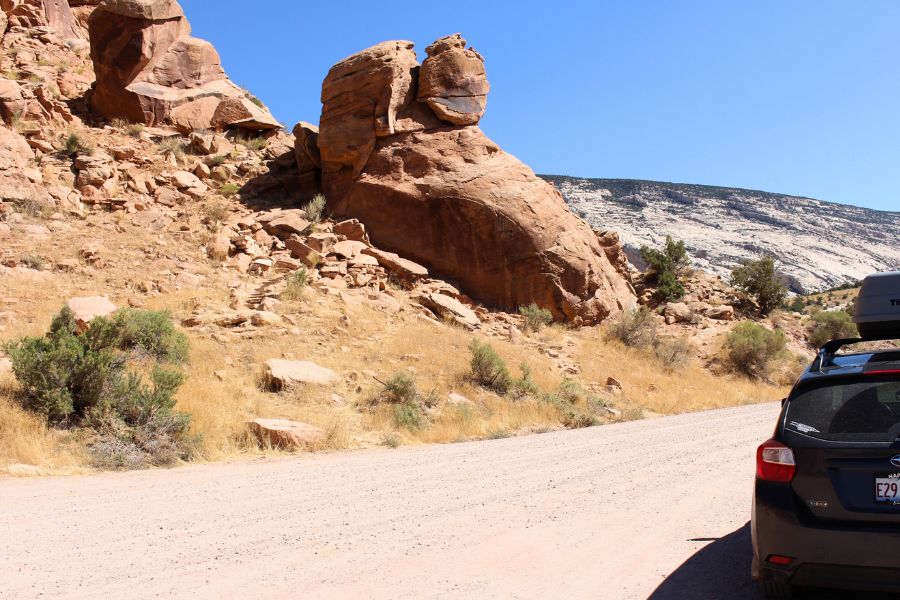
Ancient rock art hidden in plain sight — that’s exactly what you’ll find at the Cub Creek Petroglyphs site, one of the most fascinating stops along the Tour of the Tilted Rocks Scenic Drive (Cub Creek Road) in the Utah section of Dinosaur National Monument.
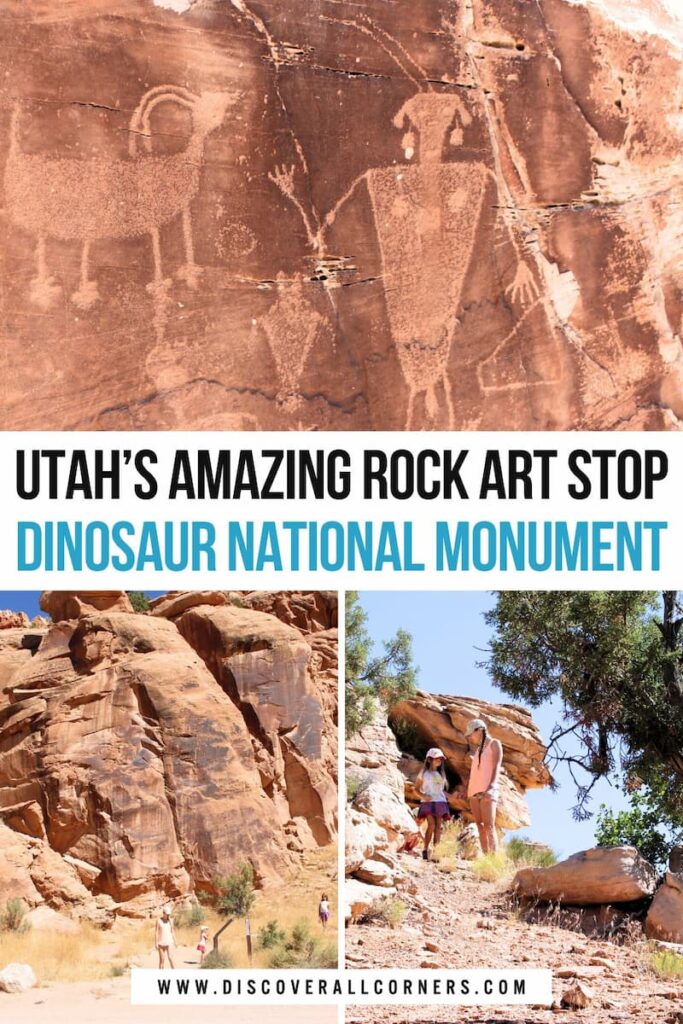
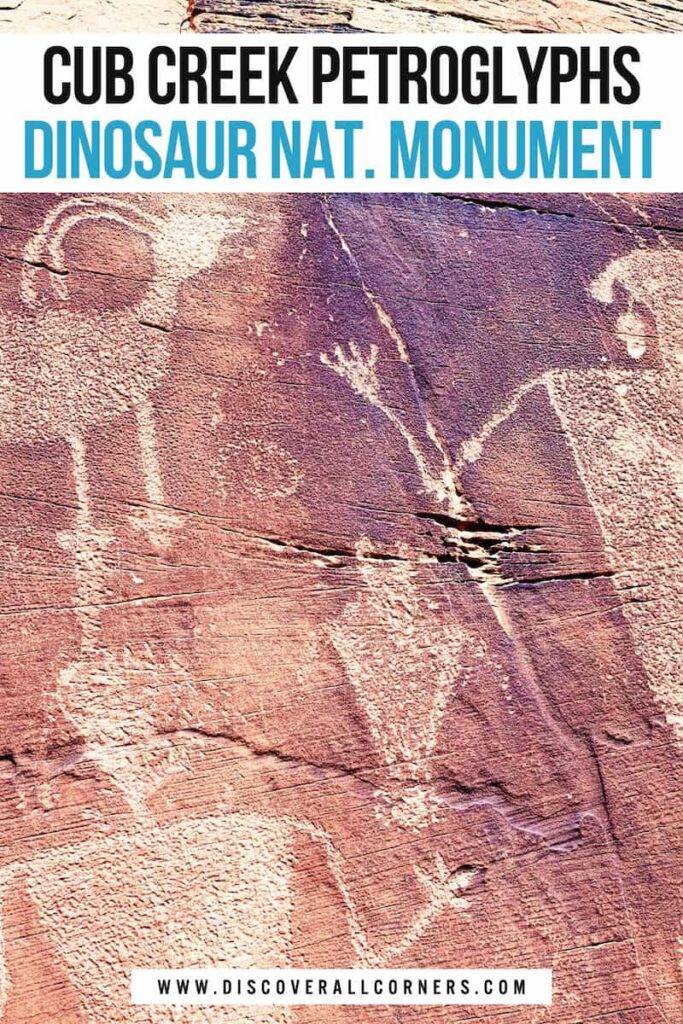
While there are several petroglyph sites scattered across the monument, including the nearby Swelter Shelter, this one is especially rich in detail. The images are remarkably well preserved, etched into the varnished cliff face nearly 1,000–2,000 years ago by the Fremont people, a group of Native Americans of the Fremont culture who once lived in what is now the Cub Creek Valley near the Green River.
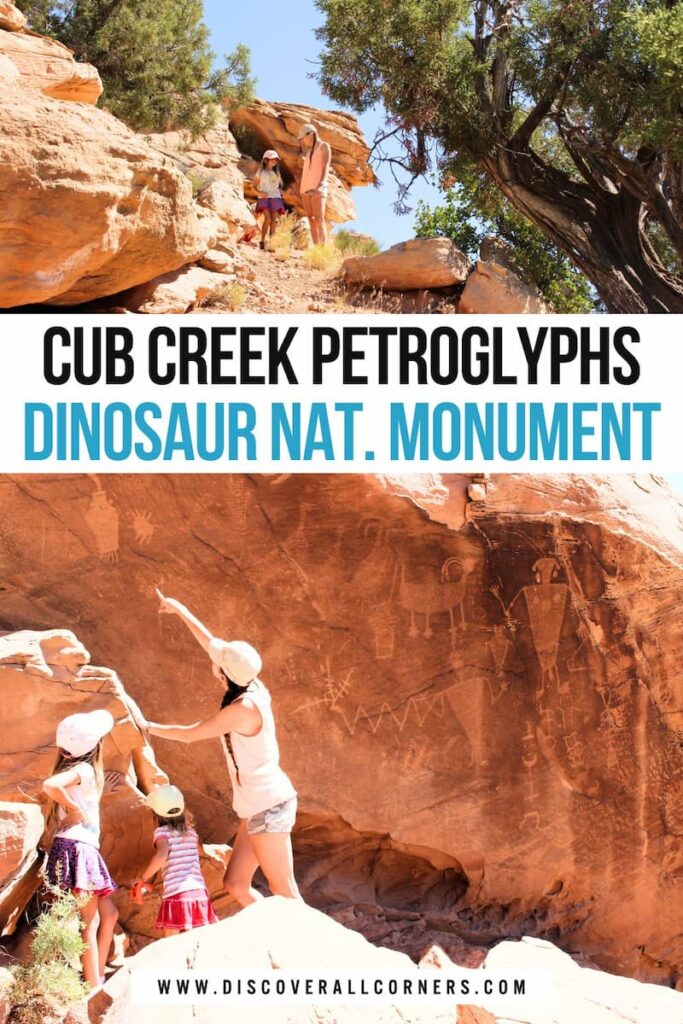
And the best part? You can get right up close to the panels for a jaw-dropping look at these mysterious designs — everything from human figures and objects to animals and abstract patterns. The panels are located a short walk from the parking area; no hiking required to see them!

Who were the Fremont people?
The Fremont culture thrived in parts of Utah and the surrounding states between roughly A.D. 200 and 1300. Archeologists still debate their origins and what happened when their culture declined. Some believe they merged with neighboring tribes, while others think they evolved into entirely new groups.
What we do know:
- They farmed corn, beans, and squash, while also hunting and foraging.
- They made baskets and pottery, and lived in pit houses, shallow caves, or simple shelters rather than elaborate cliff dwellings like their Ancestral Puebloan neighbors.
- Their communities were small, often semi-nomadic, and very diverse, making it hard to define the Fremont people as a single, uniform culture.
Standing at the Cub Creek panels, it’s easy to imagine that these carvings were more than decoration. They might have carried spiritual meaning, served as teaching tools, or been a way to record daily life. The truth remains a mystery, and that mystery is half the magic.
Cub Creek Petroglyphs site info
Here’s what you’ll spot etched into the cliff face:
- Human-like figures, some decorated with earrings and necklaces
- Animals and plants
- Geometric shapes and abstract designs that leave modern visitors scratching their heads
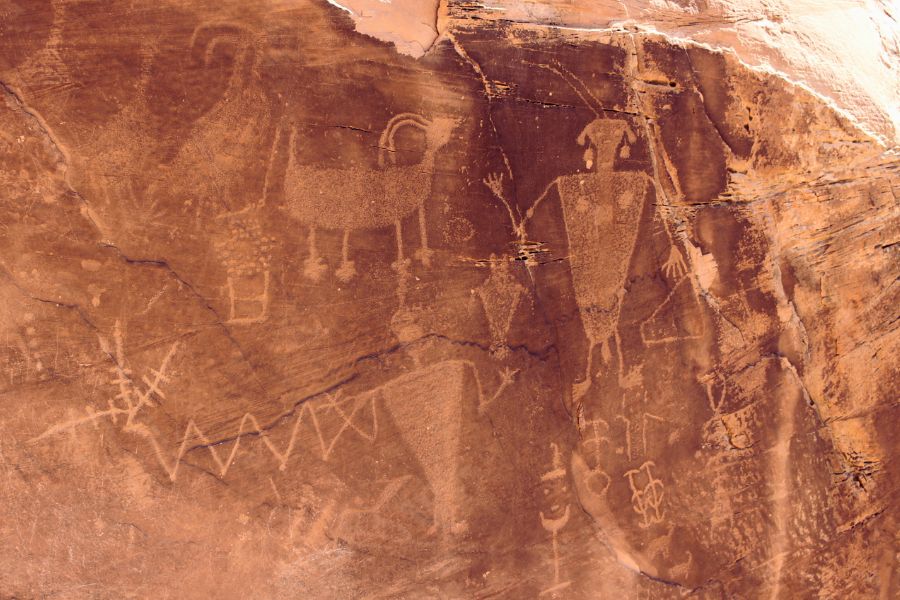
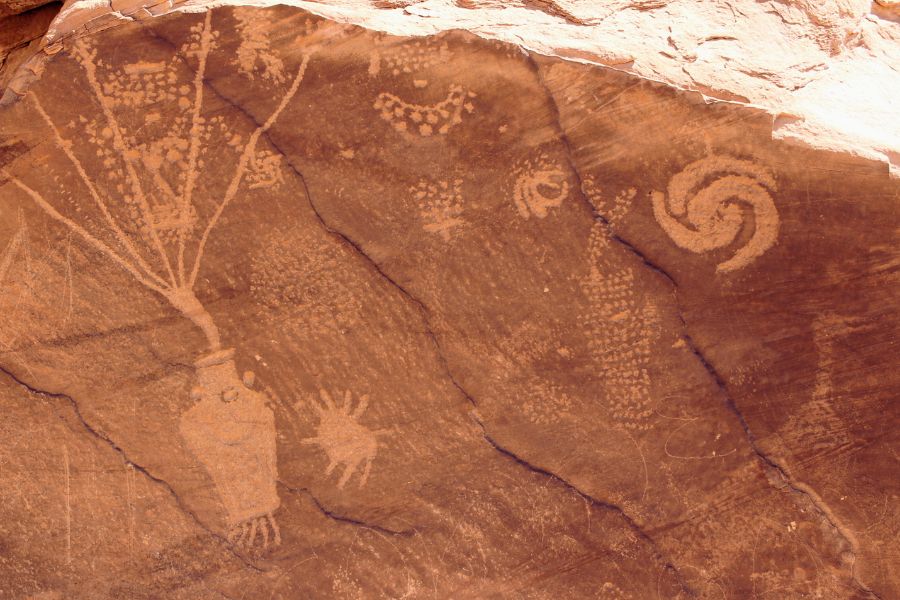
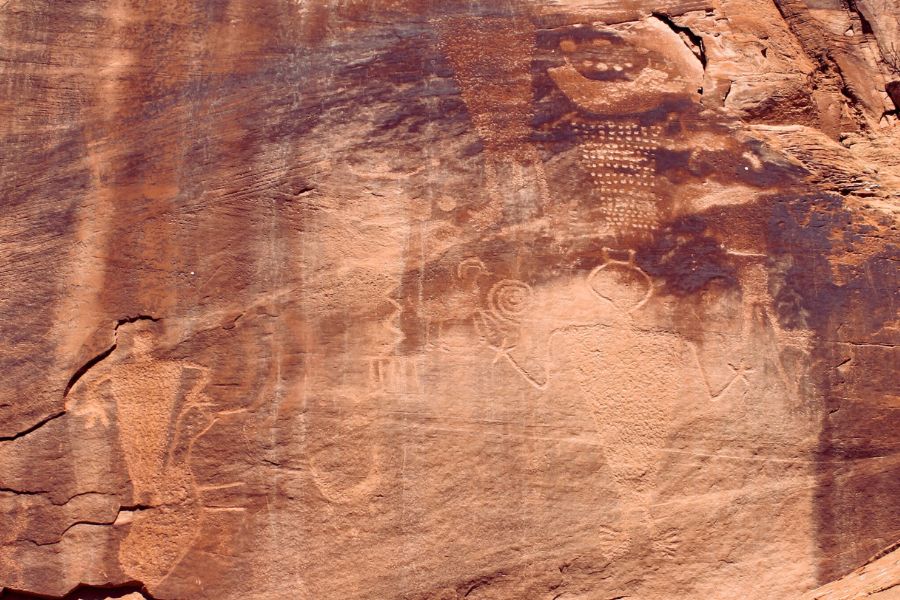
And then there are the showstoppers: the big lizards. These huge six-foot lizards aren’t common designs at other petroglyph sites within Dinosaur National Monument, making them one of the highlights of this stop.

Unfortunately, we were unable to locate the lizards on our first packed day in Cub Creek, and a quickly spreading fire in the monument ruined our chances the next day since this entire part of the park was evacuated, but the key is to look at the next pullout after this first site!
Look closely, and you’ll notice how the dark desert varnish (a natural coating that develops on sandstone in arid environments) makes each carving stand out sharply, even after more than a thousand years of wind, rain, and sun.
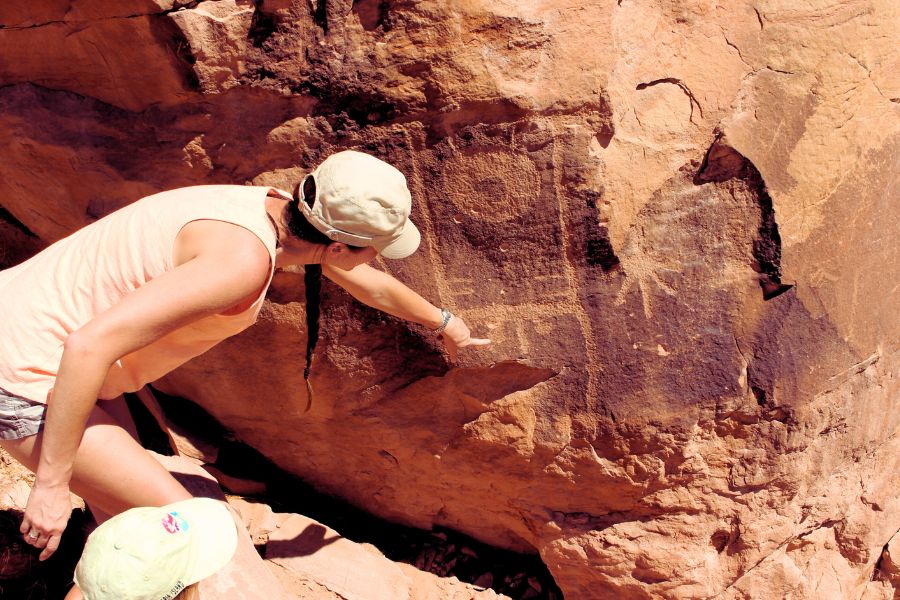
Standing among these remarkable panels, it’s impossible not to imagine the hands that created them:
- Who picked up a sharp tool to carve these intricate shapes and figures?
- Was it a child, a hunter, or maybe a storyteller sharing wisdom with their people?
- Were these carvings teaching tools, spiritual symbols, or records of daily life?
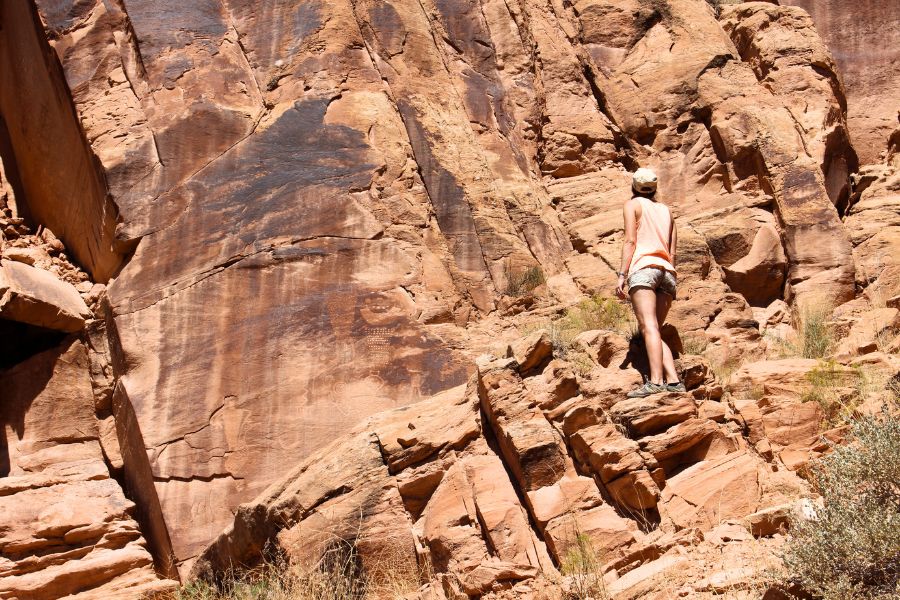
If you have some extra time, you can explore the paths along the cliff wall beyond the main panel where more rock faces invite closer inspection.
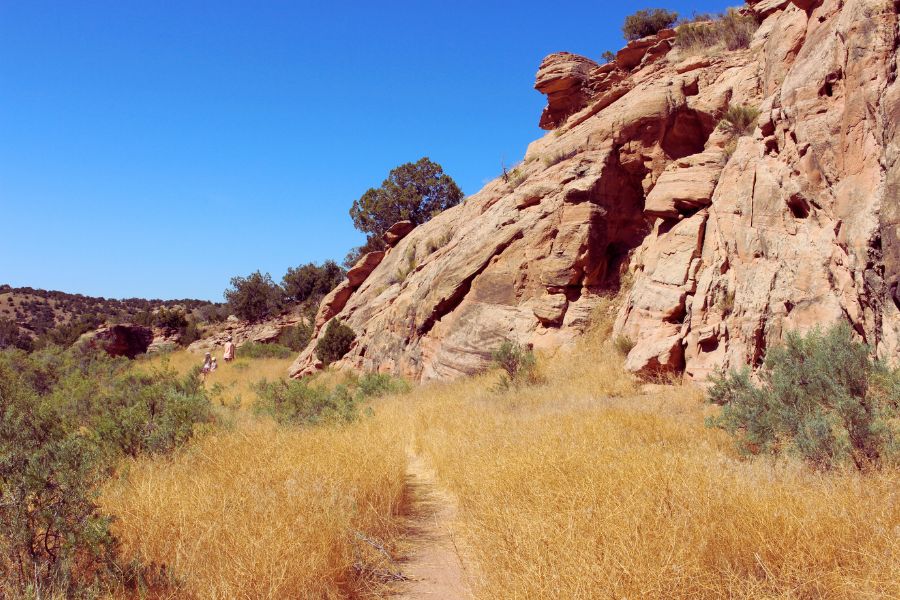
Location and access
Cub Creek Petroglyphs are located about 9 miles east of the Quarry Visitor Center in the Utah section of Dinosaur National Monument, along the Tour of the Tilted Rocks Auto Tour (Cub Creek Road) — the monument’s scenic drive and the main road in this section. The road starts paved and transitions to gravel after about 8 miles.
Directions & Access:
- After the paved section turns to gravel, there’s a fork shortly ahead — keep left for Josie’s Ranch and the petroglyphs. (The right fork leads to Blue Mountain, a rugged 4×4 route.)
- The main petroglyph panel will be on your left at the first pullout, just a short, easy walk from the parking area. It features a wide variety of Fremont designs. If you’re up for a little exploring, you can spot additional carvings along the surrounding rock faces by walking around or carefully climbing a few low boulders.
- Drive just a little farther to the next pullout (Auto Tour Stop #14). From there, a short but steep (0.2-mile) trail leads to the rare lizard petroglyphs, including some enormous figures.
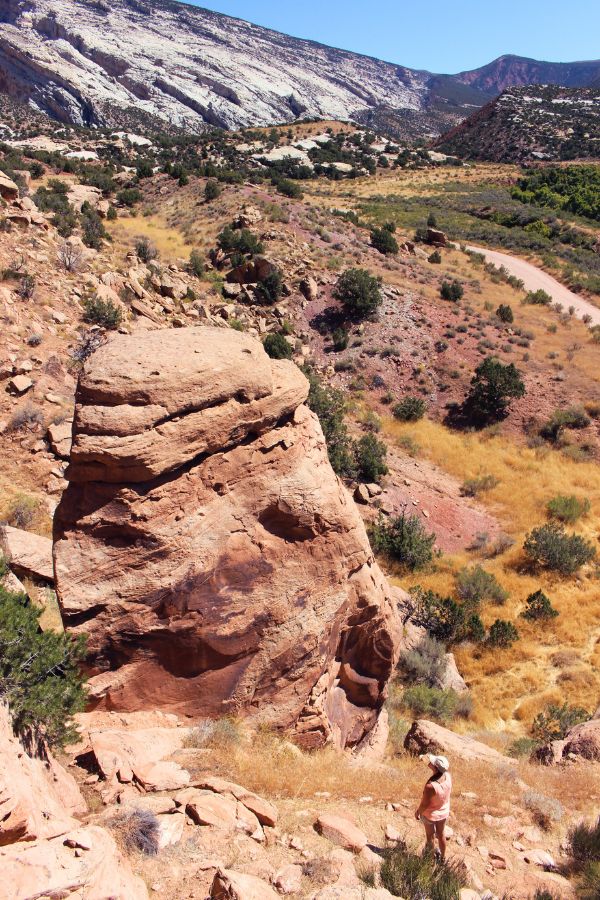
The road continues through the Cub Creek Valley until it dead-ends at the historic Cabin of Josie Bassett Morris. With a little planning, you can easily visit both in one outing.
Know before you go
- Guidebook: Grab the official Tour of the Tilted Rocks auto route guide before heading out. Guidebooks are available for a small fee at either visitor center or a self-service post near the entrance and highlight all the numbered stops along the road, including the Cub Creek Petroglyphs, scenic overlooks, and the historic Josie Bassett Morris Cabin at the road’s end.
- Road conditions: The Tour of the Tilted Rocks scenic drive along Cub Creek Road is paved for the first 8 miles, then turns to gravel/dirt for the final 2 miles. The road is graded and accessible to most vehicles in good weather. It’s open year-round, but snow isn’t cleared in winter on the unpaved section and some of the pavement (last ~4 miles), and heavy rain or snow can make parts of the last few miles tricky or impassable.
- Seasonal note: Since you’re venturing deeper into the more remote section of the monument, check current alerts at the visitor center or the official monument website if visiting during winter or wet weather. This area is prone to flash flooding during storms.
More tips and nearby stops:
- 7 Unforgettable Things to Do in Dinosaur National Monument, Utah
- One Day on the Utah Side of Dinosaur National Monument (Itinerary)
- Josie Morris Cabin: A Pioneer Homestead in Dinosaur National Monument (along the route)
- Best Hikes on the Utah Side of Dinosaur National Monument
- Fossil Discovery Trail: The Only Fossil Hike in Dinosaur National Monument (near the visitor center)
- Sound of Silence Trail: A Dinosaur National Monument Hike That Lives Up to Its Name (along the route)

Hi, I’m Marketa!
Mom of two, Malinois wrangler, and the voice behind this blog. I share places worth the detour across the U.S., from remote backroads to favorite Chicago-area finds. Always chasing good views, great memories, and dog-friendly stops. More about us →


