
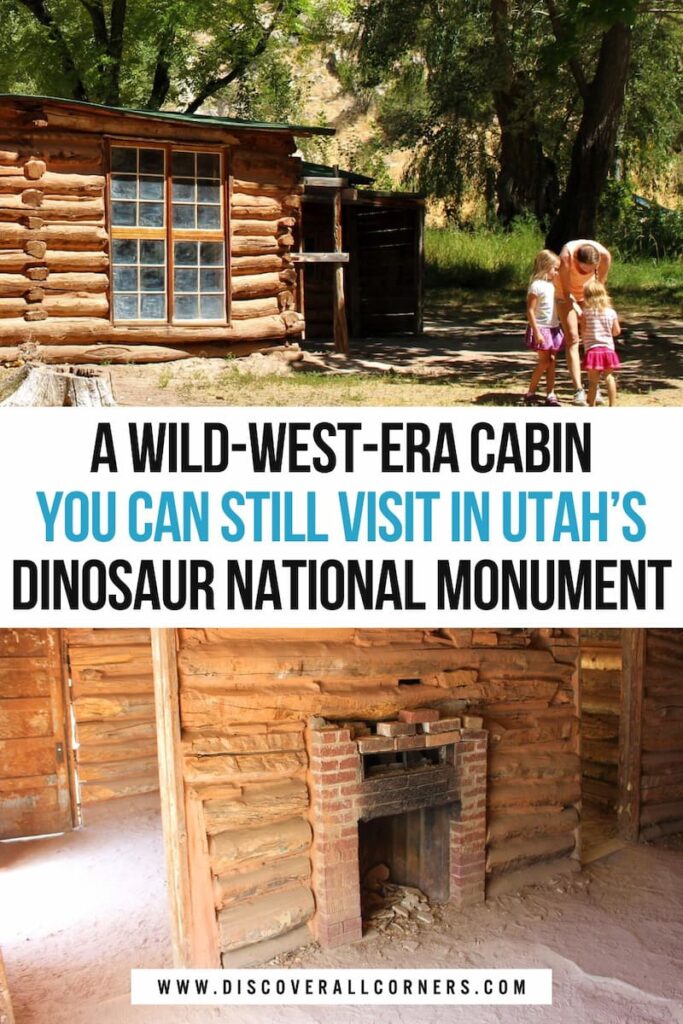
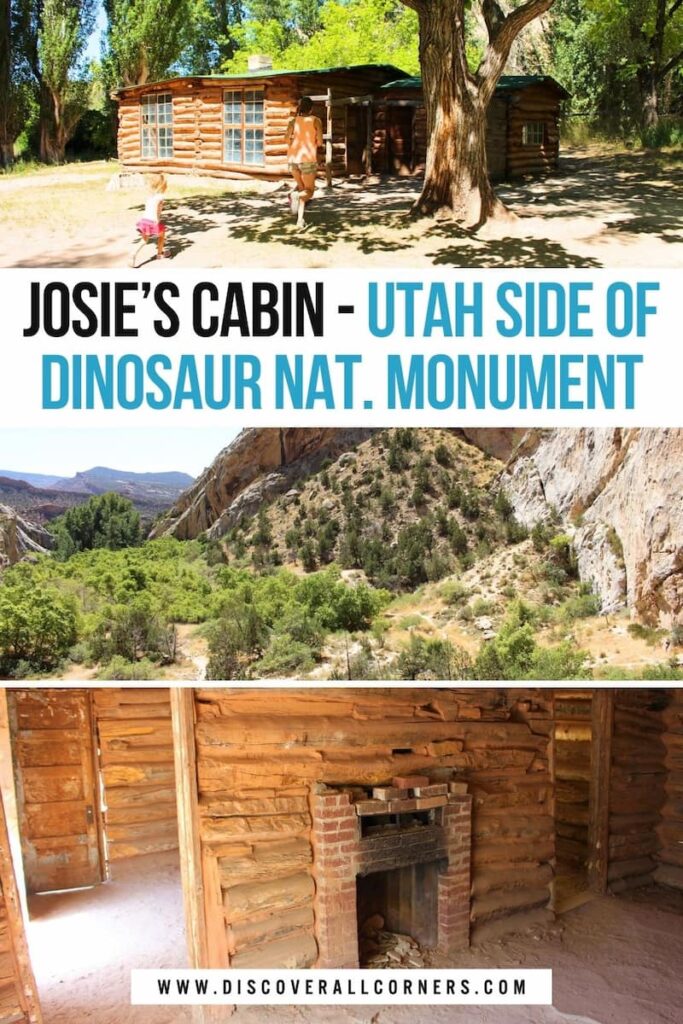
Surprisingly, the Utah side of Dinosaur National Monument isn’t all about dinosaurs (though the Wall of Bones quarry is worth a trip on its own!). One of the most fascinating stops is the Josie Morris Cabin — a log homestead tucked away in the monument that tells a very different story.
This cabin belonged to Josie Bassett Morris, a woman whose independent spirit shaped her life in rugged Cub Creek. She wasn’t just another homesteader of the early 1900s; she came from the well-known Bassett family of Brown’s Park near the Green River, an area once famous for harboring outlaws, including members of the Wild Bunch like Butch Cassidy. Rumor has it Cassidy himself visited Josie here at her cabin.
The Josie Morris Cabin offers more than a quick photo stop. It’s a window into the grit, determination, and independence of one remarkable woman in the United States’ early 1900s West.
It’s also the perfect picnic spot! Bring food from nearby Vernal or Jensen and enjoy the shade of trees, many of which Josie herself planted. You’ll be glad you did. It is quiet, peaceful, and picturesque here. I can see why Cub Creek won Josie’s heart. It won mine, too.
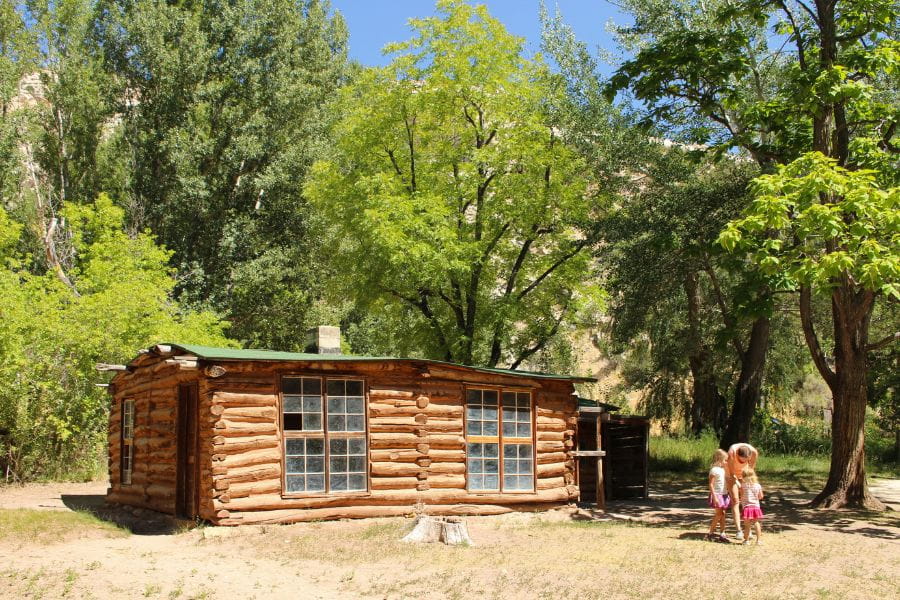
The site is listed on the National Register of Historic Places, reflecting its history as part of the Bassett family homestead.
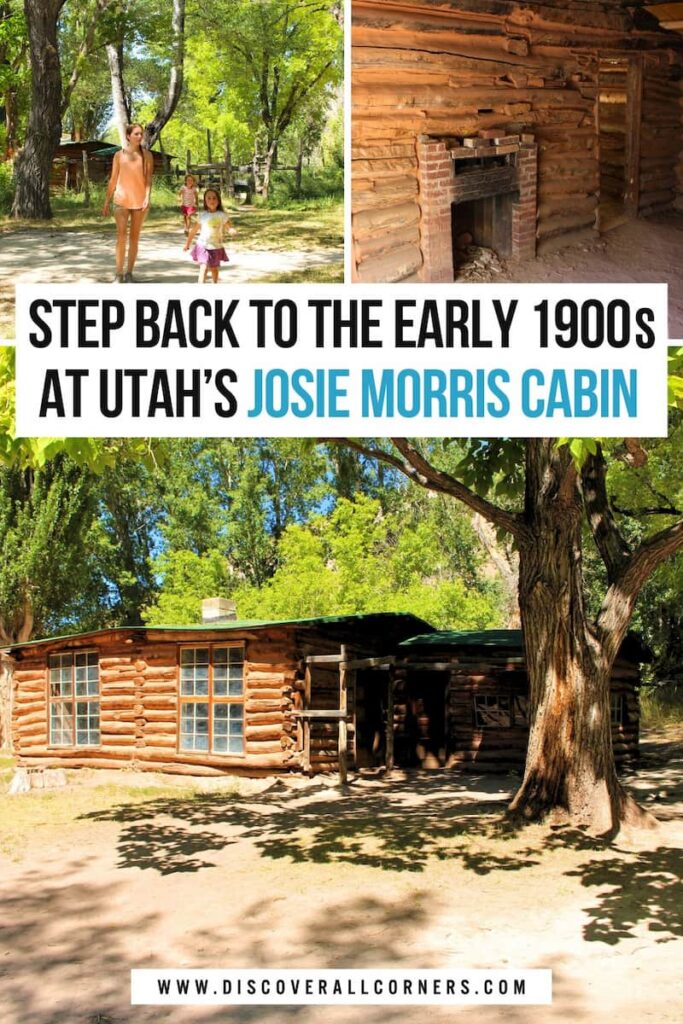
The story of Josie Morris
Built in 1924, the cabin was Josie’s own creation. For forty years she lived here alone, relying on the land and the skills she had learned growing up on a ranch in nearby Brown’s Park.
Her father taught at the local school, and her mother ran the cattle and horse operations, giving Josie a rare balance of brains and grit. She inherited her father’s refinement and her mother’s fierce ranching instincts, and even as a young woman, her independent spirit stood out in the community.

Inside the Josie Morris Cabin
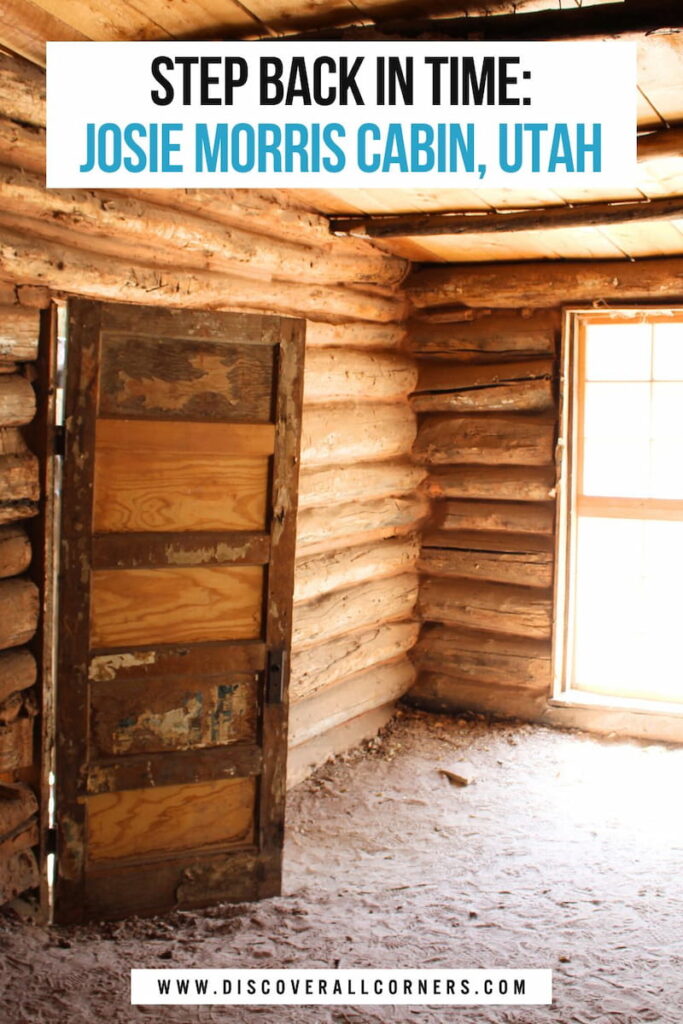
Today, Josie’s cabin interior is bare. It’s just log walls and simple dirt floors, stripped of the life that once filled them.

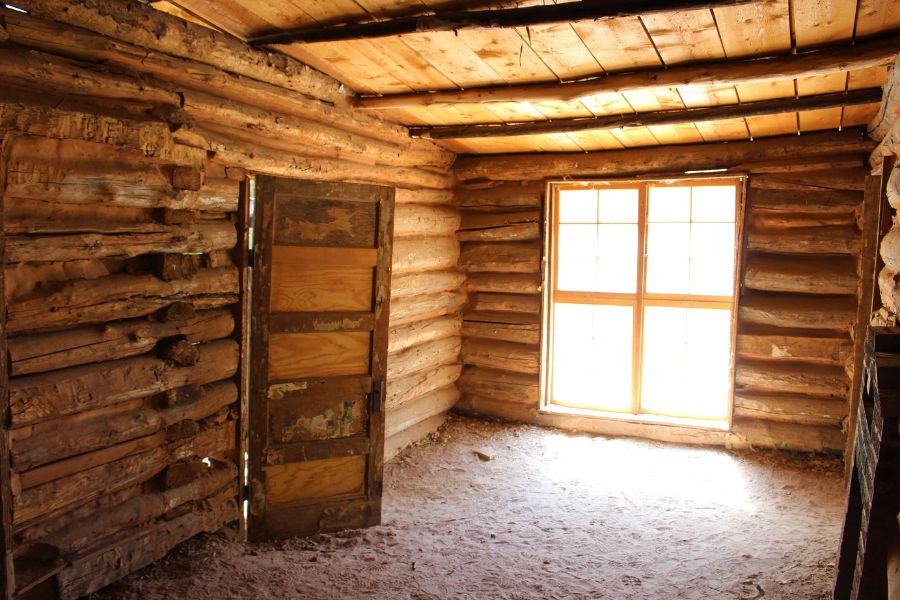
But step inside and you’ll notice weathered scraps of wallpaper clinging to the wood — little hints of Josie’s attempt to bring beauty into the rustic life.
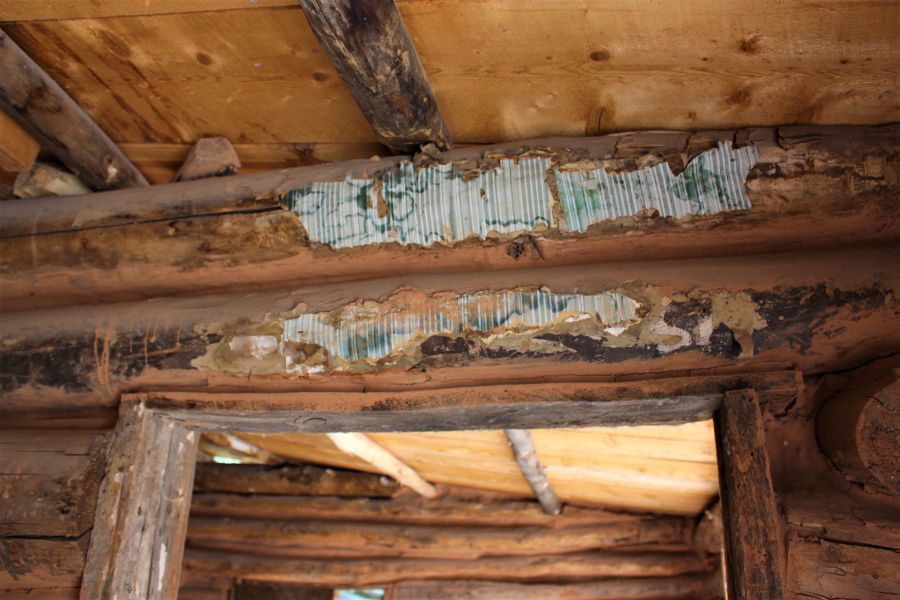
If you squint a little (or maybe lean hard on imagination, ha!), the faded patterns on the wallpaper almost look like flowers. Maybe Josie wanted her home to feel just a bit more refined than the average early 1900s homestead.
Historic photos from the Uintah County Library Regional History Center show just how different the cabin once looked. In the 1950s, Josie’s home was full of life — shelves stacked with jars, belongings tucked everywhere, and Josie herself sitting at her table in the middle of it all.

And here’s the fun part: look closely — those faded scraps above the cabin door are likely the very same wallpaper that covered Josie’s walls on the picture above.
(Or am I just seeing things?)
¯\_(ツ)_/¯
Comparing the “then and now” images makes it easy to picture how Josie’s independent spirit and determination to thrive turned this modest log structure into a cozy working home, even in such a remote location.
Josie lived here well into her 80s, tending the land and shaping this homestead into her own. Her full story makes the cabin feel even more alive when you walk around it.
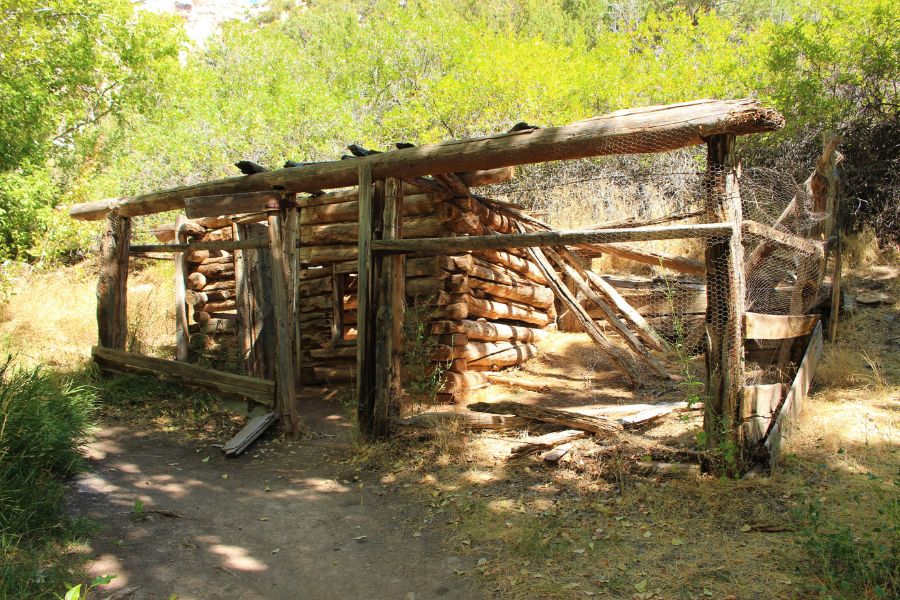
The cabin was once surrounded by flower and vegetable gardens, fruit orchards, and all sorts of domestic animals. While most nearby structures (like the root cellar, outhouse, and sheds) are gone, one last original outbuilding remains — Josie’s chicken coop, located just east of the cabin.
Trails near the cabin
If you’re up for a little walking, two short trails begin right near the cabin:
- Box Canyon Trail – A flat, nicely shaded 0.5-mile round-trip stroll. Easy for kids and non-hikers, with towering canyon walls that once served as natural corrals for Josie’s cattle.
- Hog Canyon Trail – About 1.5 miles round-trip, starting beyond the old chicken coop, east of the cabin. A bit longer but still an easy hike and family-friendly.

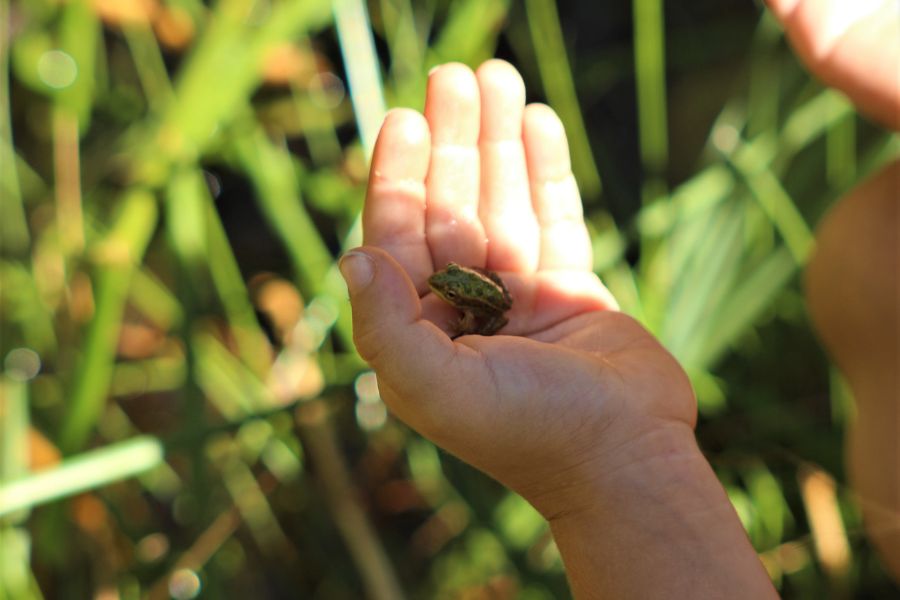
Kids will also love wandering around the pond near the cabin. Frogs are plentiful here, and it’s the kind of spot that sparks curiosity.
Know before you go
- Location: The Josie Morris Cabin sits at the end of Cub Creek Road (aka the Tour of the Tilted Rocks), a 10-mile scenic drive starting from the Quarry Visitor Center. See a map here where I’ve marked the road and various points of interest along the way.
- Other stops: Make sure to explore other highlights along the drive here, including ancient petroglyphs, striking geology, and of course the famous Wall of Bones, where hundreds of dinosaur fossils remain embedded in stone.
- Road conditions: The last 2 miles on the scenic drive are unpaved but usually passable. The last 4 miles aren’t plowed in winter (December–March).
- Time needed: The National Park Service suggests 1 hour for the drive (out and back). Realistically, allow 2+ hours to enjoy all the stops, including these amazing petroglyphs.
- Nearby towns: Jensen, Utah (6 miles away), and Vernal, Utah (13 miles farther) are your best options for food and supplies.
Final thoughts
Standing at the Josie Morris Cabin, it’s easy to imagine life here a century ago — days of cattle, gardens, and self-sufficiency, with occasional visits from notorious friends of the Wild Bunch. This place isn’t just a cabin; it’s a story of resilience, grit, and independence written into the landscape of today’s Dinosaur National Monument.
If the dinosaurs brought you here, let Josie’s story keep you awhile…
📷 Photo credit: The following images in this article are used with permission of Uintah Library / Uintah County Library Regional History Center:
https://collections.lib.utah.edu/ark:/87278/s6qk0x76
https://collections.lib.utah.edu/ark:/87278/s6tt85zw

Hi, I’m Marketa!
Mom of two, Malinois wrangler, and the voice behind this blog. I share places worth the detour across the U.S., from remote backroads to favorite Chicago-area finds. Always chasing good views, great memories, and dog-friendly stops. More about us →


