
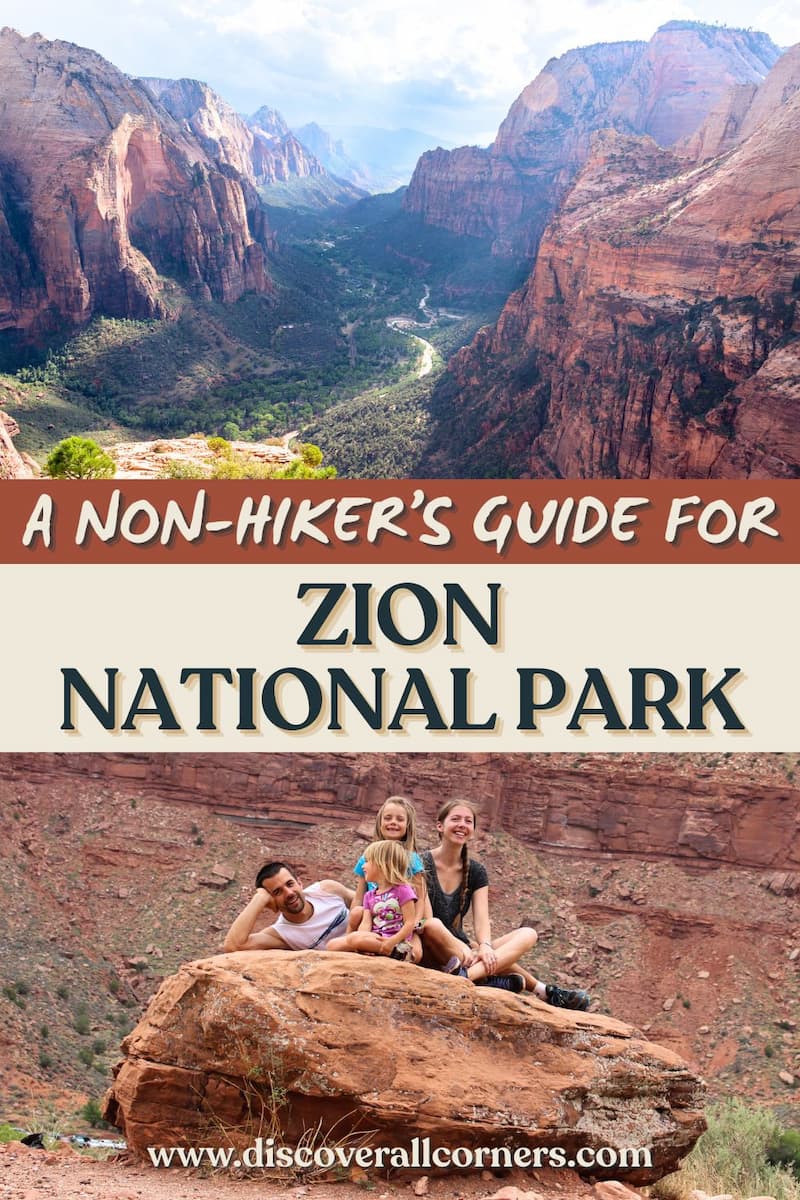
Not everyone comes to Zion National Park to hike steep trails with drop-offs and chains, and the good news is, you don’t have to!
If your ideal day looks more like walking, stopping often, and actually taking in the views instead of pushing through them, this is for you.
Zion is one of those rare parks where you can experience a lot without doing anything extreme. You just need a good plan, knowing where to go and how to structure your day so that it flows.
Jump to what you need:
- What “non-hiker friendly” means
- Getting oriented (shuttle + entrances)
- How to plan your day
- Zion Canyon layout (map)
- Start your day (shuttle strategy)
- Riverside Walk
- Weeping Rock
- Zion Lodge
- Choose your ending
- Summary (what your day looks like)
- Wildlife tips
- Final thoughts
What “non-hiker friendly” means here
In this guide, it means:
- mostly flat or gently sloped trails
- shorter distances
- paved or easy surfaces
- plenty of places to stop and rest
- flexible options so you can adjust as you go
👉 If you can comfortably walk around your neighborhood, you’ll be just fine here.
Getting oriented (quick planning tips)
Before you start your day, there are two quick things that make Zion much easier to navigate: how you’ll get around, and where you’re entering from.
Shuttle vs driving
For most of the year, Zion Canyon is accessed by the shuttle system.
- you’ll park near the Visitor Center or in Springdale
- hop on the shuttle
- ride between trailheads and viewpoints
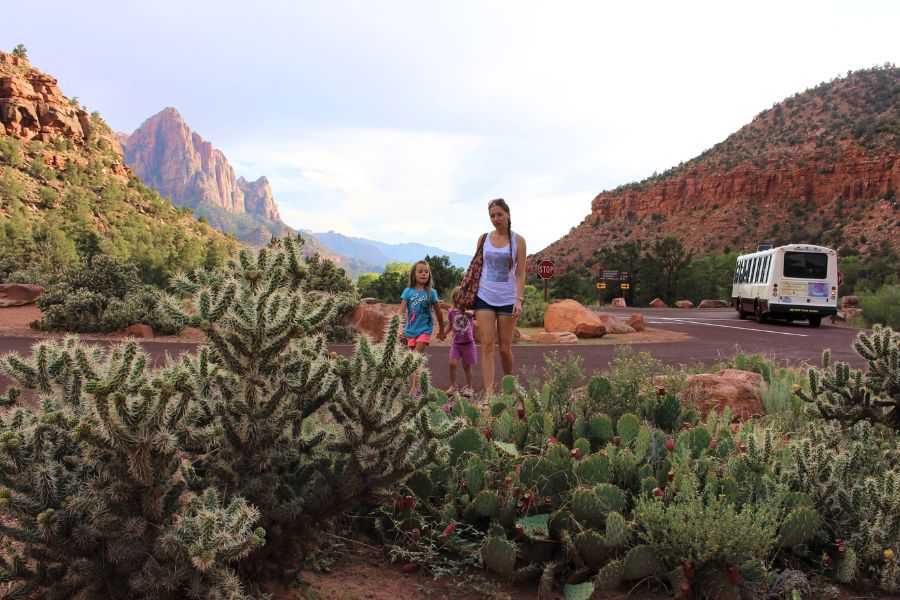
It’s simple, efficient, and the easiest way to experience the park.
If you’re visiting outside of peak season, the shuttle doesn’t run and you can drive your own car through Zion Canyon instead.
For current conditions, seasonal changes, and updates, it’s always a good idea to check the official Zion National Park page before your visit.
Zion’s entrances
Zion National Park has three entrances:
- South Entrance (Springdale)
- East Entrance (Highway 9)
- Kolob Canyons Entrance (I-15)
Both the South Entrance and East Entrance can be used to access Zion Canyon, while the Kolob Canyons Entrance provides access to a separate canyon system about 40 miles away from Zion Canyon.
- South Entrance → main access, Visitor Center, immediate immersion into the canyon, access to the Zion Canyon shuttle system as well as the Springdale Shuttle Line
- East Entrance → higher elevation, quieter, slickrock terrain, descends toward Zion Canyon via switchbacks and a long tunnel
If you can experience both, it adds a lot to your visit since both areas are so different.


How to plan your day (quick overview)
The simplest way to do it:
- start at the Visitor Center
- ride the shuttle all the way up
- explore a few key stops
- work your way back down
Zion Canyon layout (map)
This gives you a clear picture of how everything connects: where you’ll start, how the shuttle moves through the canyon, and where each stop fits into your day.
Start your day: Visitor Center → Shuttle to the top
Begin at the Visitor Center and ride the shuttle all the way to the final stop (#9 — Temple of Sinawava).
👉 Don’t get off early.
This:
- saves your energy
- avoids early crowds
- sets up the best flow for the day
And honestly, the shuttle ride itself is part of the experience. The canyon walls rise higher with every turn, and you can fully focus on the spectacular views as opposed to driving up yourself and having to pay attention to the road as well.
If you’re visiting outside of the peak season, the shuttle won’t run and you can drive up Zion Canyon yourself.
Stop 1: Riverside Walk (start strong)
Location: Shuttle Stop 9 — Temple of Sinawava
Distance: ~2 miles round trip
Terrain: flat, paved
Feel: cool, shaded canyon walk with the river beside you and walls that slowly close in

The Riverside Walk is the most accessible “wow” experience in Zion National Park.
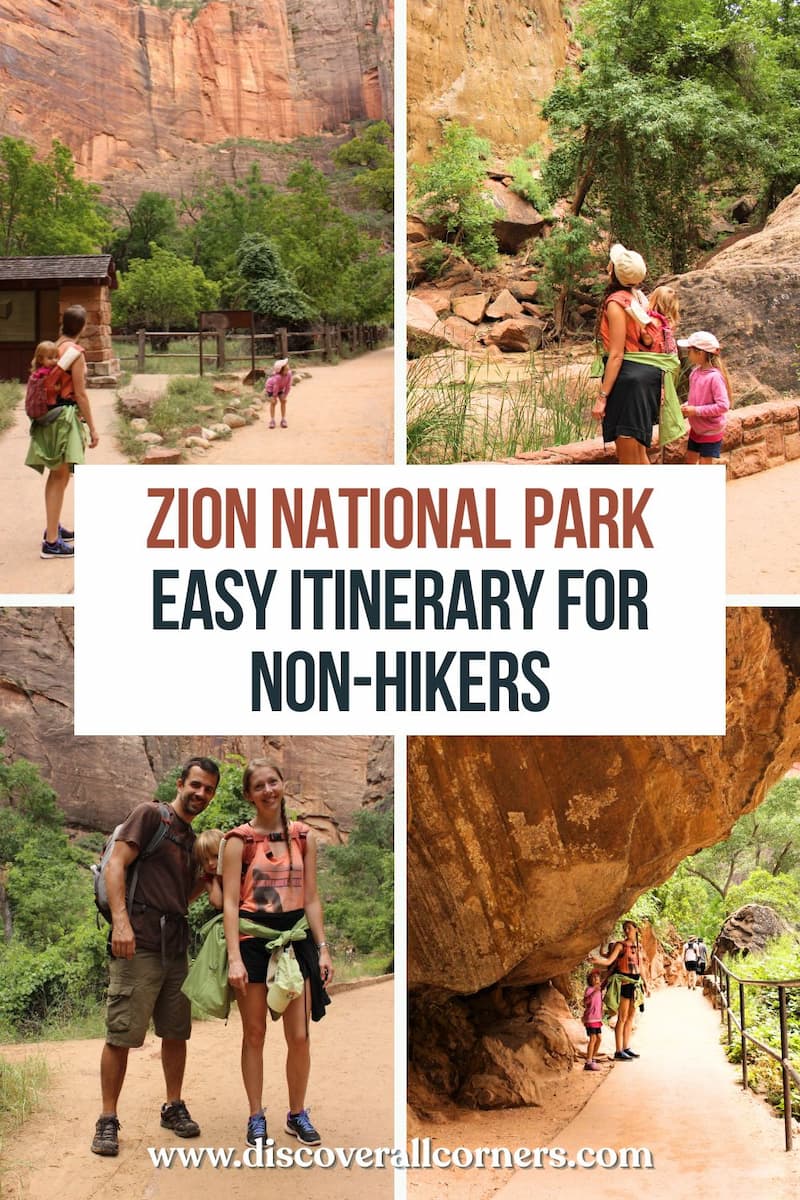
You’ll walk alongside the Virgin River as the canyon narrows, the air cools, and the scenery builds with every step. There are benches, shade, and no pressure to go fast. It’s one of the must-dos in Zion, even if you only have one day to explore the park.
👉 If you only do one thing in Zion — make it this.
Stop 2: Weeping Rock (short + memorable)
Location: Shuttle Stop 7 — Weeping Rock
Distance: ~0.4 miles round trip
Terrain: short uphill
Feel: quick transition from dry desert to a cool, misty alcove with dripping water and greenery

The Weeping Rock is one of the quickest stops in Zion National Park, but completely different from everything else.
You’ll walk up a short incline to a rock alcove where water seeps through the rock, feeding lush hanging gardens in the middle of an otherwise desert landscape. What’s more, the water misting from the canyon walls is quite literally ancient rain that has been percolating through the sandstone for thousands of years.
👉 Fast, unique, and worth every step.
Stop 3: Zion Lodge (regroup + reset)
Location: Shuttle Stop 5 — Zion Lodge
This is your midday break.
- shade
- bathrooms
- food options
- large grassy area
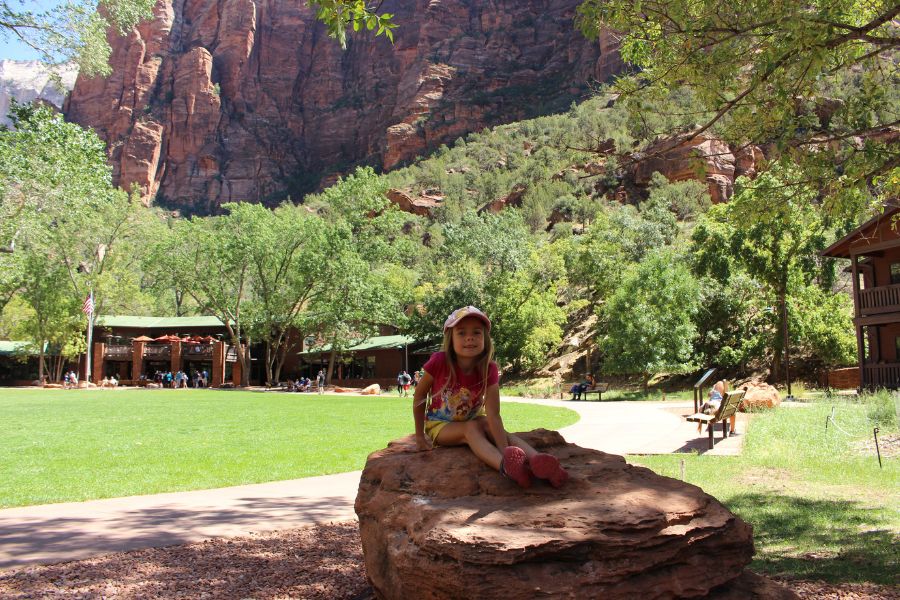
Take a breather here before deciding if you want to add anything else.
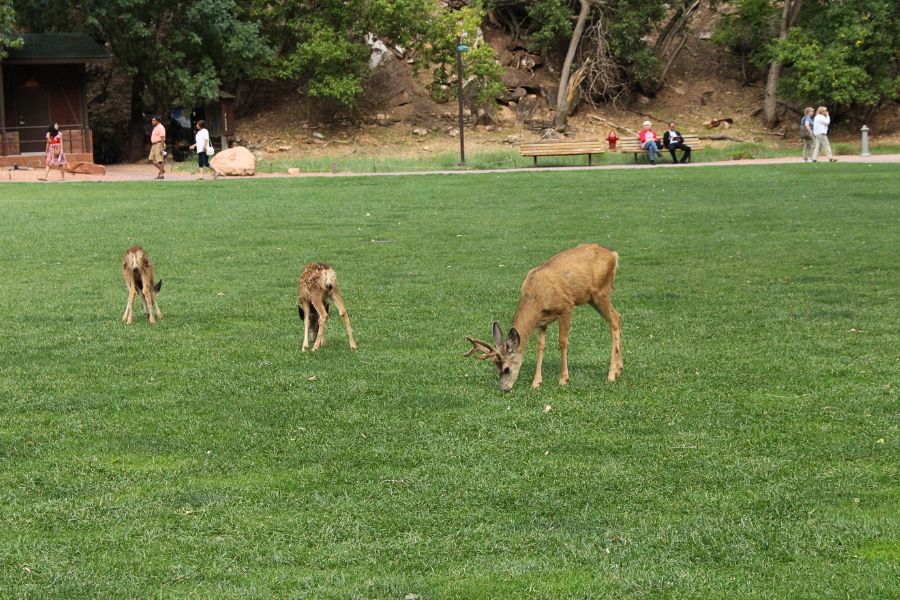
The lodge has a large lawn where deer often wander around. You can grab a bite at their restaurant or cafe, or just find a spot to sit and take in all the beauty around.
Choose your ending (keep it easy)
After experiencing Zion Canyon up close on the Riverside Walk and discovering Zion’s hidden lush pocket at Weeping Rock, you’ve already seen the highlights, and this is where your day becomes flexible.
You don’t need to do everything here. Just pick what sounds good based on your energy level.
Option 1 — One last scenic walk: Lower Emerald Pool
If you’re up for one more short, memorable trail, this is the one to choose.
Location: Shuttle Stop 5 — Zion Lodge
Distance: ~1.2 miles round trip
Terrain: paved, gradual uphill → downhill return
Feel: shaded canyon walk leading to a rock alcove with trickling waterfalls and a natural pool
Effort level: easy, but slightly more effort than Riverside Walk
The Lower Emerald Pool Trail isn’t completely flat, but it’s easily manageable if you don’t mind a slight uphill walk. The path is paved and leads to a massive rock alcove with dripping water, hanging gardens, and a natural pool just below the trail.
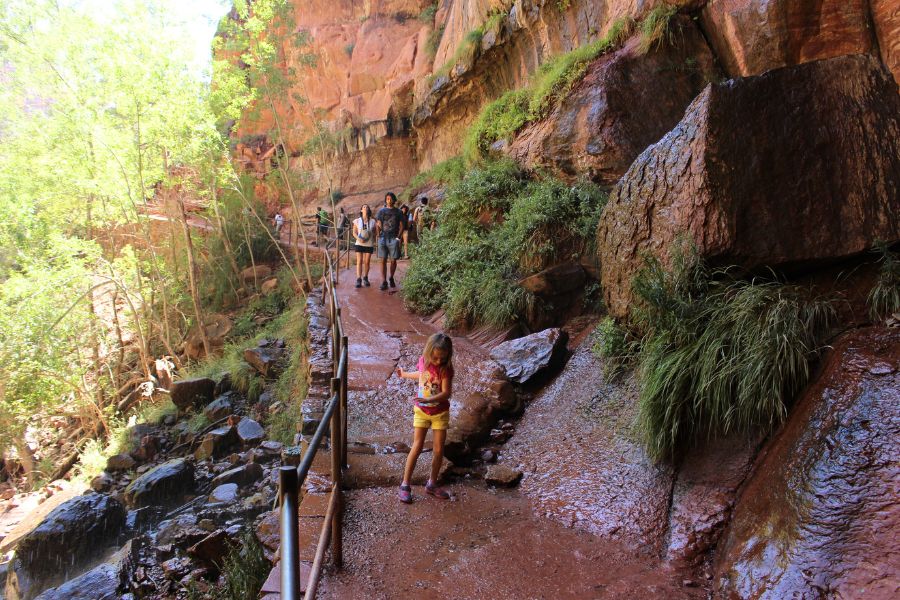
👉 It’s one of the more “immersive” short walks in Zion.
⚠️ The area under the alcove can be slippery, but you don’t need to go all the way underneath to enjoy it.
The paved trail continues a short distance to an elevated viewpoint of the alcove, and from there it climbs to more natural pools over steeper and rugged terrain (NOT non-hiker-friendly).
Option 2 — Quick and easy connector: Grotto Trail
If you want to add something short, easy, and low-commitment, this is a good option.
Location: Shuttle Stop 5 — Zion Lodge
Distance: ~0.5 miles one way (can go one-way only)
Terrain: flat
Feel: quiet path between shuttle stops with light canyon views
Effort level: easy, choose how far you go

The Grotto Trail connects Zion Lodge to the Grotto (Shuttle Stop 6). It’s not paved, but it stays mostly flat and near the road. It’s easy, but more of a connector between the two shuttles stops than a destination.
👉 Nice if you want to stretch your legs without adding much effort.
Option 3 — Slow, scenic wrap-up: Pa’rus Trail
If you’d rather wind down instead of doing another “trail” but aren’t ready to wrap up the day yet, this is a great way to end your day.
Location: multiple connections
Distance: up to 1.7 miles one way (can be hiked in sections)
Terrain: flat, paved
Feel: open canyon views, river access, and a slower, quieter end to the day + an opportunity to visit a museum
Effort level: easy, flexible (choose how far you go)
The Pa’rus Trail is a fully paved, mostly flat path that follows the Virgin River between the Zion Canyon Visitor Center (Shuttle Stop 1) and Canyon Junction (Shuttle Stop 3), with a connection to Zion Human History Museum (Shuttle Stop 2) about halfway through (adds around ~0.2 miles one way).
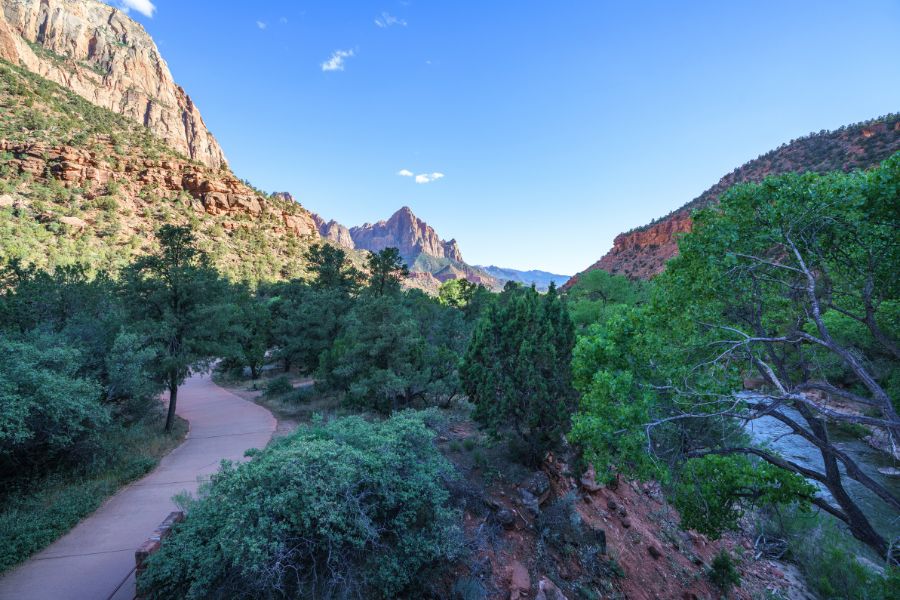
Early morning or late afternoon is best here. There is spotty shade in some sections, but nothing consistent, so leaving this walk for the hottest part of the day can be intense.
👉 It feels less like a hike and more like easing out of the park.
💡 Start at either stop (Visitor Center, Zion Human History Museum, or Canyon Junction — stops 1/2/3), go as far as you want, reach the next shuttle stop or turn around when you feel like it. No pressure to “complete” anything. Or skip the walk entirely and just stop at the museum instead (Shuttle Stop 2) if the museum is open (check current hours here).
🚌 Just keep in mind that stops 2 and 3 (Zion Human History Museum and Canyon Junction) are down-canyon stops only, so the shuttle only stops here on the way down as it returns back to the Visitor Center.
Which part is better?
- Closer to Canyon Junction: quieter, popular for sunset views
- Closer to Visitor Center: busier, shaded at first, then exposed
- Zion Human History Museum: halfway through, exhibits on geology and human history of the park
Distance:
Visitor Center ↔ Canyon Junction: 1.7 miles
Canyon Junction → Museum: ~1.2 miles
Museum → Visitor Center: ~1 mile
Option 4 — Done for the day (no extra walking)
Also completely valid.
After Riverside Walk + a couple of the next stops, you’ve already had a full Zion experience.
👉 You can head back, grab food in Springdale, or just call it a day.
Option 5 — Stay for sunset (no extra effort, big payoff)
If you’re not in a rush to leave, this is one of the best ways to end your day.
Canyon Junction (Shuttle Stop 3) happens to be one of the most popular sunset spots in Zion for a reason.
- wide-open canyon views
- easy access
- no hiking required
👉 Just show up, slow down, and take it in.
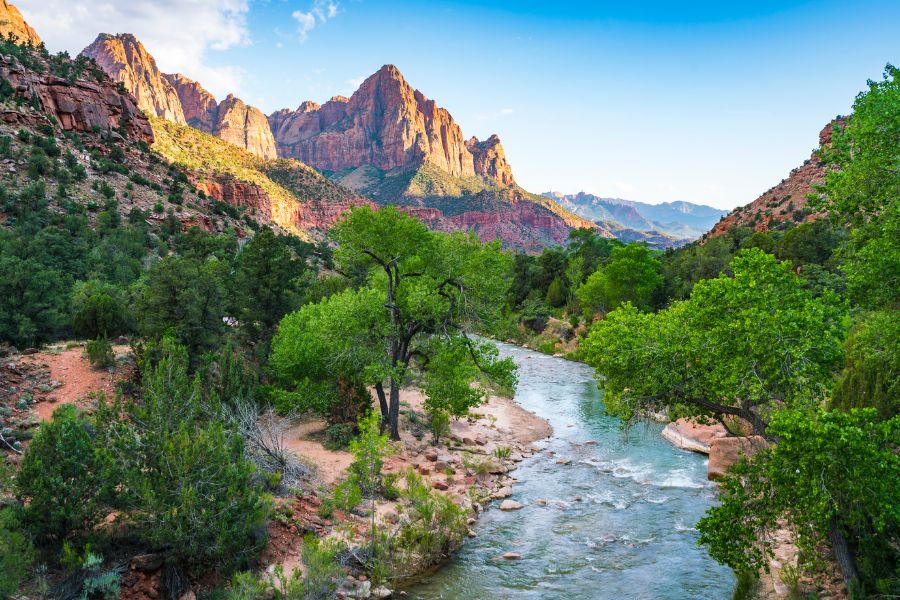
➡️ You can get here by shuttle (this is a down-canyon stop only) or drive (limited parking available). This area is fully open to visitors, unlike Zion Canyon Road which starts at this intersection where private vehicles aren’t allowed when the shuttle is operational.
What your day actually looks like (summary)
By the end of the day, you will have seen some of Zion’s most iconic scenery — without overdoing it.
Recap
- start at the Visitor Center
- ride the shuttle all the way up (or drive if visiting out of season)
- Riverside Walk (anchor experience)
- Weeping Rock (a quick interesting addition)
- Zion Lodge area (pause)
- Choose your ending
👉 And if you’re lucky, you might even spot wildlife along the way (more on that below).
Total walking distance
Core plan:
- Riverside Walk: 2 miles
- Weeping Rock: 0.4 miles
👉 ~2.4 miles total
If you add more:
- Lower Emerald Pool (+1.2 miles) → ~3.6 miles total
- Grotto Trail (+0.5 miles) → ~3 miles total
- Pa’rus Trail (flexible; walk as much or as little as you want) → 2.4 miles +
Timing tip (this matters more than distance)
A small timing shift can completely change how your day feels.
- exposed areas (Pa’rus Trail) → best early or late
- canyon trails (Riverside Walk, Weeping Rock, Emerald Pools) → more forgiving midday
You don’t need perfect timing, but a little awareness goes a long way.
Wildlife in Zion (what you might see)
Zion isn’t just about the scenery. There’s a good chance you’ll spot wildlife along the way, on top of deer which are plentiful throughout the canyon.
California condors
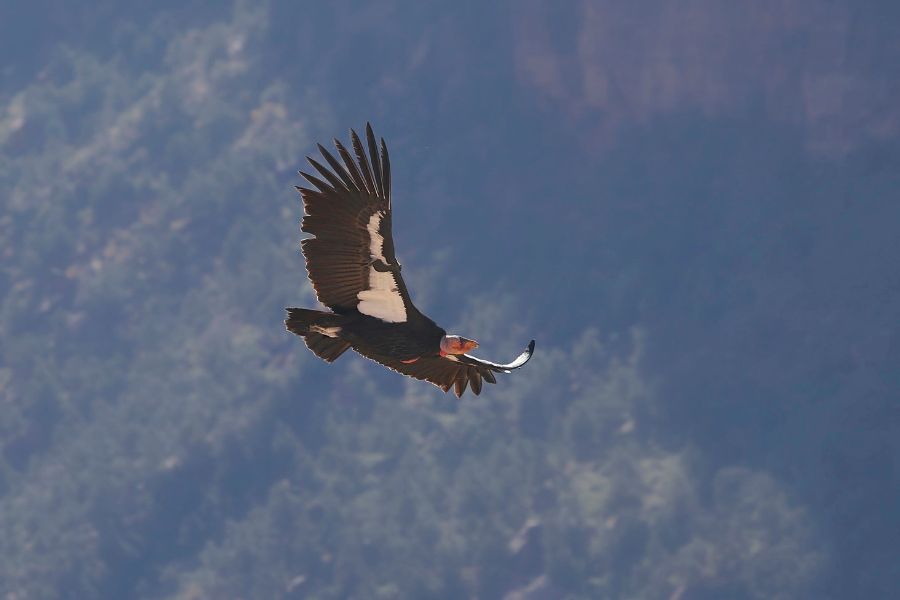
While riding the shuttle or walking in Zion Canyon, keep an eye on the cliffs in the upper part of the canyon for California condors, especially near Big Bend (Shuttle Stop 8 / down-canyon stop only). They’re massive, slow-gliding birds and hard to miss if they’re out. They’re not guaranteed, but not uncommon either, especially in the morning or late afternoon when they are more active.
Desert bighorn sheep
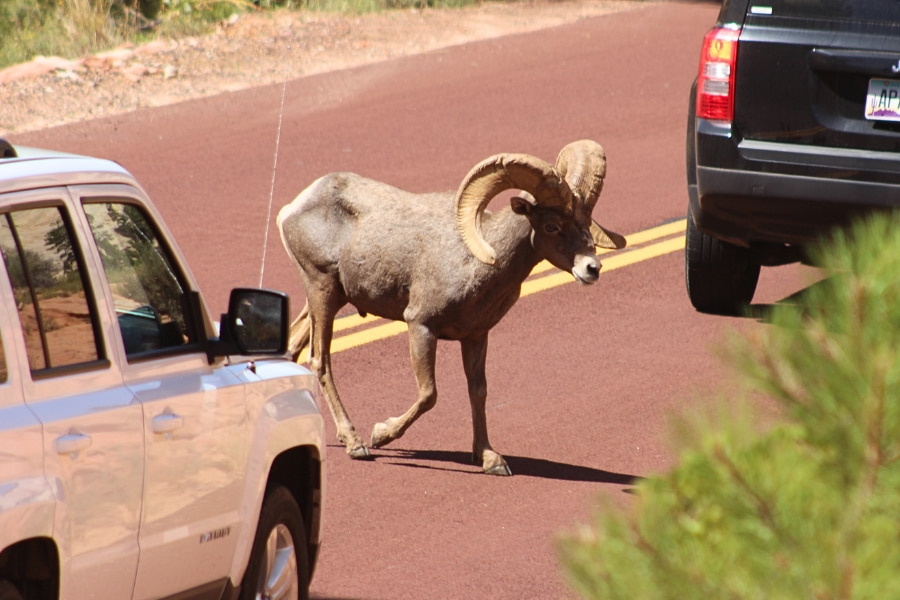
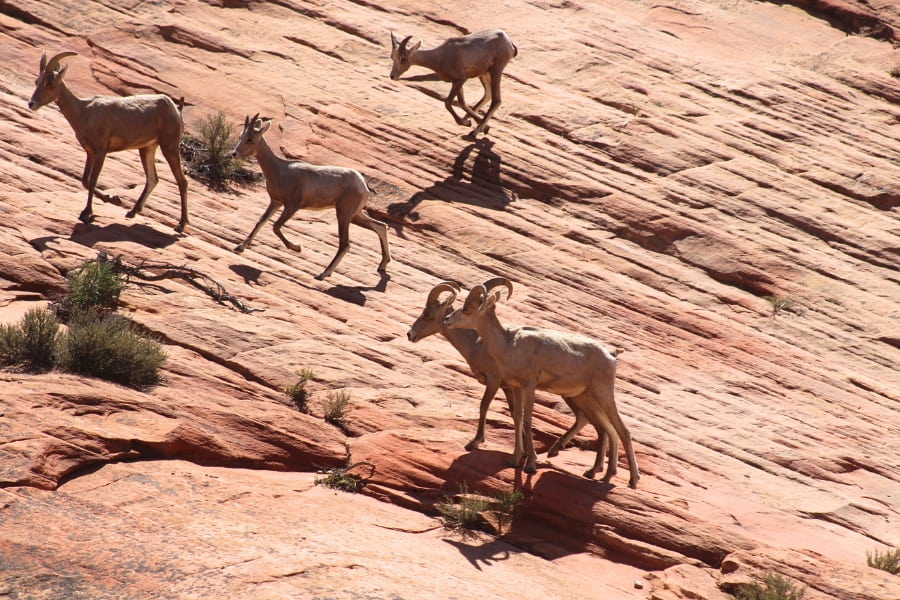
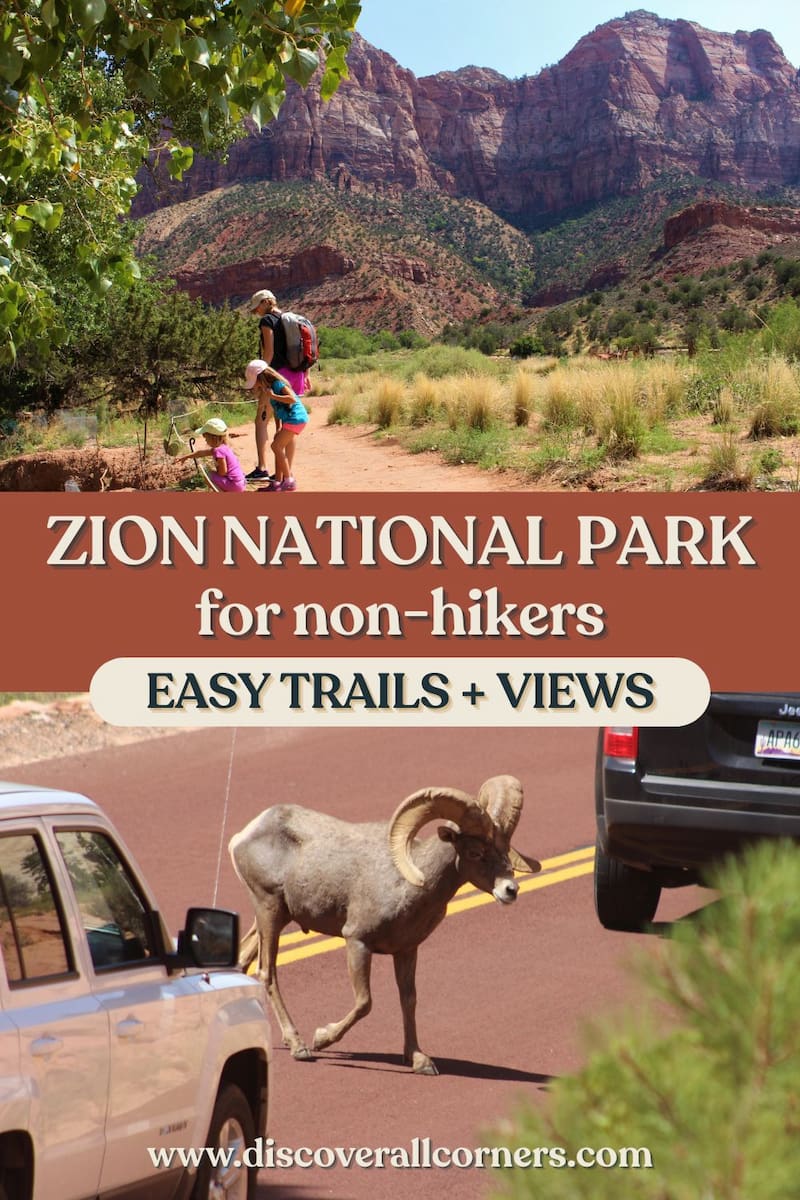
The East Entrance is one of the best areas to spot desert bighorn sheep. When they’re not crossing the road they’re often on the slickrock slopes along the road. They can easily blend into the environment, so keep your eyes peeled!
Final thoughts
You don’t have to hike hard to experience Zion. If you walked, explored, paused, and actually took it in, you did it right.
- If you can only squeeze one activity into your day, don’t miss the Riverside Walk.
- If you’re looking for a more hike-focused version of this day, I break that down here: How to Spend One Perfect Day in Zion National Park.
- If you’re considering slightly more adventurous options (but still very doable), you might like: Best Easy/Moderate Hikes in Zion National Park.

Hi, I’m Marketa!
Mom of two, Malinois wrangler, and the voice behind this blog. I share places worth the detour across the U.S., from remote backroads to favorite Chicago-area finds. Always chasing good views, great memories, and dog-friendly stops. More about us →


