If you’re planning to visit Zion National Park with a dog, the short answer is: yes, you can bring them, but your options inside the park are limited.
That doesn’t mean it’s not worth stopping by though.
With the right expectations (and a simple plan), you can still enjoy a beautiful, low-key visit together with your dog.
First, what to expect…
Zion National Park is one of the more restrictive U.S. national parks when it comes to pets.
Dogs are welcome in certain developed areas, but trail access is extremely limited, and pets are not allowed on shuttle buses at all.
Zion isn’t the park you plan a full dog-focused trip around, but it can be a worthwhile stop if you’re already here.
👉 The main thing to know: There is only one trail in Zion Canyon where dogs are allowed.
The one dog-friendly trail in Zion Canyon: Pa’rus Trail
If you’re visiting Zion National Park with a dog, this is where you’ll spend your time.
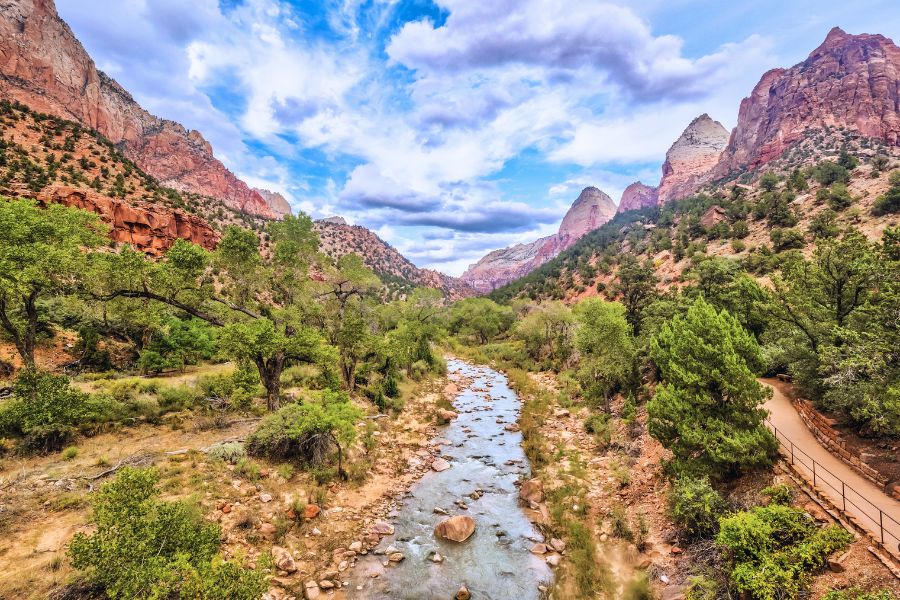
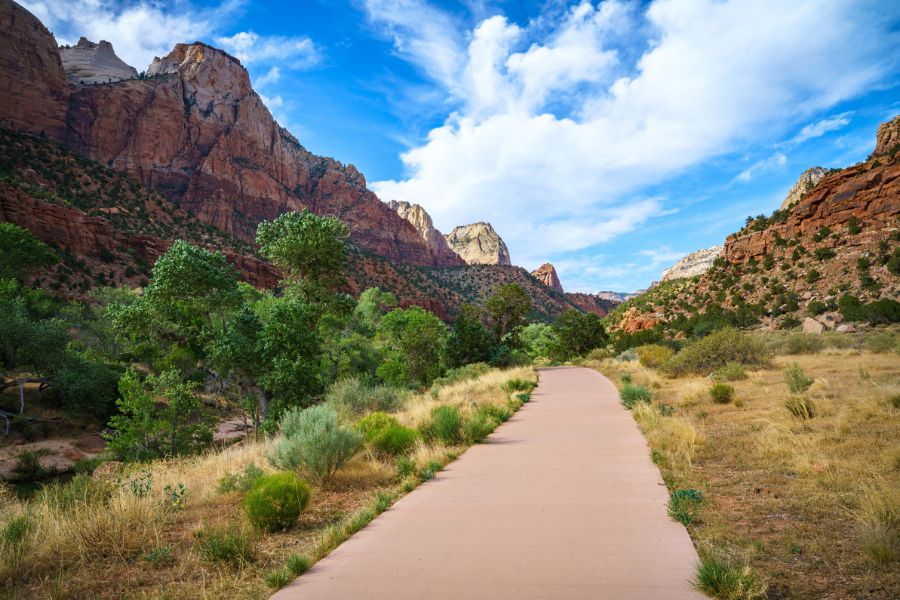
Pa’rus Trail:
- starts at the Visitor Center
- ends at Canyon Junction (Shuttle Stop 3)
- fully paved and mostly flat
- follows the Virgin River
- about 1.7 miles one way (but completely flexible)
It’s an easy, scenic walk along the Virgin River with open views of the canyon. There’s not much shade, so mornings and late afternoons are your best bet. If you make it to Canyon Junction, it’s a great spot to catch sunset.
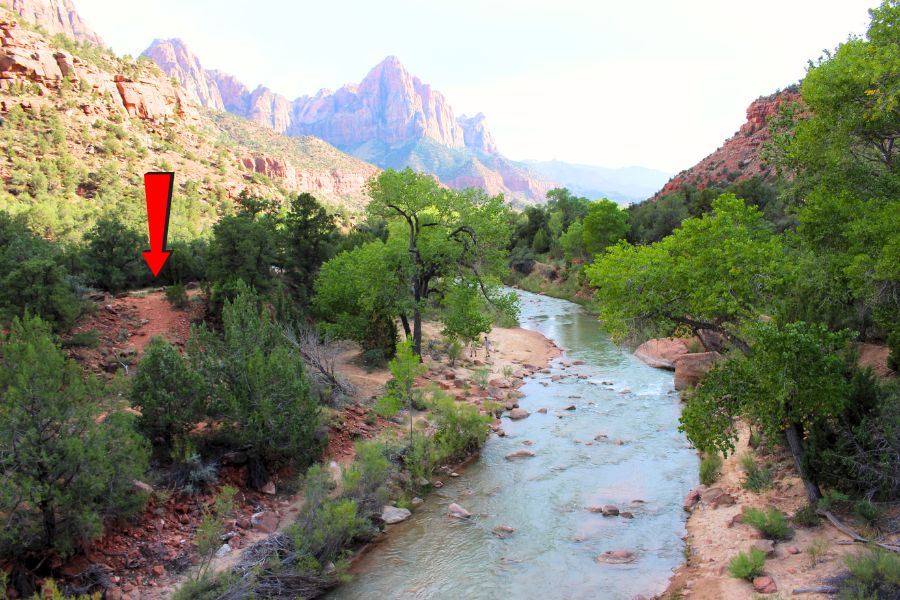
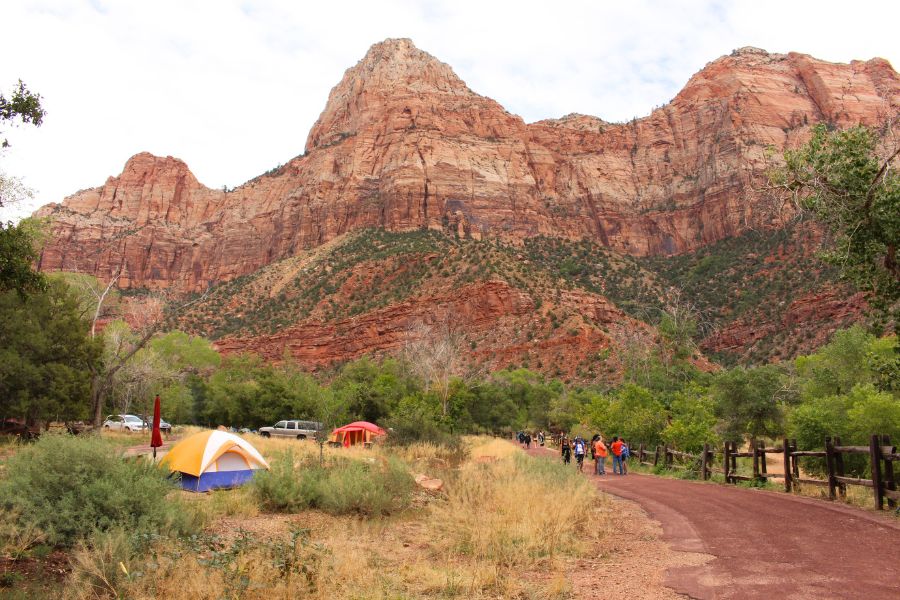
There’s also a small parking lot at Canyon Junction that’s a good option if you or your dog aren’t up for walking the full 3.4 miles (round trip). Since dogs aren’t allowed on the shuttle, this is the only way to reach the junction for sunset without the longer walk. Just keep in mind that this is the last public parking area before the shuttle-only section of the canyon, so it can still fill up. That said, it’s generally less competitive, since only shuttles returning to the Visitor Center stop here (same for stop #2), making it a less convenient option for most visitors.
👉 You don’t need to “hike” the full trail. You can just walk as far as you want and turn around whenever you feel like it. Take a look at the map below to see the trail’s route and how it connects to the parking lot (just toggle on the Pa’rus Trail to highlight it).
Important rules to know
Like all other national parks, Zion takes pet safety and environmental protection seriously, so there are a few rules you’ll want to follow:
- Dogs must be on a leash at all times.
- Pets are only allowed on the Pa’rus Trail and in developed areas (roads, campgrounds, picnic areas, Zion Lodge area).
- Dogs are not allowed on shuttle buses, any other trails, in wilderness areas, or inside buildings.
⚠️ Water safety (this one matters)
The Virgin River and its tributaries in Zion National Park can contain cyanobacteria, a type of photosynthetic bacteria that can produce blooms containing cyanotoxins, which can cause serious illness or death in both humans and pets. This is often more of an issue during the warmer months, but the toxins can be present in the water at any time of the year, and they cannot be filtered, treated, or boiled out.
👉 Keep dogs out of the water and avoid letting them drink from the river.
The NPS monitors the park’s water for these toxins — check their advisory page for current conditions before you visit.
⚠️ Heat and safety
Zion can get hot — very, very hot.
- Never leave your dog in a vehicle
- Plan walks early or later in the day
- Bring plenty of water (there are free water bottle refill stations at the Visitor Center)

If you want to see more of Zion National Park
Because dogs aren’t allowed on the shuttle or most trails, experiencing the main canyon is a bit different.
Here are a few realistic options:
Do Zion Canyon in shifts
If you’re traveling with another adult:
- one person explores (Riverside Walk, viewpoints, etc.)
- one stays with the dog
- then swap
👉 Not ideal, but it’s a simple way to see more of the park if you both want to explore.
If you’re visiting during the shuttle season, moving around the canyon is very straightforward. Consider some of the easier or shorter hikes in the park that don’t require too much effort or a full day of hiking if you’re planning your days this way, and take a look at how the Zion shuttle system works before you arrive.
Take the scenic drive (east side)
If you’re driving through Zion, the east side of the park is absolutely worth the detour.
- winding roads
- slickrock landscape
- fewer crowds
- beautiful viewpoints without leaving your car
You might even spot desert bighorn sheep along the way.

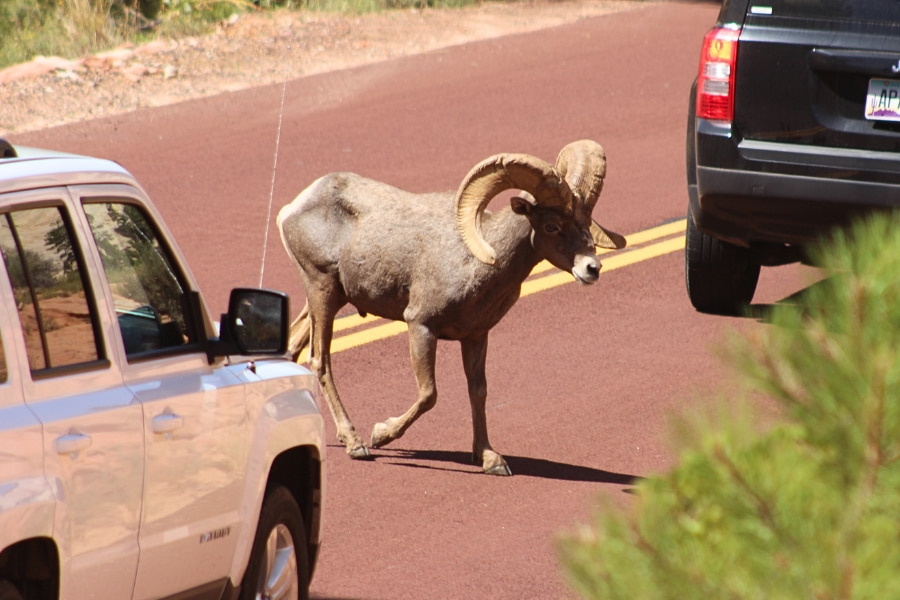
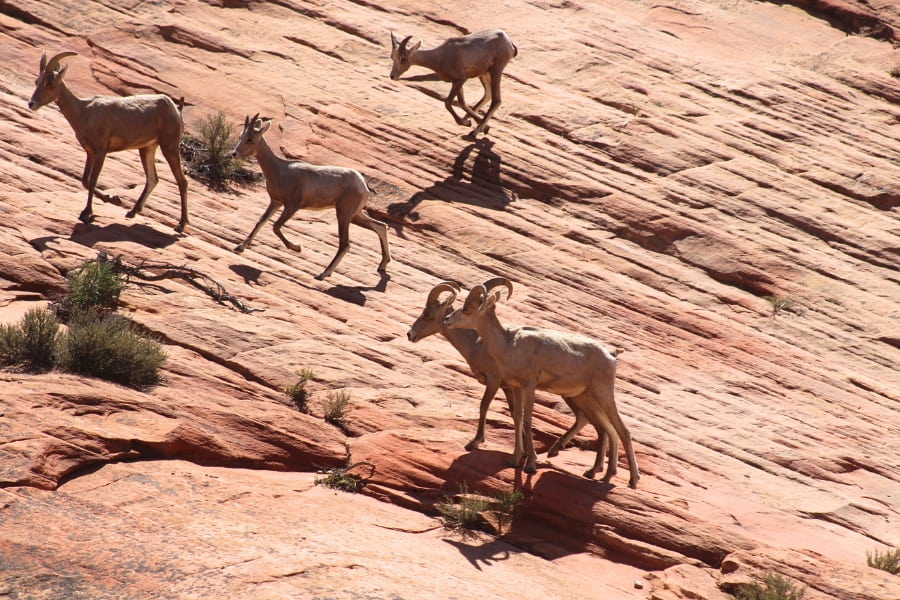
👉 Always follow park guidelines and keep a safe distance from wildlife.
Arrange local pet care (boarding or dog-sitting)
If you want to explore more of Zion National Park beyond the Pa’rus Trail, another option is to arrange care for your dog nearby.
Boarding facilities and pet sitters are available in towns like Hurricane, St. George, Kanab, Cedar City, and even closer to the park in Rockville. Some travelers also use platforms like Rover to find local dog sitters.
Requirements vary, but most boarding facilities will ask that your dog is up to date on vaccinations, and some may require spaying or neutering.
👉 If you’re comfortable with this option, it can open up the rest of Zion’s trails and shuttle system so that you can experience more of the park.
⚠️ Availability can be limited during peak season, so it’s worth looking into this ahead of time.
Explore nearby dog-friendly areas
Just outside the park, you’ll find more flexibility.
- surrounding BLM land
- quiet desert trails
- scenic areas where dogs are more freely allowed

👉 If Zion is just one stop on a larger trip, this is where you can balance things out.
Who this is for
This type of visit works best if you’re:
- road-tripping with your dog
- passing through southern Utah
- making a quick stop in Zion Canyon
- looking for a simple, low-effort experience
Final thoughts
Zion National Park isn’t the most dog-friendly park when it comes to trail access, but that doesn’t mean you should skip it entirely. If you’re already passing through southern Utah, it’s still worth a stop.
Keep your expectations simple, focus on what is possible, and you’ll still walk away with a beautiful experience. Because sometimes it’s less about doing everything, and more about enjoying where you are.
Before you go, it’s worth double-checking the official park page for current pet rules, since they can change.
One last thing — parking fills up fast. If you’re not staying inside the park, plan to arrive early (around 8:00 AM or earlier), or later in the day. Once the main lot fills up, you’ll need to park in Springdale. While there is a shuttle that connects the town to the park, dogs are not allowed on it, so plan accordingly.

Hi, I’m Marketa!
Mom of two, Malinois wrangler, and the voice behind this blog. I share places worth the detour across the U.S., from remote backroads to favorite Chicago-area finds. Always chasing good views, great memories, and dog-friendly stops. More about us →