
Whether you’re planning your first trip to Zion National Park or you’re back for another round of jaw-dropping canyon views, the Zion Canyon shuttle system is likely going to be part of your day.
The park shuttle cruises the canyon floor, drops you right at trailheads and key stops, and lets you explore without worrying about parking or traffic congestion. It’s basically Zion’s own circulator — similar to public transit, except far more scenic!
In this guide I’ll walk you through exactly how the Zion National Park shuttle works, where it goes, how often it runs, where to park, and what you can do at every stop, to help your day in Zion run a whole lot smoother.
Quick navigation:
- Do you have to use the shuttle in Zion National Park?
- Driving in Zion with your own vehicle
- How the Zion shuttle works
- 🚍 Zion Canyon Line (route and stops)
- 🚍 Springdale Line (route and stops)
- Where to park for the Zion shuttle
- Know before you go
- FAQs

Do you have to use the shuttle in Zion National Park?
Short answer: often — yes.
For most of the year, private vehicles are not allowed in the main canyon and on the Zion Canyon Scenic Drive, and visitors get around the canyon using the park’s free shuttle system.
The shuttle typically operates from March through late fall, with limited service during winter holidays, when traffic congestion inside the canyon would otherwise be unmanageable (Zion receives over 5 million visitors annually!). During this time, you can still drive through Zion National Park using State Route 9, but access to Zion Canyon itself is shuttle-only.
In the off-season, when the shuttle is not operating, visitors may drive their own vehicles to trailheads and viewpoints along the Zion Canyon Scenic Drive and park at designated pullouts on a first-come, first-served basis.

Driving private vehicles through Zion National Park
Visitors can drive through Zion National Park year-round using Utah State Route 9 (SR-9), which connects Springdale (west end of the park) with Mt. Carmel Junction (east end).
Seasonal closures to private vehicles apply only to the Zion Canyon Scenic Drive, which branches off SR-9 at Shuttle Stop 3 (Canyon Junction) and runs up Zion Canyon toward the park’s most popular trailheads and the Zion Lodge.
Guests with reservations at the Zion Lodge are permitted to drive on the Zion Canyon Scenic Drive to access the lodge even during shuttle season.

How does the Zion National Park shuttle work?
There are two separate shuttle lines that service Zion National Park, each with a different purpose.
- Zion Canyon Line – operates inside the park and provides access to trailheads and viewpoints
- Springdale Line – runs through the town of Springdale and connects to the park’s pedestrian entrance for easy Zion Canyon Line connection
Both shuttle lines are free, and no tickets or reservations are required.

Schedule and frequency
Both lines on the Zion shuttle system typically operate daily from early March through late November, with limited service during winter holidays. Shuttle schedules change seasonally, so always check the National Park Service website before your visit for current operating hours.
Typical shuttle frequency:
- Zion Canyon Line: every 5–10 minutes
- Springdale Line: every 10–15 minutes
Typical operating hours:
- Zion Canyon Line: roughly 7 AM–7/8 PM
- Springdale Line: similar schedule, but often starts about an hour later

Accessibility
All shuttle buses are wheelchair accessible (the shuttle lift has a combined weight limit of 600 lbs; chair size can’t exceed 45″x25″).
Strollers are allowed on the shuttle but must be folded (larger strollers must be stored on the bike rack at the front of the bus, and you must be able to load and unload it yourself).
Bicycles
Standard bicycles are allowed on the shuttle, and bike racks are located on the front of the buses. Fat-tire bikes and e-bikes are not permitted. Cyclists riding Zion Canyon Scenic Drive must ride single file, in groups no larger than six, and pull over completely when shuttle buses need to pass.
Pets
Pets are NOT allowed on the shuttle. Only service animals are permitted to ride the shuttle (emotional support animals are considered pets).
Visiting Zion with a dog? Here’s what to know.

Zion Canyon Shuttle route and stops
The Zion Canyon Line serves nine key locations inside the park. It runs from the Zion Canyon Visitor Center, stopping at major viewpoints, trailheads, and the Zion Lodge before ending at the Temple of Sinawava.
The full route is approximately 8 miles one way and takes about 45 minutes to complete.
While most stops are served both ways, a few are designated only for return journeys down-canyon (meaning, the bus will only stop in this location when it’s headed back towards the Visitor Center).
Before diving into each stop, take a look at the map below to get familiar with Zion Canyon’s layout, shuttle routes, and key trailheads.

Zion Canyon Line shuttle stops
| Stop | Best For | Hikes / Attractions | Facilities | Crowd Level |
|---|---|---|---|---|
| 1. Visitor Center | Starting your day | Watchman Trail, Pa’rus Trail, Archeology Trail | 🚻🚰ℹ️ | Heavy |
| 2. Zion Human History Museum (Down-canyon stop only) | Quick museum stop | Pa’rus Trail access, Museum | 🚻🚰ℹ️ | Light |
| 3. Canyon Junction (Down-canyon stop only) | Photography & sunsets | Pa’rus Trail, sunset views | Moderate | |
| 4. Court of the Patriarchs | Quieter scenic stop | Sand Bench Trail | Light | |
| 5. Zion Lodge | Families, food, Emerald Pools | Emerald Pools, Grotto Trail, picnic area, lodging, dining | 🚻🚰🍽️ | Very heavy |
| 6. The Grotto | Major hiking access | Angels Landing, West Rim Trail, Kayenta Trail, picnic area | 🚻🚰 | Very heavy |
| 7. Weeping Rock | Scenic canyon access | Weeping Rock, Observation Point access | 🚻 | Heavy |
| 8. Big Bend (Down-canyon stop only) | Views & photography | River access, viewpoints, short walks only | Moderate | |
| 9. Temple of Sinawava | Riverside Walk & Narrows | Riverside Walk, The Narrows | 🚻🚰 | Very heavy |
1. Zion Canyon Visitor Center
Shuttle Stop 1 at the Zion Canyon Visitor Center is where most visitors begin their day inside the park. The Visitor Center is located near the main parking lot, just beyond the south entrance near Springdale and within walking distance of both Watchman and South campgrounds. It’s a great place to chat with the rangers, use the restroom, and fill up your water bottles.
The first stop provides access to the quiet Watchman Trail, the paved and easy Pa’rus Trail that follows the Virgin River, and the short Archeology Trail behind the Visitor Center.
If you’re arriving later in the morning during peak season, expect this entire area to feel busy fast. Parking fills early, shuttle lines build quickly, and this is usually where the “wow, Zion is crowded” realization kicks in for first-time visitors.
Activities and trail access:
• Visitor Center
• Watchman Trail
• Pa’rus Trail
• Archeology Trail
2. Zion Human History Museum
The Zion Human History Museum is less than a mile up the road from the Visitor Center and open seasonally (closed during the winter months). Once the park’s visitor center, it now houses artifacts from the historic human occupation of this area, plus geology, plant, and animal exhibits. A short path from the parking lot crosses the road and provides another access point for the easy Pa’rus Trail.
Down-canyon stop only: Shuttles typically stop at the Zion Human History Museum only when traveling back toward the Visitor Center.
Activities and trail access:
• Zion Human History Museum
• Pa’rus Trail
3. Canyon Junction
This stop marks the junction with the Zion Canyon Scenic Drive. From here, only shuttles and guests of the Zion Lodge can continue up into the canyon during the shuttle season.
It’s also where the Pa’rus Trail ends, and one of the most popular photo spots in Zion National Park, particularly at sunset, offering iconic views of the Virgin River and Watchman peak glowing up in the last light of the day. The park has been increasingly strict about foot traffic over the Canyon Junction Bridge, but you can get very nice views from the Pa’rus Trail itself as well, which follows along the river just below the bridge. Honestly, even if you’re not into photography, it’s worth hopping off here for a few minutes if the light is good.
Down-canyon stop only: Shuttles stop at Canyon Junction only when traveling back toward the Visitor Center.
Activities and trail access:
• Photography
• Sunsets
• Pa’rus Trail
4. Court of the Patriarchs
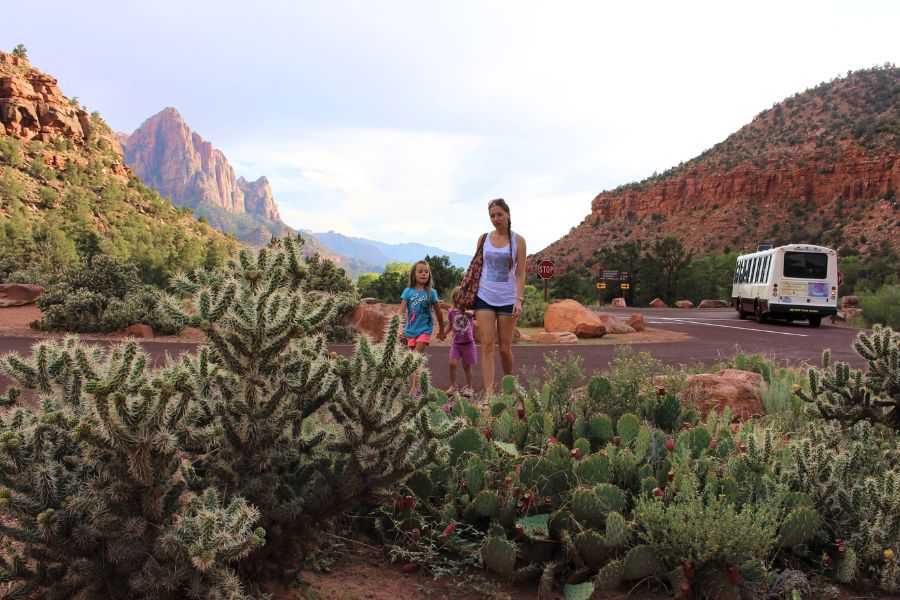
This quiet stop offers a viewpoint with unique rock formations (known as the Patriarchs), and access to the Sand Bench Trail (which is honestly more popular with horseback riders than hikers), as well as a sandy spur toward the Emerald Pools on the next stop. It’s a much calmer stop compared to nearby trailhead-heavy locations.
Activities and trail access:
• Viewpoint
• Sand Bench Trail
• Emerald Pools via Sand Bench spur (to Stop #5)
5. Zion Lodge
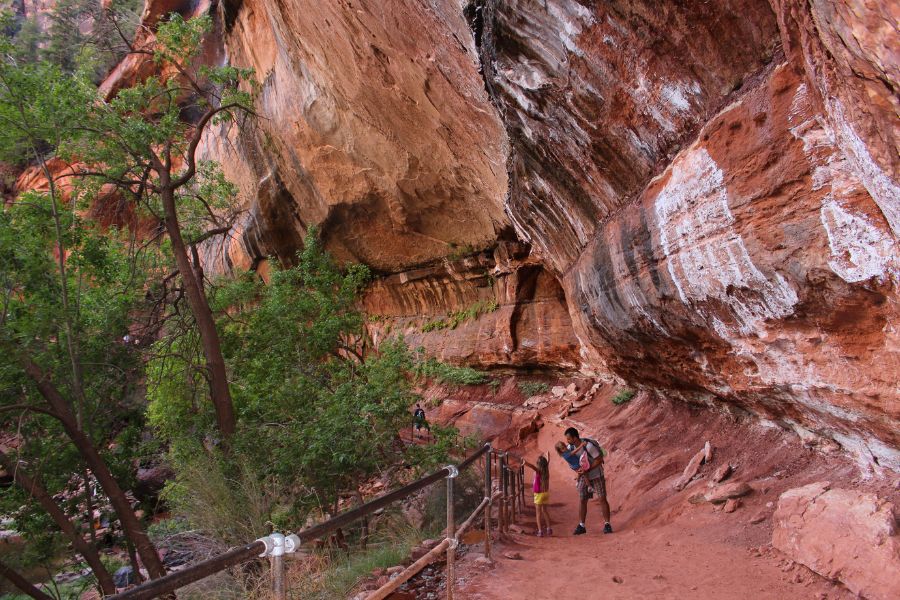
This is one of the busiest and most useful shuttle stops in Zion National Park. The Zion Lodge area acts as a major hub for food, restrooms, relaxation on shaded lawns, and several popular trails, including the Emerald Pools trail system and the easy Grotto Trail to the next shuttle stop.
This stop is one of the best places in Zion to slow down for a bit. Families with younger kids, tired hikers, and anyone needing a break from the heat tend to naturally migrate here. And apparently the deer know it too. We saw many every time we got off the shuttle here.
The Zion Lodge features two dining options (which are also the ONLY in-park dining options) — Red Rock Grill (open year-round), and the Castle Dome Cafe (open seasonally; spring through fall). We tried the restaurant and were positively surprised with the quality of food we received.
Just know that midday crowds can get intense around this area, especially during spring break, summer, and fall weekends. If you’re hoping to grab lunch, refill water bottles, or find a quiet patch of grass, earlier is definitely better.

Activities and trail access:
• Zion Lodge
• Food & picnic
• Emerald Pools
• Grotto Trail (to Stop #6)
• Sand Bench Trail connection (to Stop #4)
6. The Grotto
This is one of the most critical shuttle stops in Zion for hikers.
If you’re hiking Angels Landing, starting the West Rim Trail, or connecting toward Emerald Pools via the Kayenta Trail, this is where you’ll get off. It’s one of the busiest shuttle stops in Zion, especially by mid-morning when hikers start piling in for the park’s most famous trails. Expect shuttle lines, and a constant flow of hikers moving through the area.
The Grotto itself is shaded and scenic, with nice picnic areas and easy access to the Virgin River nearby. Even if you aren’t tackling one of the major hikes, it’s a fantastic spot to hop off the shuttle and take a relaxing break in the shade.
Activities and trail access:
• Angels Landing
• West Rim Trail
• Kayenta Trail
• Grotto Trail (to Stop #5)
• Picnic area

7. Weeping Rock
This stop serves as the access point for several iconic Zion hikes and viewpoints, including Weeping Rock, Hidden Canyon, Observation Point, and the East Rim Trail system. Even though this stop looks fairly small and unassuming, this area has historically been one of the park’s major hiking gateways.
The Weeping Rock Trail itself is one of the easiest quick stops in Zion and well worth doing if it’s open during your visit (it’s actually one of our favorite hikes in the park!). As of early 2026, the Weeping Rock Trail is OPEN again after a long closure from rockfall damage.
CLOSURE ALERT ⚠️
As of early 2026, Hidden Canyon and sections of the East Rim Trail toward Observation Point remain closed due to ongoing rockfall damage. (Observation Point can still be reached via the East Mesa Trail outside the main canyon.)
Activities and trail access in 2026:
• Weeping Rock
• Sections of the East Rim Trail

8. Big Bend
This stop isn’t the starting point for any hikes but provides stunning views of the Virgin River and towering Zion Canyon cliffs, including the Great White Throne, Angels Landing, and Cable Mountain. It’s a prime spot for viewing peregrine falcons and California condors, and a popular stop for nature photographers. There is access to the river and informal paths alongside it to the previous and next shuttle stops.
This is one of those stops people often skip, but honestly, the canyon walls here are incredible, especially in softer morning or late afternoon light.
Down-canyon stop only: Shuttles typically stop at the Big Bend Stop only when traveling back toward the Visitor Center.
Activities and trail access:
• Wildlife viewing
• Photography
9. Temple of Sinawava
This is the final stop on the Zion Canyon shuttle route and one of the busiest areas in the park, and for good reason. The Temple of Sinawava serves as the gateway to both the Riverside Walk and The Narrows, which are some of the most famous hikes in the entire national park system.
Even visitors who aren’t planning to hike The Narrows often get off here just to experience the Riverside Walk, which is easy, paved, and incredibly scenic.
Expect heavy crowds throughout much of the day, especially in warmer months. Early mornings and late afternoons are noticeably calmer and far more enjoyable if your schedule allows flexibility. If not, you can enjoy the riverside stroll at any time of the day since there is plenty of shade and cool air from the river throughout.
Activities and trail access:
• Riverside Walk
• The Narrows

Springdale Shuttle Line
While the Zion Canyon Line helps keep the Zion Canyon Scenic Drive free from traffic jams, the Springdale Line provides shuttle service between the town of Springdale and the park itself.
Springdale is directly adjacent to the park’s south entrance, and many visitors park here when the parking lot at the Visitor Center reaches capacity. If you’re staying here, it’s a convenient option to access the park without driving.
The Springdale Shuttle operates along a 3-mile stretch of Zion Park Boulevard (Utah State Route 9) with nine designated stops. (Stop names change over time, as they’re tied to nearby establishments.)
Currently, the first stop on the far end of the route is Hotel de Novo, and the final stop is the Zion Canyon Pedestrian Entrance (Zion Canyon Village) where you can easily transfer to the Zion Canyon Shuttle.

Where to park for the Zion shuttle
Parking in Zion National Park is limited, and spaces often fill early in the day. The most convenient place to start your shuttle trip is of course at the Zion Canyon Visitor Center parking lot, but even if that lot fills up you still have some alternatives nearby.
Parking inside Zion National Park
- Zion Canyon Visitor Center: This is the primary lot for park visitors and shuttle riders. It’s a large lot but fills up quickly nonetheless, especially on weekends and in summer.
- Other in-park lots: There is limited parking near the Zion Human History Museum, Zion Nature Center, and Canyon Junction, but these also tend to fill early. These are also all down-canyon stops only, so even if you find a spot here, you’ll have to take the shuttle down to the Visitor Center first and start there anyway.
On our visits, the Visitor Center lot was always full surprisingly early, even around 8 AM during peak months. Once that happens, traffic around the entrance can become frustrating fast. If your schedule is flexible, try to arrive as early as possible.

Parking in Springdale
When parking inside the park is full, visitor have no choice but to head to Springdale which borders the park at the south entrance. And honestly, parking in Springdale and using the town shuttle is often less stressful than circling the Visitor Center lot hoping somebody leaves.
The Springdale line drops riders off at the Zion Canyon pedestrian entrance right near the Visitor Center and the first park shuttle stop.
Key points about Springdale parking:
- Paid parking: Springdale has on-street and off-street parking that requires payment. There are multiple zones (Zone A, Zone B, Zone C; with Zone A being the closest to the park entrance) and public lots, including the Bit and Spur Lot near Zion Park Boulevard.
- Free parking in town is rare and typically fills early.
- RV/Oversized parking: Larger vehicles cannot use standard on-street spaces and must park in designated spots (Lion Boulevard section).
Full details on Springdale parking are available on the town’s official site, including the parking zone map and rates.

Tips to make parking easier
- Plan to arrive early (before 8:00 AM in peak months) to increase your chances of snagging a parking spot at the Visitor Center.
- Don’t wait for spots to open in an already full lot — finding a spot in Springdale and riding the shuttle is usually faster.
- If you’re staying in Springdale, park near your lodging and use the town shuttle. It’s usually the most convenient way to get into the park.
Know before you go
- Don’t wait for the last shuttle. Missing it can mean a very long walk back down the canyon.
- Bring water and sun protection. Shade is limited at many shuttle stops, but water bottle refill stations are available throughout the park.
- Food is not allowed on the shuttle. Only water bottles are permitted.
- Allow passengers to exit before boarding and keep gear compact during busy periods.
More planning tips:
- 9 Family-Friendly Hikes in Zion National Park (Safe & Easy Trails)
- One-day Zion itinerary
- What to do in Zion if you don’t hike
- Complete Emerald Pools trail guide
FAQs
Yes. Both the Zion Canyon Line and the Springdale (Town) Line are completely free to use, but a National Park fee applies to enter the park.
No. The Zion shuttle does not require tickets, reservations, or advance booking. You simply show up at a shuttle stop and board when a bus arrives.
Riding the Zion Canyon shuttle end to end — from the Visitor Center to its last stop at the Temple of Sinawava — takes about 45 minutes one way. Most visitors only ride short segments between stops rather than the full route.
Yes. You can get on and off the shuttle as often as you like throughout the day.
If a shuttle arrives full, you’ll need to wait for the next one. During peak hours, buses run frequently — usually every 5–10 minutes in the canyon — so the wait is typically short, though lines can form during busy periods.
Yes. Large backpacks and hiking poles are allowed on the shuttle as long as you can carry them safely and keep aisles clear. Trekking poles do not need to be collapsed, but be mindful of other passengers when boarding and exiting.
Food is not allowed on the shuttle. Only water bottles are permitted, and drinks should be securely closed while riding.
If you miss the last shuttle of the day, you may be required to walk back down the canyon, which can be up to eight miles, depending on where you are. Do not rely on catching the final shuttle — plan to head back earlier, especially after long hikes.
Crowds are heaviest mid-morning through early afternoon, especially between 9:00 AM and 3:00 PM. Early mornings and the later hours are typically less crowded and more relaxed.
To secure parking at the Zion Canyon Visitor Center, plan to arrive before 8:00 AM, especially during peak season. Once the lot fills, parking is only available in Springdale, with access via the Springdale Shuttle.
Yes. Children must have their own seat or be held securely on an adult’s lap. Strollers are allowed but must be folded before boarding.
Severe weather, flooding, or unsafe conditions can temporarily suspend shuttle service. If this happens, park access may be limited or closed entirely. Always check the National Park Service website for current conditions before heading into the canyon.
Restrooms are available at the Zion Canyon Visitor Center (Stop 1), Zion Human History Museum (Stop 2), Zion Lodge (Stop 5), The Grotto (Stop 6), Weeping Rock (Stop 7), and Temple of Sinawava (Stop 9). Flush toilets are available at Stops 1, 2, and 5. Stops 3, 4, and 8 do not have restroom facilities.
Water refill stations are currently available at the Zion Canyon Visitor Center (Stop 1), Zion Human History Museum (Stop 2), Zion Lodge (Stop 5), The Grotto (Stop 6), and Temple of Sinawava (Stop 9).


Hi, I’m Marketa!
Mom of two, Malinois wrangler, and the voice behind this blog. I share places worth the detour across the U.S., from remote backroads to favorite Chicago-area finds. Always chasing good views, great memories, and dog-friendly stops. More about us →


