
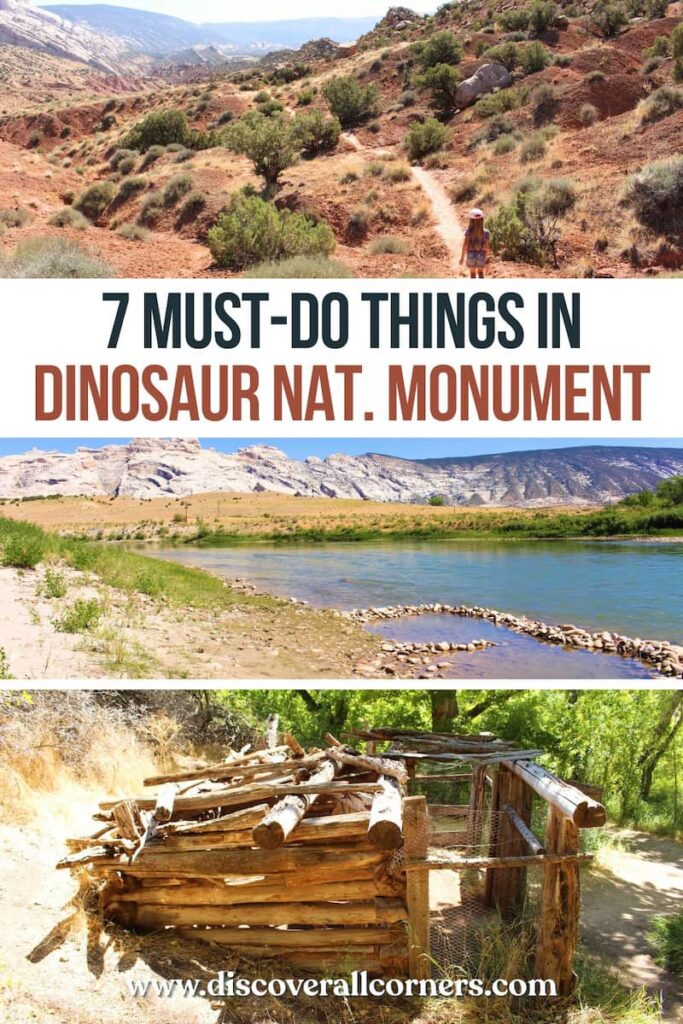
The #1 reason to visit Dinosaur National Monument is exactly what the name promises — dinosaurs — but that’s just the beginning! We stopped here for the real dinosaur fossils on our U.S. Southwest road trip… and ended up discovering a whole lot more that completely surprised us.
In this guide, I’ll share the best things to do on the Utah side of Dinosaur National Monument along with tips to help you make the most of your visit.
Why the Utah side? Dinosaur National Monument straddles the northern border of Utah and Colorado, with two main entrances and two visitor centers — the Quarry Visitor Center in Utah and the Canyon Visitor Center in Colorado. The two areas aren’t connected by roads within the monument, and if you want to see the famous dinosaur fossils, the Utah section is where you need to be.
In this guide:
- 7 Must-do things in Dinosaur National Monument
- Map of Dinosaur National Monument
- Best time to visit
- Know before you go
Short on time? Check out my one-day guide to Dinosaur National Monument.
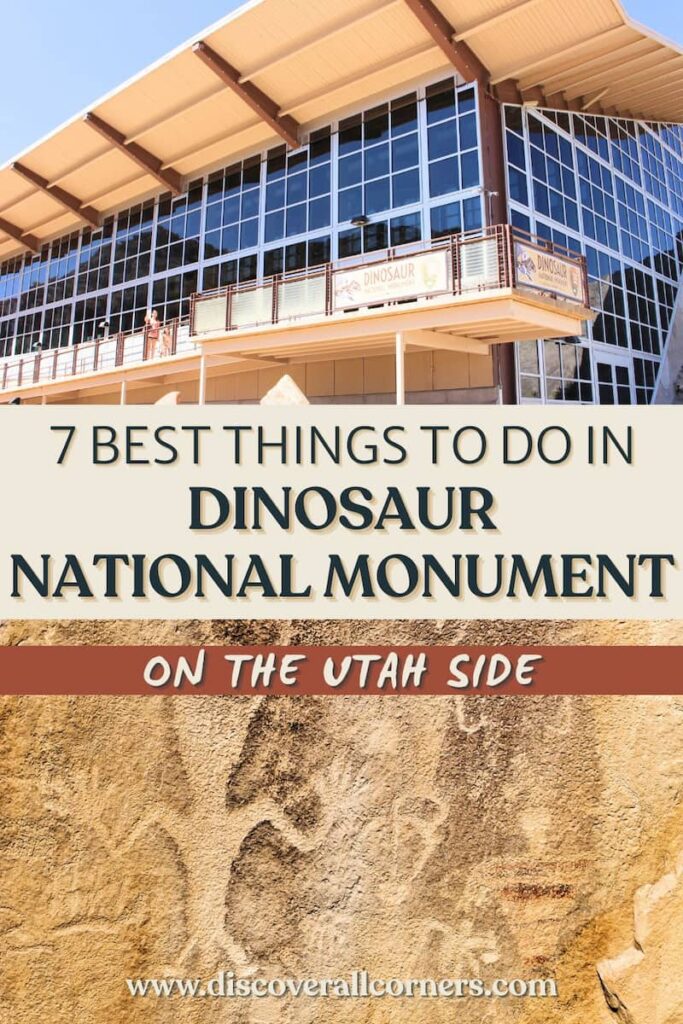
What to see and do in Dinosaur National Monument (Utah side)
Tip:
Later in this guide, you’ll find a custom map I created with all the stops marked — perfect for visualizing your route before your trip!
1. Quarry Exhibit Hall
The Quarry Exhibit Hall — the world-famous Carnegie Dinosaur Quarry — is the real star of the Utah side of the monument, the “main attraction” in every sense.
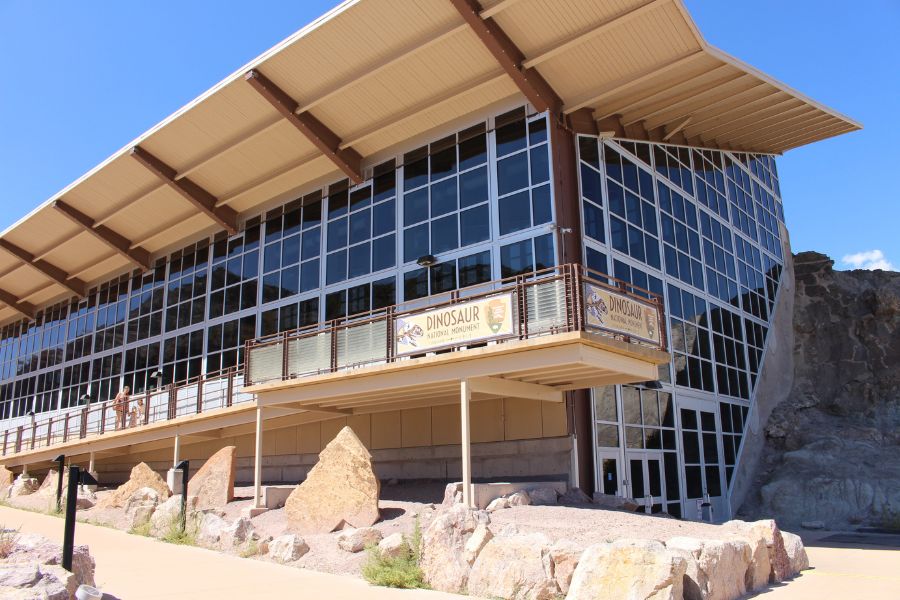
Here, a massive cliff face holds over 1,500 fossils dating back 150 million years, left exactly where they were discovered in the early 1900s by paleontologist Earl Douglas. The showstopper? A Camarasaurus skull you won’t forget.
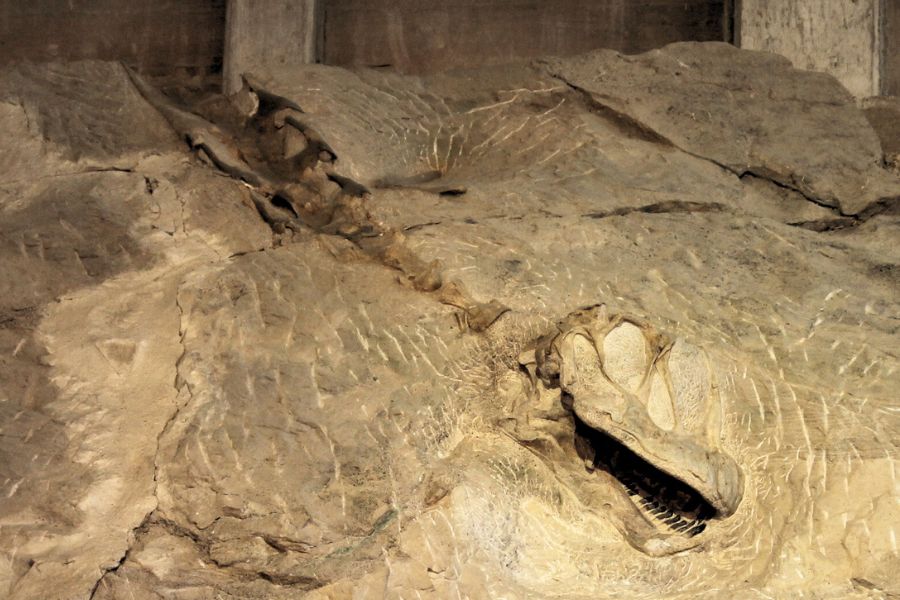
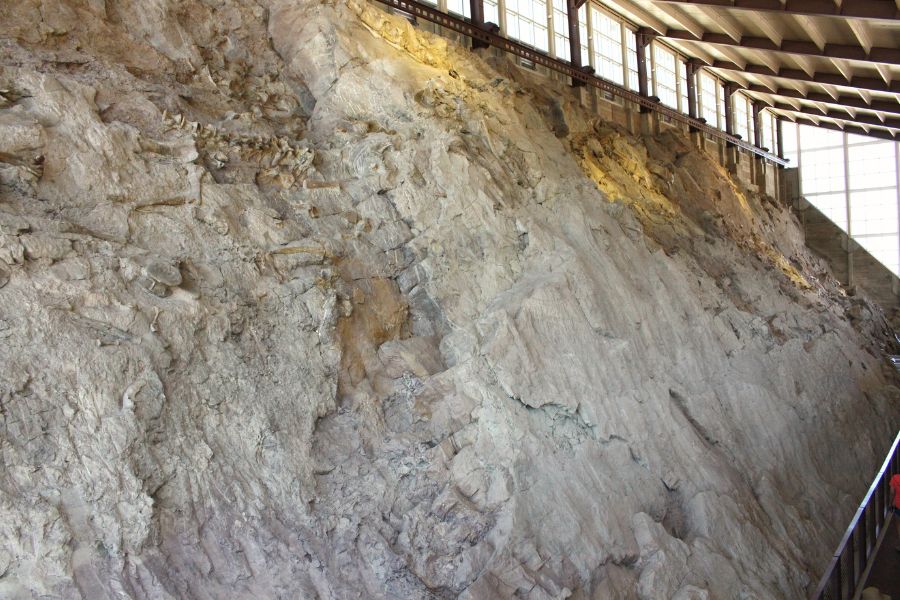
Park rangers are on hand to answer questions, and kids love hunting for specific bones on the Junior Ranger fossil map. On the lower level, you can even touch real dinosaur bones, a surreal, hands-on connection to the Jurassic past.
Pro tip:
If you’re planning a longer national park road trip with kids, having a few solid travel strategies beforehand makes a HUGE difference on long driving days.
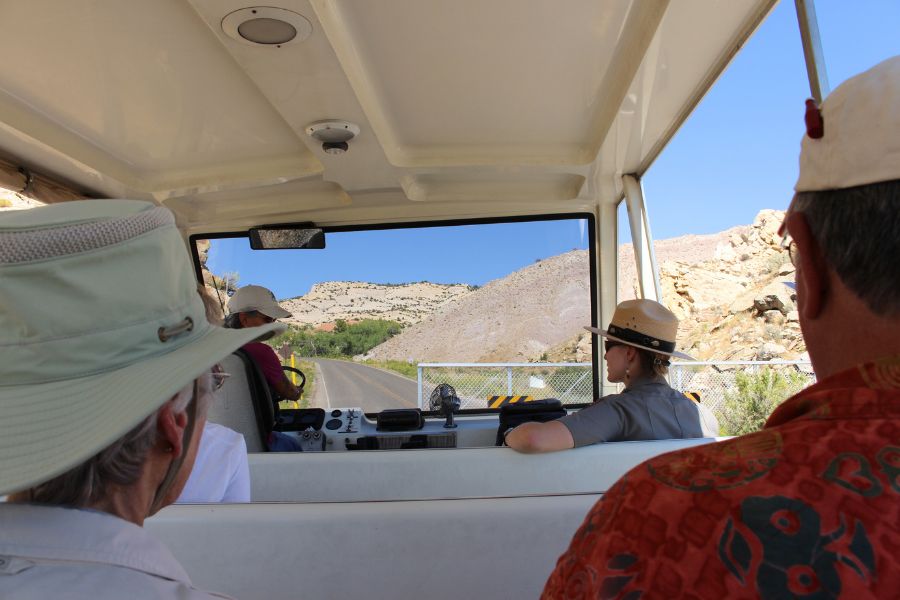
During the summer months, a free shuttle takes you from the Quarry Visitor Center to the Exhibit Hall (parking is limited at the top). The short shuttle ride is an experience in itself; for a moment, you’ll almost feel like you’ve stepped into Jurassic Park! In the off-season, you can drive right up.
2. Tour of the Tilted Rocks
Want to see a lot without a lot of walking? The Tour of the Tilted Rocks is the next best thing to do in Dinosaur National Monument for you! And no worries of having to actually look for it, this is literally the main road in the monument (Cub Creek Road).
This 10-mile (one-way) scenic drive starts near the Visitor Center and takes about an hour to complete (out and back). The road winds through layers of colorful rock formations twisted and folded into dramatic shapes over millions of years.
There are 15 marked stops along the way — highlights include amazing petroglyphs and a historic cabin with a cool story (more on those next). You can grab an inexpensive guidebook at the Visitor Center for details on each point of interest.
The road is paved except for the last 2 miles, which are unpaved but generally passable for most vehicles in good weather. Winter access can be tricky or impossible due to limited maintenance of the dirt road (more on weather later).

3. Fremont Petroglyphs
Hidden in plain sight along the Tour of the Tilted Rocks (the monument’s scenic drive), the Fremont petroglyphs are one of Dinosaur National Monument’s most fascinating stops. These ancient carvings, made by the Fremont people over 1,000 years ago, feature human-like figures, animals, and mysterious shapes whose meanings are still up for debate.
There are two rock art sites in this corner of the monument:
- Swelter Shelter – Just about a mile east of the Visitor Center (and the very first stop on the scenic drive), this small panel has a few cool designs and is an easy walk from the road (about 200 feet, maybe a minute or two). Perfect for a quick stop. It features mostly petroglyphs, with a few pictographs mixed in.
- Cub Creek Petroglyphs – Located about 8 miles further east on the scenic drive, this site is a must-see for petroglyph lovers (honestly one of the best we’ve seen in the Southwest!). Several panels (some requiring light scrambling) showcase incredibly well-preserved Fremont carvings, including rare designs even for Fremont sites. The main panel is just steps from the road and at perfect eye-level. No glass, no ropes, just you and stories carved over 1,000 years ago. (Another in our top few favorites is this hidden gem — also in Utah!)


Both sites offer a rare chance to connect with ancient history up close, where you can truly feel the stories etched in stone. For the best views, plan your visit in the morning or late afternoon when the sunlight brings out the carvings’ intricate details.
4. Hiking
Dinosaur National Monument’s Utah side offers a variety of easy-to-moderate hikes, perfect for most visitors. Even little kids and non-hikers can enjoy some of the shorter, gentler trails. Just keep in mind this is desert terrain, so plan accordingly — bring sturdy shoes, a hat, sunscreen, and plenty of water.
What’s cool about hiking here? The trails are quiet. Unlike the crowded national parks nearby, you’ll likely have most paths to yourself, especially outside the busier summer months.
Near the Visitor Center:
- Fossil Discovery Trail – A relatively short, educational loop right near the Visitor Center, featuring fossil sites. It’s easy enough for non-hikers (and you don’t even have to commit to the full loop to see the best of the trail), but watch for slippery spots and avoid the hottest midday hours in summer.
Within 2-5 miles:
- Sound of Silence – A scenic 3+ mile loop with spectacular views. A must-do hike in Dinosaur National Monument for those who love to hit the trails!
- Desert Voices – A 2-mile nature hike with great scenery. Can be combined with the Sound of Silence Trail. More popular, so expect a few more hikers.
- River Trail – A 2-mile connector between campgrounds, with some drop-offs and open views. This trail is pet-friendly.
About 10 miles out:
- Box Canyon Trail – A very short stroll along a lush path near the historic Josie Morris Cabin (next up on this list). Perfect for a quick nature break and has decent shade.
- Hog Canyon Trail – An easy, peaceful 1.5-mile round-trip hike starting near the same cabin.

Want more trail details?
Check out my full guide to the best hikes in Dinosaur National Monument for every skill level.
5. Josie Morris Cabin
The Josie Morris Cabin marks the end of the Tour of the Tilted Rocks. It’s the last stop on the scenic road, and the road ends here. This historic cabin is part of a homestead that once belonged to Josie Bassett Morris, a true Old West character with a story as fascinating as the rugged landscape around here.
The National Park Service keeps it pretty basic, but I got hooked digging deeper into Josie’s life, and you should too, because knowing her story can add so much meaning to your visit.

You can step inside the cabin and wander the peaceful, lush grounds Josie chose as her home. Honestly, it’s one of the best picnic spots in Dinosaur National Monument.
Part history, part Wild West legend — Josie Morris lived here for over 50 years, ranching, gardening, and living completely off the land. Her little homestead still stands, shaded by cottonwood trees and surrounded by the kind of peace you just can’t bottle. It’s an easy walk from the parking area, but the stories linger long after you leave.
You might also like: 8 Best Things to Do in Capitol Reef National Park
6. Stargazing
Utah is famous for its dark skies, but did you know Dinosaur National Monument is a hidden stargazing gem? We’ve never seen the Milky Way shine brighter or clearer than right here. The vast, open desert sky feels like a planetarium come to life.
Camping is hands-down the best way to soak in this celestial spectacle, but if you’re just passing through, the monument is open 24/7, so swing by anytime and just look up.
Not camping? No problem!
If you prefer a comfy hotel room, the nearby town of Vernal, Utah (about 13 miles away), has plenty of hotels and rentals to choose from, making it easy to enjoy the stars without roughing it.
7. Green River Campground
On the Utah side of Dinosaur National Monument, there are three established campgrounds (details here). The most accessible one open to all — not just groups — is Green River Campground, about 4 miles from the Quarry Visitor Center along Cub Creek Road (aka the Tour of the Tilted Rocks scenic drive).
What makes the Green River Campground stand out?
- Desert camping right by the river (some sites even have private river access).
- Stunning night skies perfect for stargazing.
- Many campsites offer decent shade.
- Several spots are spacious and nicely secluded.
- The kind of place where time feels like it stands still.
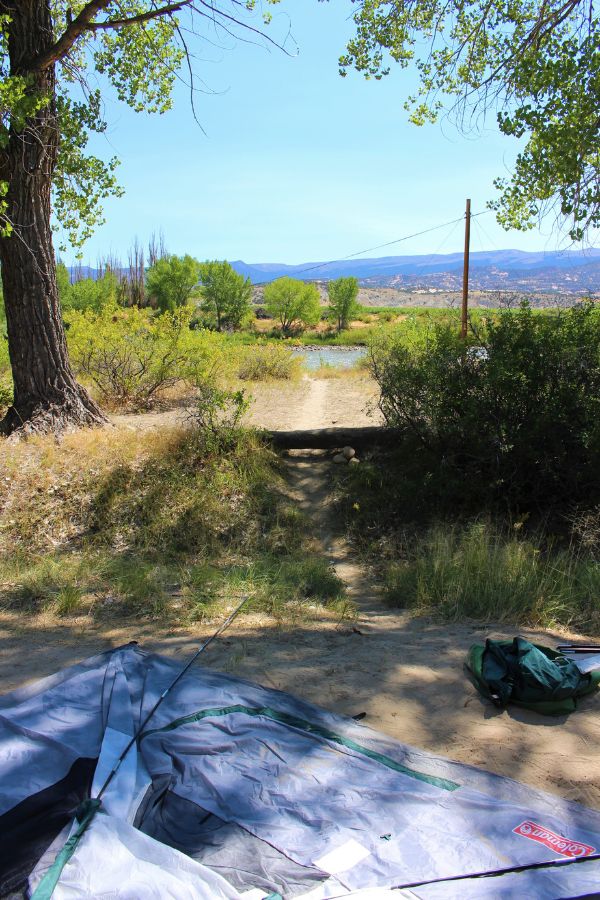
Keep in mind, this campground is pretty basic (no showers or hookups), but there are flushing toilets and running water to cover the essentials.
Bonus: Unlike many popular Utah park campgrounds, Green River usually fills up more slowly, so you’ve got a better shot at snagging a spot.
A word of caution: chipmunks here are adorable… until they treat your campsite like an all-you-can-eat buffet. They’re fearless and will chew through just about anything chew-worthy (pretty much everything you own), so don’t leave your stuff unattended.
And the highlight of our stay? Watching a snake catch and eat a mouse right before our eyes. Talk about nature’s drama unfolding live!
Your all-in-one Dinosaur National Monument map
I created this interactive map of Dinosaur National Monument to help you find the best sights, trails, and historic spots. It’s the perfect way to visualize your route — see exactly where everything is in relation to each other. Click each pin for details and zoom in to plan your own adventure.
Best time to visit Dinosaur National Monument, Utah
Below is a handy graphic showing the average year-round weather for the Utah side of the monument (including temperatures, rainfall, and snowfall). Keep in mind that the monument sits at around 5,000 feet elevation, which can mean cooler temperatures than you might expect.
Peak season runs from May through September, with warmer temps and the most visitors. Early fall through early spring tends to be quieter and cooler.

Know before you go
- To see dinosaur fossils, head to the Utah section of Dinosaur National Monument. (The Colorado side is spectacular but has no fossils.)
- Access the Utah section from Highway 40, about 6 miles north of Jensen, UT.
- In peak season, a free shuttle bus runs every 15 minutes from 8 a.m. to 5 p.m. between Quarry Visitor Center and Quarry Exhibit Hall due to limited parking at the quarry. Outside of peak season, you can drive up yourself.
- Entrance fee: $25 for a 7-day auto pass (unless you have an America the Beautiful annual pass). Check the monument’s official website for the latest info on hours, fees, and closures.
- There are no services inside the monument. Closest towns with amenities are Jensen (6 miles) and Vernal (13 miles).
- Visiting with a dog? Pets are welcome in developed areas, one trail, and a short path to a petroglyph site. For the full breakdown of where dogs are allowed (and whether it’s worth your time), check out my dog-friendly guide to Dinosaur National Monument.

Hi, I’m Marketa!
Mom of two, Malinois wrangler, and the voice behind this blog. I share places worth the detour across the U.S., from remote backroads to favorite Chicago-area finds. Always chasing good views, great memories, and dog-friendly stops. More about us →


