
If you’re planning a trip to Capitol Reef National Park, chances are you’ve heard about Fruita Campground — the park’s only developed campground and the one spot where history, scenery, and convenience collide in the best possible way.
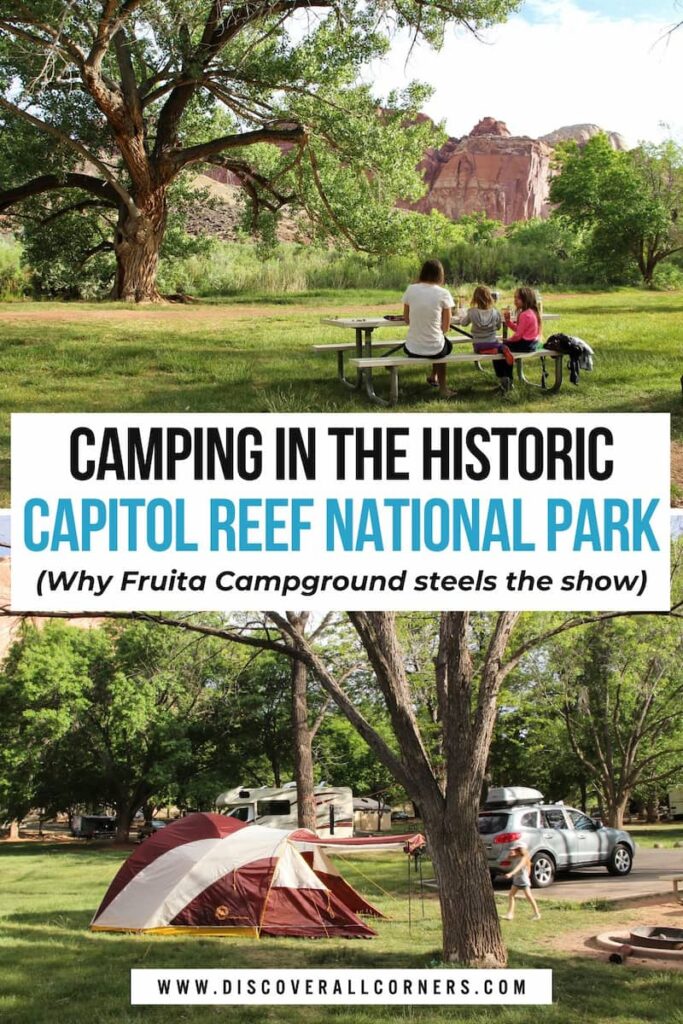
Nestled in the heart of the Fruita Historic District, this campground sits in a lush green valley surrounded by red rock cliffs, shady cottonwood trees, and even working fruit orchards. It’s the kind of place that feels like a hidden treasure tucked inside Utah’s red rock country.
I don’t usually dedicate a full post to national park campgrounds, but Fruita Campground turned out to be nothing like I expected. Based on the images I saw, I braced for crowds, cramped sites, and chaos. But what I found was a peaceful, surprisingly scenic base camp that ended up being one of the highlights of our Capitol Reef visit.
Why Fruita Campground is so popular
Set in a lush green valley bordered by the Fremont River, Fruita Campground has an unmistakably charming setting. It’s right in the middle of the Historic Fruita District, where Mormon pioneer homesteads, fruit orchards, and towering cliffs all come together in one scene.
You’re a little over a mile from the Visitor Center, a short walk from multiple trailheads, and surrounded by some of the park’s most photogenic views. It’s a rare national park campground where you can hike, watch wildlife, and even pick fresh fruit(!) — all without ever moving your car.

Fruita Campground basics
- Open year-round
- Fees: $25/night (stay limits apply)
- Reservations required March–October (check availability here and book early; this one fills fast! Here are a few alternatives to try if the campground is full for your dates.)
- Winter season (Nov–Feb): First-come, first-served.
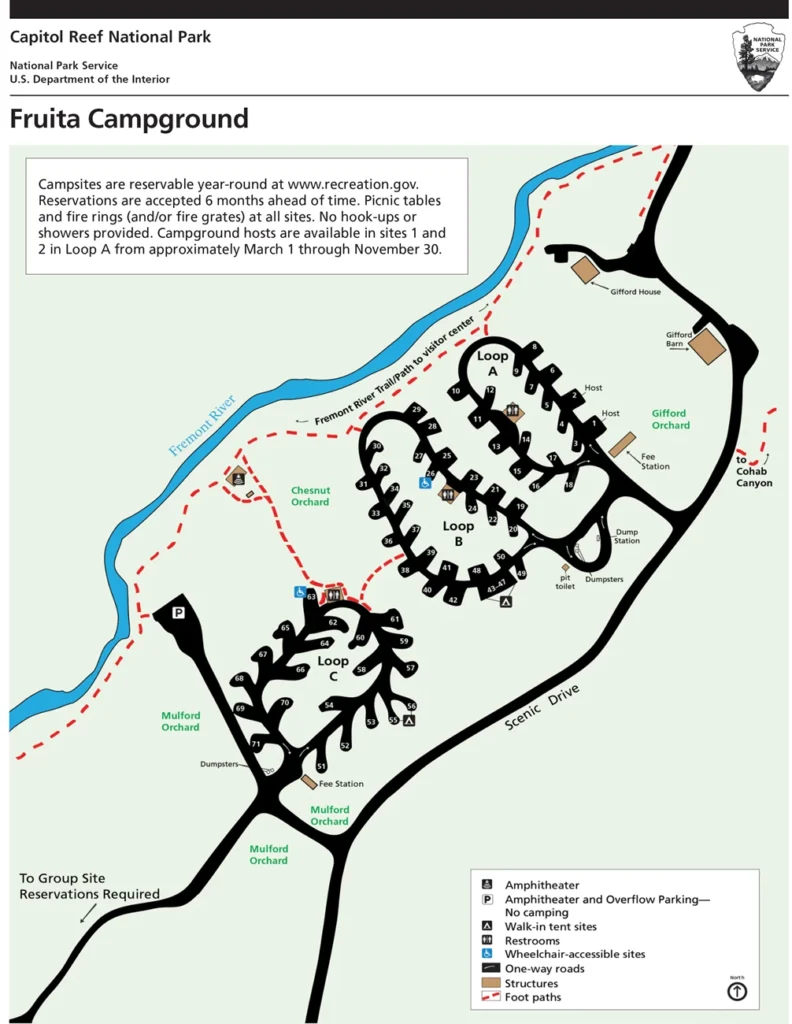
- 71 campsites across three loops (A, B, C)
- Loop C allows generators (limited hours)
- 3 accessible campsites with limited electrical hookups (medical devices only)
- RV-friendly (check the specs of individual sites here). No standard hookups, but there’s a dump station and potable water fill station near the entrance.
- Leashed pets are welcome (6 ft max leash; can’t be left unattended)
- Restrooms with flush toilets, picnic tables, potable water, and fire rings (except sites #7, #48, and #50, which have above-ground grills)
- No cell service (you’ll get your digital detox here)
💡 Pro tip: Loop B tends to have the most shade.
Traveling with pets? See a list of dog-friendly areas in Capitol Reef National Park.
What to expect during your stay
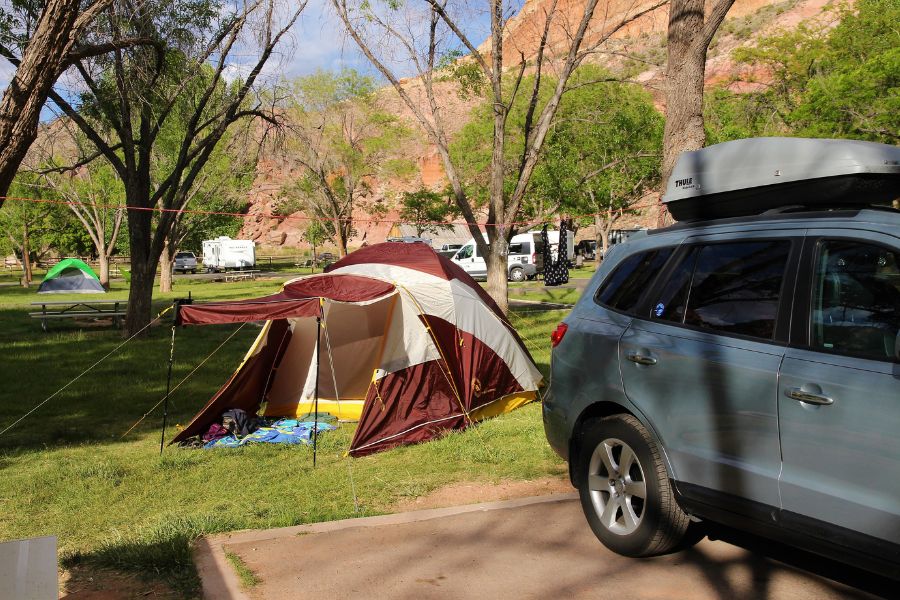
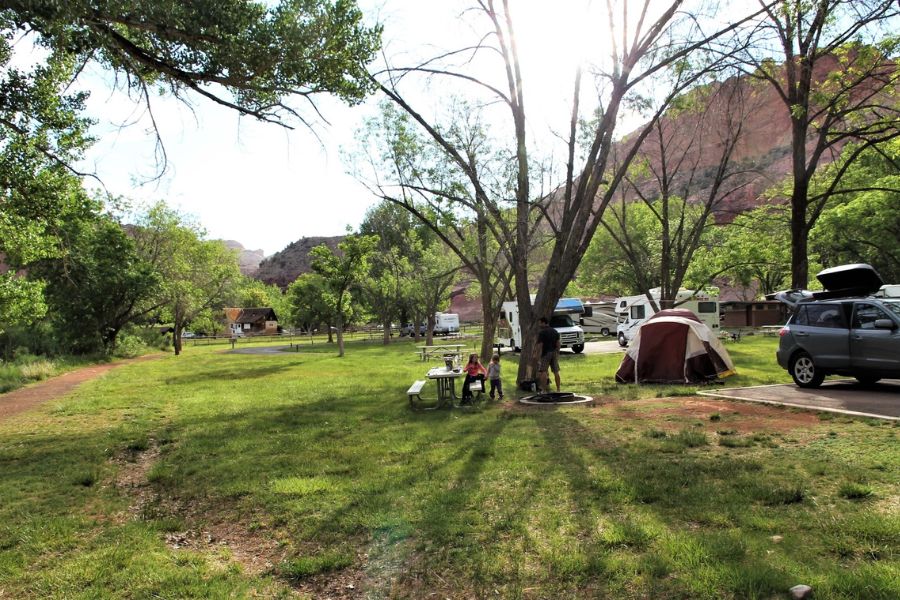
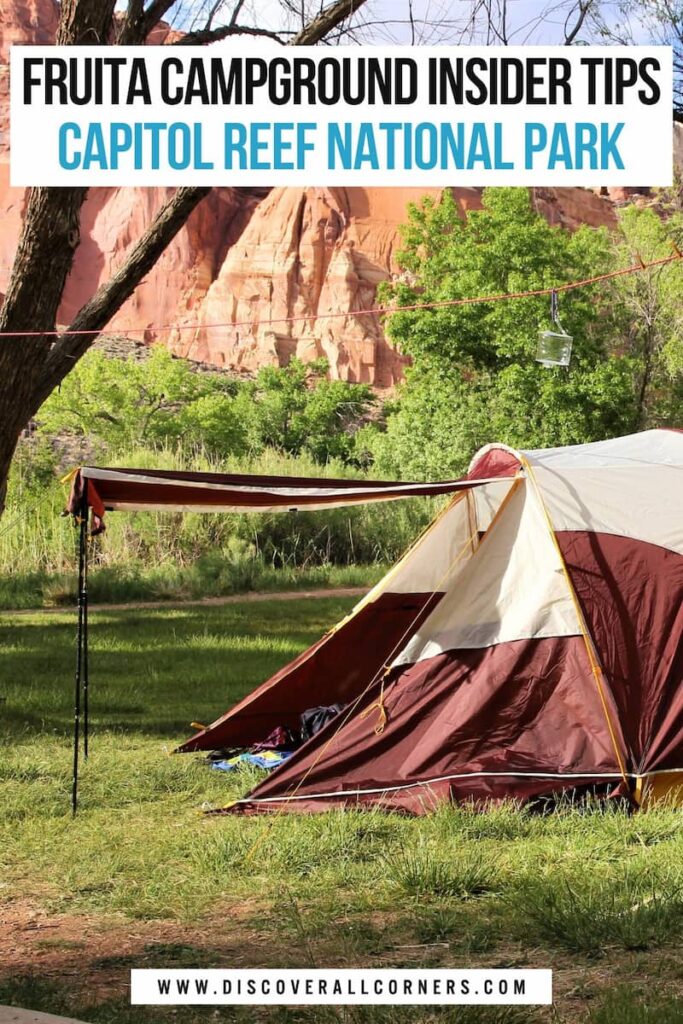
Fruita Campground sits on a wide-open grassy field, which keeps dust down but limits privacy. You’ll definitely see (and hear) your neighbors. But surprisingly, that openness adds to its charm (here goes something I never thought I’d say, ha!). Once you settle in, the sense of community, the sound of the Fremont River, and the glow of the cliffs at sunset more than make up for it. Shade trees scattered throughout the meadow also help break up the openness and keep things feeling inviting.
(We even bordered a river access point at our site AND the popular Fruita footpath/Fremont River Trail and STILL felt like we had our own piece of paradise here…)
Tip:
If the absence of privacy bothers you, go ahead and check out the campground in Google maps/street view for a better idea of where each available site puts you. All loops are covered!
Wildlife is everywhere. Mule deer wander right through the campsites, birds fill the campground with beautiful songs, and marmots peek out along the Fruita paths.
Nights are quiet and dark, with unbeatable stargazing thanks to Capitol Reef’s International Dark Sky Park designation.
Connectivity: There’s no reliable cell signal, but you might catch a flicker of service near the Visitor Center or Scenic Drive entrance. Bring a paper map for trail planning — rangers still hand them out for a reason.

Things to do within walking distance
Here comes the fun part… It’s not very often that you find a national park campground where you can do a whole lot within walking distance, but that’s not the case for the Fruita Campground. Here, you can fill an entire day (or even three) without having to rely on your car.
Everything listed below is within easy walking distance, and all of it showcases the unique blend of history, geology, and peaceful scenery that makes this area so special.
(See a map at the end of the post for exact locations and proximity to the campground).
1. Historic Fruita
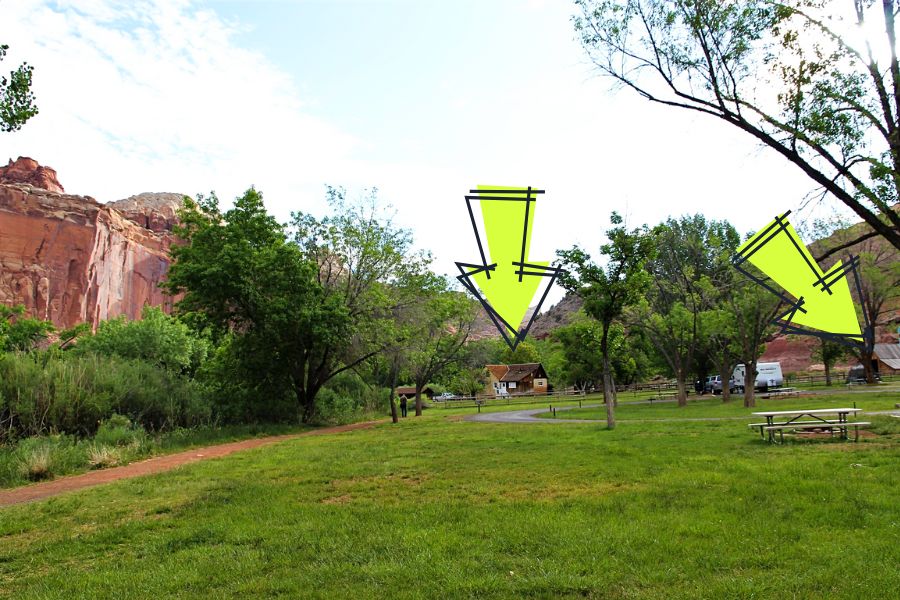
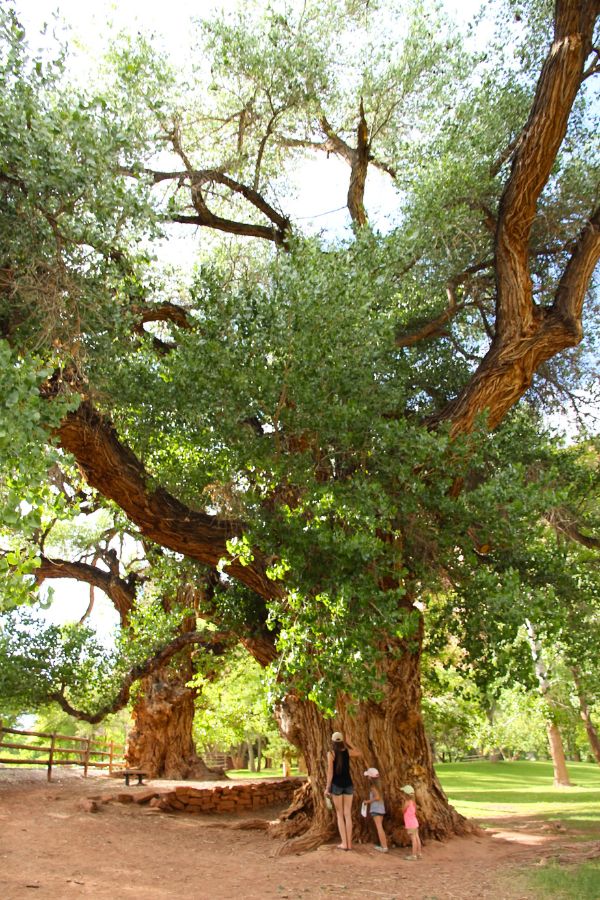
Fruita Campground sits right inside the Fruita Historic District, a thriving Mormon pioneer settlement from the late 1800s to mid-1900s. Several of the original buildings still stand, giving you a glimpse into what life was like in this remote Utah valley.
Walk north along the Fruita path (which runs along the river’s edge) past the campground Loop A and you’ll reach the historic Gifford House, Fruita Barn, and Blacksmith Shop — all within half a mile.
- Gifford House: Now a museum and gift shop, it sells delicious homemade pies, bread, jams, coffee, and ice cream. (Pies and other baked goods sell out early, so go in the morning!) The Fruita Barn is just steps away.
- Blacksmith Shop: The starting point for the Fremont Gorge Overlook Trail and home to interpretive displays; located near the park’s main picnic area.
- Fruita Mail Tree: The famous tree where settlers once picked up their mail still stands nearby.
This area also hosts geology talks and Fremont culture programs during the busier summer season.
2. Fruita Orchards
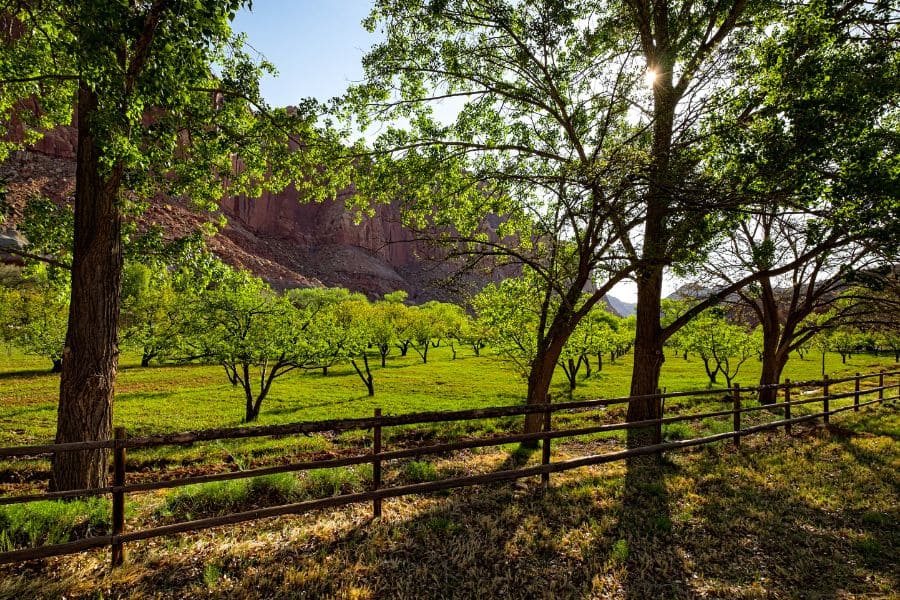
The orchards are one of Capitol Reef’s hidden treasures. Over 2,000 fruit trees — apple, peach, cherry, apricot, pear, and plum, plus several nut tree varieties — surround the campground.
These historic orchards are open to the public when the gates are unlocked, and you’re free to sample fruit right from the trees (as long as you eat it on-site). If you want to take some with you, a small self-pay fee applies. Harvest typically runs June through mid-October, depending on the variety (see the harvest season and orchard map here).
Fun fact:
Some of the trees are heirloom varieties planted by the original Fruita settlers, so you’re literally tasting living history (you can go over a detailed list here).
3. Hiking trails near Fruita Campground
You’ve got several great trails starting right near your campsite:
- Fruita Trail: A peaceful river path at the edge of the campground — perfect for morning walks.
- Fremont River Trail: Flat and shady at first, passing the historic Fruita orchards and pastures before climbing for a panoramic overlook (2 miles round trip; easy/moderate).
- Fremont Gorge Overlook Trail: Expansive canyon views and solitude. Starts near the Blacksmith Shop (4.5 miles round trip; moderate/strenuous).
- Cohab Canyon Trail: Just across the road from the campground entrance; a must-do(!) for colorful rock formations and Fruita overlook views (up to 3.4 miles round trip; moderate).
4. Ripple Rock Nature Center
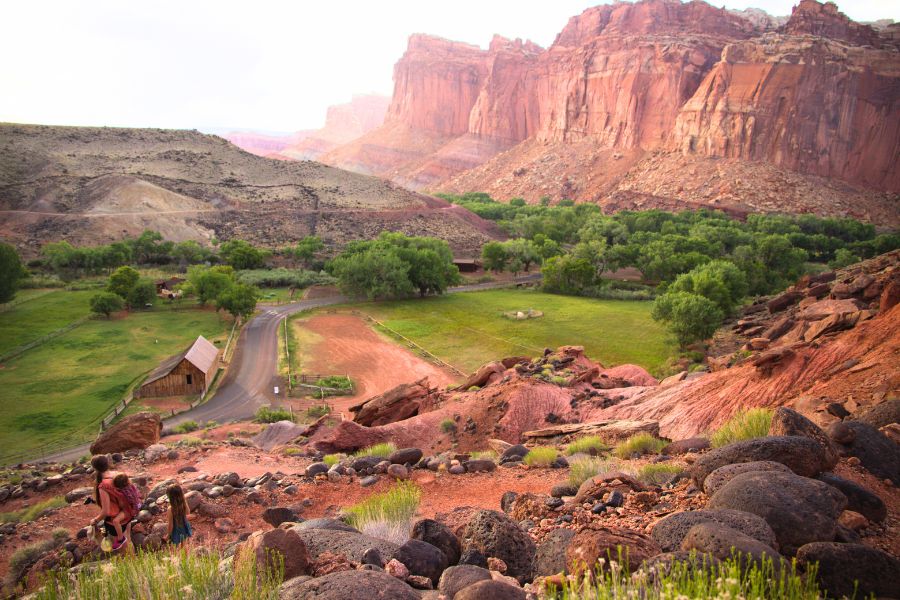
If you’re traveling with kids, this spot is gold. The Ripple Rock Nature Center features hands-on exhibits, old-fashioned pioneer games, and Junior Ranger activities. You’ll often spot marmots here, too.
It’s just a 10-minute walk (about half a mile) from the campground via the Fruita Trail.

5. Capitol Reef Visitor Center
About 1.2 miles northwest of the campground, the Capitol Reef Visitor Center is easy to reach on foot. The path follows the Fruita Trail past the Ripple Rock Nature Center and continues along the road.
Up to the Ripple Rock Nature Center and Blacksmith Shop, the trail is lush and green. After that, the landscape shifts — within minutes, you’re walking through open desert terrain. The remaining 0.9 miles to the Visitor Center are dry, exposed, and not particularly scenic, but it’s still a convenient way to reach the park’s Visitor Center if you want to get a few more steps in.
6. Cool off in the Fremont River
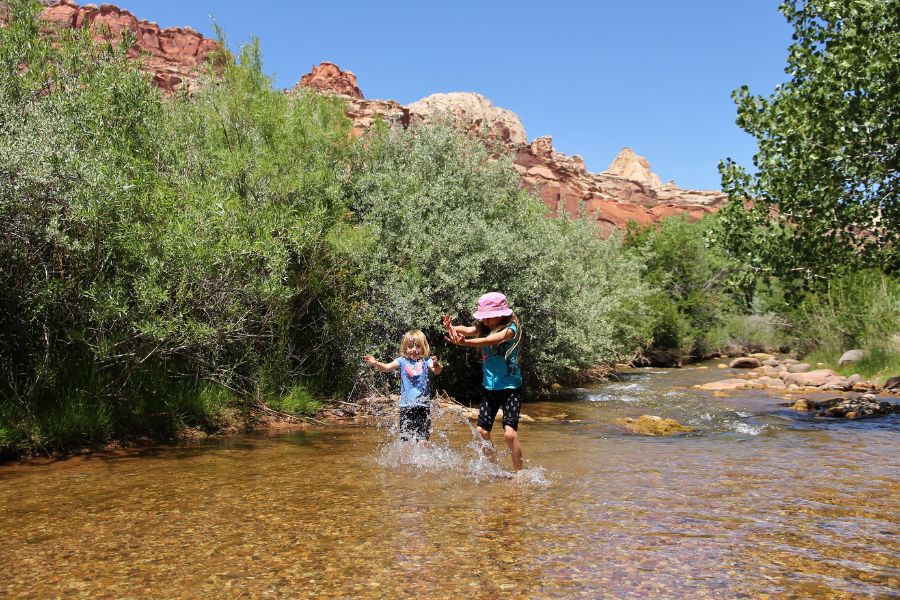
Between loops A/B, a large cottonwood tree marks one of the easiest river access points. The Fremont River flows shallow and calm here, perfect for cooling off on hot days or letting the kids splash. Just remember: water levels can rise quickly after rain.

7. Ranger programs
Capitol Reef offers daily interpretive programs from spring through fall, usually at the Gifford House lawn or Loop C amphitheater. They’re definitely worth it, with topics ranging from geology and Fremont culture talks to night sky programs. You can check the current schedule on the park’s website or at the Visitor Center when you arrive.
Know before you go
- Nearest supplies: Torrey, 11 miles west on Utah State Highway 24 (a small town with a few restaurants, gas station, and a cozy grocery store).
- Entrance fees: Capitol Reef National Park is free to enter, but driving the scenic road beyond the campground requires a $20 self-pay pass (valid for 7 days).
- Current conditions: Check the park website for more information and current alerts for visitors. Flash floods can occur in washes, canyons, and even on the paved Scenic Drive, especially during summer storms.
- Don’t miss: Discover what else you shouldn’t miss in Capitol Reef.
Fruita Campground might not offer hookups or privacy, but it’s easily one of the best spots to stay in the area. The setting is unmatched. If you want a peaceful base camp in the heart of red rock country with trails, history, and homemade pies just steps away, you’ll love the Fruita Campground.


Hi, I’m Marketa!
Mom of two, Malinois wrangler, and the voice behind this blog. I share places worth the detour across the U.S., from remote backroads to favorite Chicago-area finds. Always chasing good views, great memories, and dog-friendly stops. More about us →


