
Planning a trip to Capitol Reef National Park? You’re in for a treat. This is the park most people zip past on their way to Zion or Bryce Canyon, which is great news for you, because that means fewer people in your photos and just as many jaw-dropping views!
Tucked between the small towns of Torrey and Hanksville, this underrated southern Utah gem protects the Waterpocket Fold, a 100-mile wrinkle in the Earth’s crust that creates some of the most surprising scenery in the Southwest. Whether you’ve got just a few hours or a few days to explore, these eight must-do experiences will show you why Capitol Reef often ends up as a favorite for visitors who take the time to slow down.
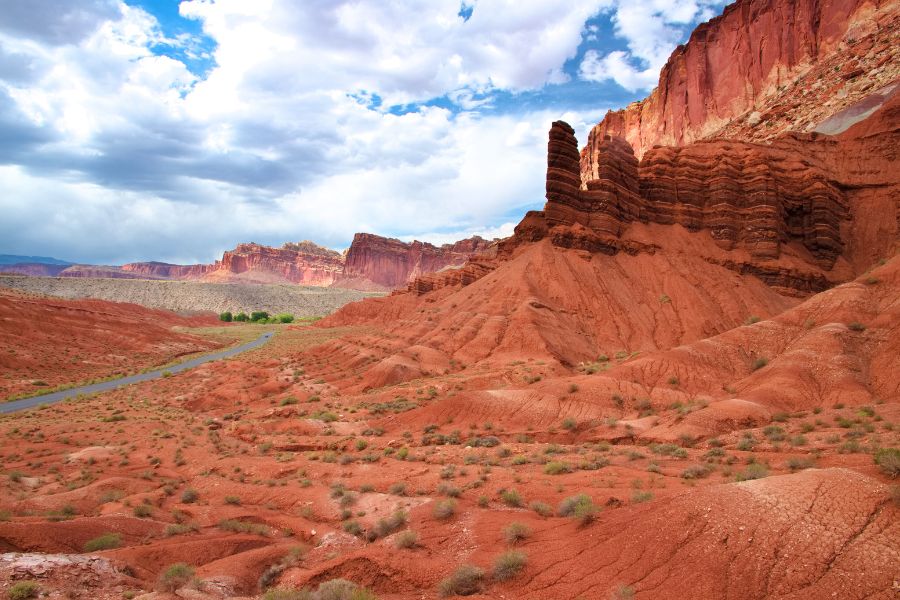
8 things not to miss in Capitol Reef National Park:
- Fruita Historic District
- Fruita Orchards
- Capitol Reef Petroglyphs
- Fruita Campground
- Pie at the Gifford House
- Capitol Gorge Road
- Pioneer Register
- Capitol Reef National Park hikes
Below is a handy map with all the spots included in this guide — trails, historic sites, picnic areas, parking, and more — so you can get a quick sense of distances and how everything connects.
1. Fruita Historic District
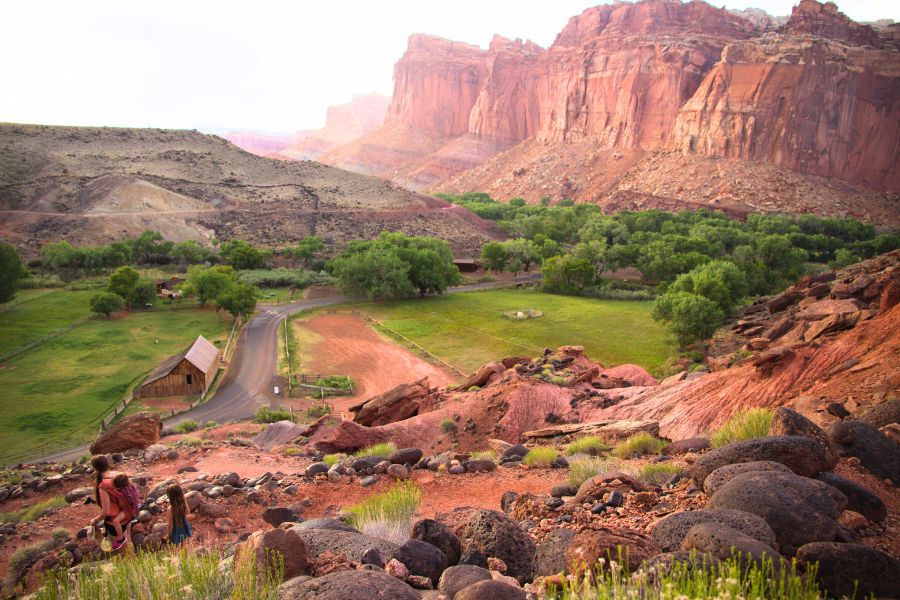
The Fruita Rural Historic District, listed on the National Register of Historic Places, preserves a former Mormon settlement tucked into the lush Fruita Valley. This little pocket of green along the Fremont River is easy to spot just past the Visitor Center.
Once called Junction, Fruita was a small community of fruit farmers at the meeting point of the Fremont River and Sulphur Creek. It thrived from the late 1800s into the 1950s, peaking in the 1920s. Many of their original buildings are still standing, including:
- Gifford Homestead (Gifford House & Fruita Barn): Located in central Fruita, about 1 mile south of the Capitol Reef N.P. Visitor Center along the Scenic Drive. Built in 1908, the Gifford House now serves as a museum and gift shop that sells various artisan items including homebaked goods (seasonal: March–November).
- Blacksmith Shop: Located just before the Gifford House.
- Fruita Schoolhouse: Less than a mile east of the Visitor Center along Highway 24, outside the central Fruita hub. Built in 1896 and used until 1941.
- Behunin Cabin: 5.2 miles east of the Schoolhouse along Highway 24. One of the earliest homes in the district, built in 1883.

Gifford House 
Fruita Schoolhouse

Behunin Cabin 
Blacksmith Shop
Fun fact:
According to the 1900 federal census, only one Fruita resident was known to be a polygamist, contrary to common assumptions about Mormon settlers.
Scattered across Fruita, you’ll also find various crumbling historic structures that hint at life in this small pioneer community. The area across the road from the Blacksmith Shop has a few just behind the Ripple Rock Nature Center (an extension of the Visitor Center) that are worth a look.
In the same area, next to Fruita’s main picnic spot, you’ll also find the famous Fruita Mail Tree, where pioneer residents once collected their mail.
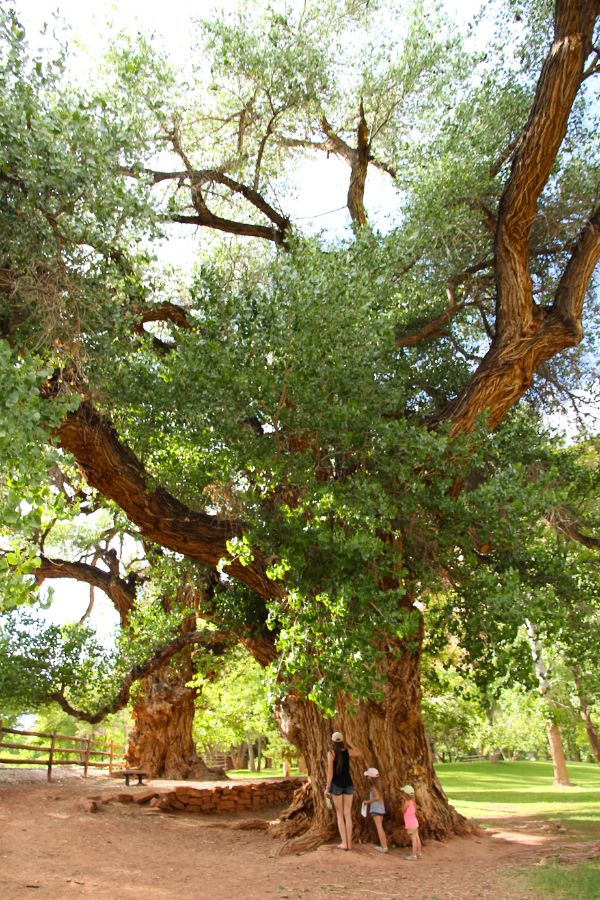
2. Fruita Orchards
One of the most iconic experiences in Capitol Reef National Park is visiting the Fruita Orchards scattered throughout Fruita. Many of these orchards were originally planted by early Mormon settlers, and today roughly 2,000 fruit trees fill the valley with apples, apricots, cherries, peaches, pears, and plums — many of them heirloom or unique (see a full list here) — along with a few nut tree varieties.
And the best part? You can sample it — for FREE!
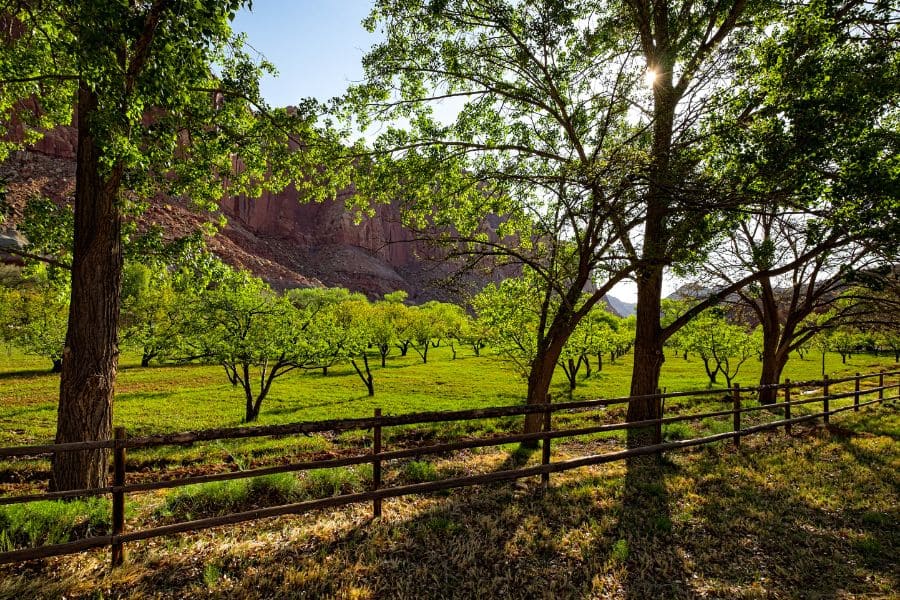
During harvest season, you can pick ripe fruit from marked orchards (ladders and hand-held fruit pickers are provided). You can eat as much as you’d like inside the orchards or take it to-go for a small fee (via honor system self-pay stations).
How cool is that?!
#freshisbest
While the fruit isn’t strictly organic, the National Park Service maintains the orchards with care, balancing tradition with practical upkeep. Still, organically grown or not, fresh fruit in the middle of stunning scenery is tough to beat!
Heritage highlight:
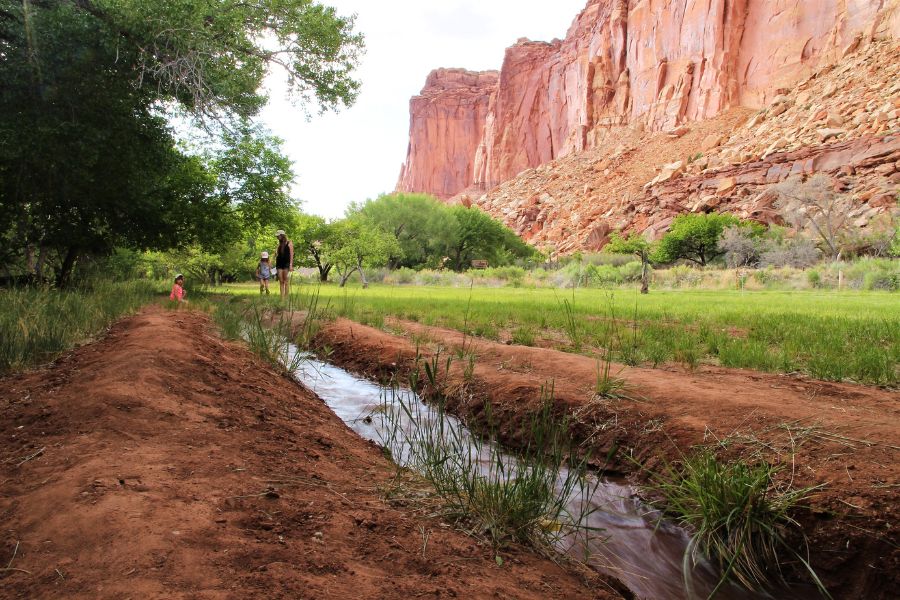
The orchards are watered using a heritage flood irrigation system that draws water from the Fremont River and Sulphur Creek, preserving the methods the pioneers used over a century ago.
You might also like: 7 Best Things to Do in Dinosaur National Monument, UT
3. Capitol Reef Petroglyphs
Long before any Mormon settlers arrived, the Fruita Valley was inhabited by the Fremont people, named after the nearby Fremont River Canyon where archaeologists first identified them as a distinct culture. They lived in the area from roughly 300–1300 A.D., leaving behind a rich legacy in the form of petroglyphs carved into the towering sandstone walls.
Capitol Reef Petroglyphs can be found along Highway 24 before you officially enter the park, about a mile east of the Capitol Reef Visitor Center. They’re a short walk from the parking lot and easily accessible via two wooden boardwalks.
The panel tends to draw crowds because of its easy access, and you can’t view the designs from up close (nothing beats the proximity of the magnificent petroglyph site in Dinosaur National Monument), but it’s a massive petroglyph panel worth a look. If you’re interested in ancient history, this stop is a Capitol Reef must-see.

Pair this visit with the nearby Fruita Schoolhouse (less than half a mile away) for a deeper sense of the area’s rich history. Together, these sites showcase both the ancient and pioneer influences that shaped Capitol Reef National Park.
4. Fruita Campground
Fruita Campground is the only developed campground in Capitol Reef National Park. It sits right along the scenic drive inside Fruita’s green pocket and makes an ideal base for exploring historic sites and trails (our favorite hike in the park starts just across the road from the campground entrance).
There are both positives and negatives to staying at the Fruita Campground, but to sum it up: WE HAD A TRULY UNIQUE EXPERIENCE HERE. While there are several great camping options in and around Capitol Reef National Park, Fruita has many charms you won’t find anywhere else (how do you feel about freshly baked pies and bread? Keep reading…).
Pro tip:
Fruita Campground fills quickly during peak season, so definitely plan ahead if you want a spot.

5. Pie at the Gifford House
One of the sweetest stops in Capitol Reef National Park isn’t a trail or a viewpoint. It’s a slice of pie at the Gifford House which is part of the historic Gifford Homestead that includes the barn down the road.
The homestead has a rich history, first built in 1908 by Calvin Pendleton (the only documented polygamist in Fruita with two wives to his name), followed by the Jorgen Jorgensen family, and finally taken over by Dewey and Nell Gifford in 1928. The Giffords lived here for over 40 years before selling their home to the National Park Service.
Today, the Gifford House operates as a small museum and gift shop which sells a variety of items, but its claim to fame for visitors is the fresh fruit pies made from the park’s own orchards. A delicious pie, enjoyed while taking in the surrounding valley and towering cliffs, is more than a treat… it’s a taste of Fruita’s pioneer life. This is a must-do in Capitol Reef, no matter how much time you have. (PS: There’s also homemade ice cream and fresh coffee on the menu to seal the deal.)
If you’re not camping at the adjacent Fruita Campground, you’ve got a few options for enjoying your pies (yes, plural; odds are you won’t settle for just one flavor):
- Gifford House picnic tables: Small area right by the building.
- Doc Inglesby Picnic Area: Larger picnic area just up the road, with plenty of tables. (Or the much small Chesnut Picnic Area across the road.)
Parking options:
- Small lot at the Gifford House (time limits apply during peak season).
- Large lot across from the barn.
- Official picnic area parking.
Good to know:
The pies often sell out, so the earlier you swing by, the better your chances of scoring some.
6. Capitol Gorge Road (Capitol Reef Scenic Drive)
No trip to Capitol Reef National Park should be complete without taking its Scenic Drive. It’s a great way to reach the deeper, more rugged parts of Capitol Reef without having to hike for hours. (Though if you’re up for a hike or two, several great trails are located along the way.)
Starting at the Visitor Center, the paved portion stretches for 7.9 miles, winding past orchards, historic Fruita buildings, and scenic views of the Waterpocket Fold. The pavement ends where the road becomes Capitol Gorge Road, a graded dirt road that runs about 2 more miles to the popular Capitol Gorge Trail.
Most vehicles can navigate the dirt section safely (the park notes anything under 27 feet is fine), though some turns are tight and best taken slowly in larger rigs. No 4WD or high clearance is required, but always check conditions, especially after rain or snow.

(FYI: Just before the paved scenic drive becomes a dirt road, a dirt spur (Pleasant Creek Road) veers to the right, leading deeper into the south section of the park. This road requires a high-clearance 4WD vehicle — do NOT attempt it in a standard car.)
Plan to spend about 30 minutes to complete the entire stretch of the scenic drive (paved road + dirt section) one way. The closer you get to the end of Capitol Gorge Road, the more stunning the scenery becomes. Towering canyon walls and dramatic rock formations make this stretch a highlight of the park. Even if you’re short on time, Capitol Gorge Road is 100% worth it.
Warning:
This area is prone to flash flooding. If you’re visiting during the summer monsoon season (July–September), check the weather forecast and road conditions at the Capitol Reef Visitor Center before heading out on the scenic drive. You can also call (435) 425-3791 and follow the prompts for the latest forecast and road updates.
7. Pioneer Register
The Pioneer Register is one of Capitol Reef’s most fascinating historic stops. You’ll find it in Capitol Gorge, at the very end of the Capitol Reef Scenic Drive, followed by a short, easy walk into the gorge (Capitol Gorge Trail). The road to the trailhead turns from paved to dirt (see #6 above), but any car can make it. Just avoid it after heavy rain and check the weather forecast beforehand, especially during summer.
The whole Capitol Gorge Trail is only a mile long (one way), but reaching the Pioneer Register takes even less effort since it’s located near the beginning of the trail. As you walk along the wash, you’ll first spot faded Fremont-era petroglyphs shortly after the trail begins, and about the same distance later (roughly half a mile from the trailhead) you’ll reach the Pioneer Register: names of 19th-century pioneers carved high into the sandstone. Just remember to look up, waaaay up there. Unless a sign has been added, there is nothing pointing it out, and since the inscriptions sit well above eye level, they’re easy to miss unless you’re already looking.
Why here? In the late 1800s and early 1900s, this rugged canyon was the only dependable route through the 100-mile Waterpocket Fold. Many pioneers passing through left their marks, some in spots that make you wonder how risky the whole operation really was.
It’s a short walk, a big dose of history, and a must-see if you love uncovering human stories layered into the landscape.
FYI: The distance might be short but the trail is sandy, so comfortable shoes definitely help.


8. Hiking trails
Not every national park is a hiker’s paradise, but Capitol Reef National Park delivers! Striking vistas, colorful rock walls, and peace and solitude? Check — check — check! Even if you only have one day in Capitol Reef, I highly recommend you try one of the many hikes in the park. Some are an easy stroll, so you can technically experience the park’s striking scenery even if you don’t hike.
Popular hikes:
- Capitol Gorge Trail – An easy, family-friendly hike with mostly flat terrain. Along the trail, you’ll encounter petroglyphs and the Pioneer Register (#7 on this list). Optional: a short but challenging spur to the Tanks (natural water basins AKA waterpockets eroded into the rock).
- Cohab Canyon Trail – Rated moderate, this fun trail winds through a colorful canyon with unique rock formations and offers slightly quieter views compared to the popular easy trails.
- Grand Wash Trail – A scenic trail through a narrow canyon with towering walls, perfect for those who enjoy canyon vibes without a long hike.
- Hickman Bridge Trail – A moderate hike to a stunning natural arch, with colorful canyon walls and a mix of flat and rocky terrain.
Here is the official NPS hike list for the main section of Capitol Reef National Park. See a list of the hikes we’ve tried in the park and why we think you may like some over the others, depending on your ideal type of a hike.
Tips for hiking in Capitol Reef:
- Most trails are exposed, so sun protection is essential.
- Carry plenty of water, especially in the warmer months.
- Watch the forecast — flash floods can occur with little to no warning, even if it’s sunny in your location.
- Trails range from easy to strenuous. Terrain varies, so choose a hike that fits your experience level.

Best time to visit Capitol Reef National Park
Spring (late March/early April through June) and fall (September through October) are the most popular times to visit Capitol Reef National Park. Temperatures are mild, the orchards blossom or fruit, and hiking conditions are ideal. Summers can be extremely hot, and the monsoon season (July–September) often brings afternoon thunderstorms.

Know before you go
- There are no restaurants or services in the park. The fruit pies and coffee at the Gifford House are about the extent of prepared food available.
- The closest town is Torrey, Utah, located 11 miles west of the Visitor Center.
- Capitol Reef National Park has no entrance fee for the Fruita district or Hwy 24 sections. The only fee in the park is for driving the Scenic Drive ($20 per vehicle if you don’t have an annual pass). A self-pay station is located just past the Fruita Campground.
- The park is open 24/7 year-round. Visitor Center hours vary seasonally.
- Elevation ranges from 4,000 to over 11,000 feet. The most visited areas sit around 5,000 feet.
- Parking around Fruita is available at the Doc Inglesby Picnic Area, Fruita Campground Amphitheater (Loop C), and Gifford House (a small parking lot has time limits in peak season; a larger lot down the road does not and is suitable for large rigs). The Visitor Center lot has limited parking.
- Potable water is available at the Visitor Center, Doc Inglesby Picnic Area, Fruita Campground, and Gifford House.
- Bringing your dog? Check the pet-friendly activities in Capitol Reef before planning your day.
- Always check the NPS website for trail updates, closures, and alerts before you head out.


Hi, I’m Marketa!
Mom of two, Malinois wrangler, and the voice behind this blog. I share places worth the detour across the U.S., from remote backroads to favorite Chicago-area finds. Always chasing good views, great memories, and dog-friendly stops. More about us →


