Is Capitol Reef National Park dog-friendly? Short answer: yes, BUT with important limitations (these rules apply to pets; service animals are legally permitted anywhere that visitors can go). The good news is that Capitol Reef’s layout works in your favor, making it one of the easier Utah national parks to enjoy with a dog — if you know where to focus your time.
This guide breaks down the dog-friendly areas in Capitol Reef National Park, highlights which spots are actually worth visiting with a pet, and helps you plan a fun southern Utah stop where you and your dog can get the most out of your visit, despite pet restrictions.
Note: We didn’t visit Capitol Reef with our dog Athena (this trip was before she joined our family), but the recommendations here are based on firsthand experience in the park and current National Park Service pet regulations.
- What to know before visiting Capitol Reef National Park
- Where dogs are/aren’t allowed in Capitol Reef
- Capitol Reef National Park map & key highlights
- Dog-friendly things to do in Capitol Reef National Park
- Nearby dog-friendly areas
- Best time to visit Capitol Reef with a dog
- Final tips for visiting with a dog
What to know before visiting Capitol Reef National Park
- Capitol Reef National Park has no main entrance gate or fee. Visiting the Visitor Center costs nothing, and Highway 24, which runs through the park, is always free to drive. Several viewpoints, historic sites, and trailheads are accessed directly from this road. Fees only apply on the Scenic Drive (pay at the self-pay station along the drive or at the Visitor Center; park passes accepted).
- Fruita is the park’s hub. This central area is home to the Visitor Center, campground, picnic areas, and many of the park’s most popular stops, and it’s also free to visit.
- Capitol Reef is shaped by the Waterpocket Fold, a dramatic 100-mile-long wrinkle in the earth that creates stunning cliffs, canyons, and valleys that make the park unique.
- It’s one of Utah’s least visited national parks. Despite its incredible geology, Capitol Reef sees far fewer visitors than Zion, Bryce, or Arches, which means more breathing room, quieter roads, and a more relaxed experience for both you and your dog.
Where are dogs allowed in Capitol Reef National Park?
The park pet rules state that leashed dogs are allowed in developed areas, including:
- Public roads (and within 50 feet of the centerline)
- Parking areas
- Campgrounds
- Designated picnic areas
- Two dog-friendly trails
- Unfenced or unlocked orchards
Pets must be leashed at all times (6 feet / 1.8 meters or shorter).
Dogs are not allowed:
- On most hiking trails
- In backcountry or wilderness areas
- Inside public buildings
- Left unattended in vehicles or at campsites
Here’s what this looks like in practice. Below, we break down each dog-friendly area in Capitol Reef National Park, what to expect at each stop, and how to plan your time around pet restrictions.
Capitol Reef National Park map & key highlights
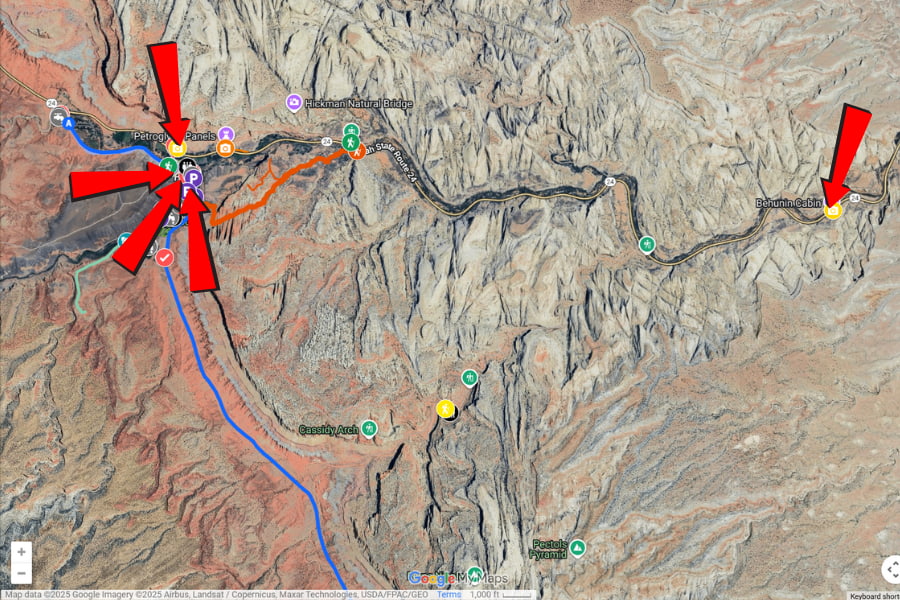
This interactive map shows the main highlights across Capitol Reef National Park. Use it to get oriented as you explore the dog-friendly areas outlined below. Note that not all locations on the map allow pets.
Dog-friendly things to do in Capitol Reef National Park
1. Camping in Capitol Reef National Park (with a dog)
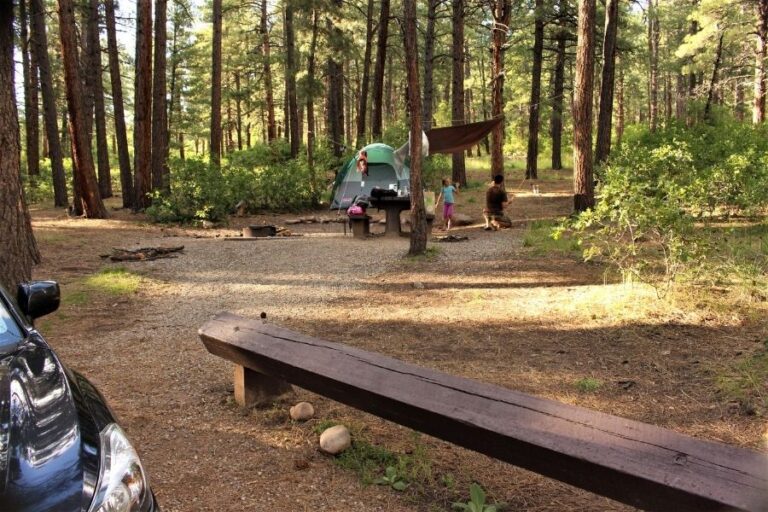
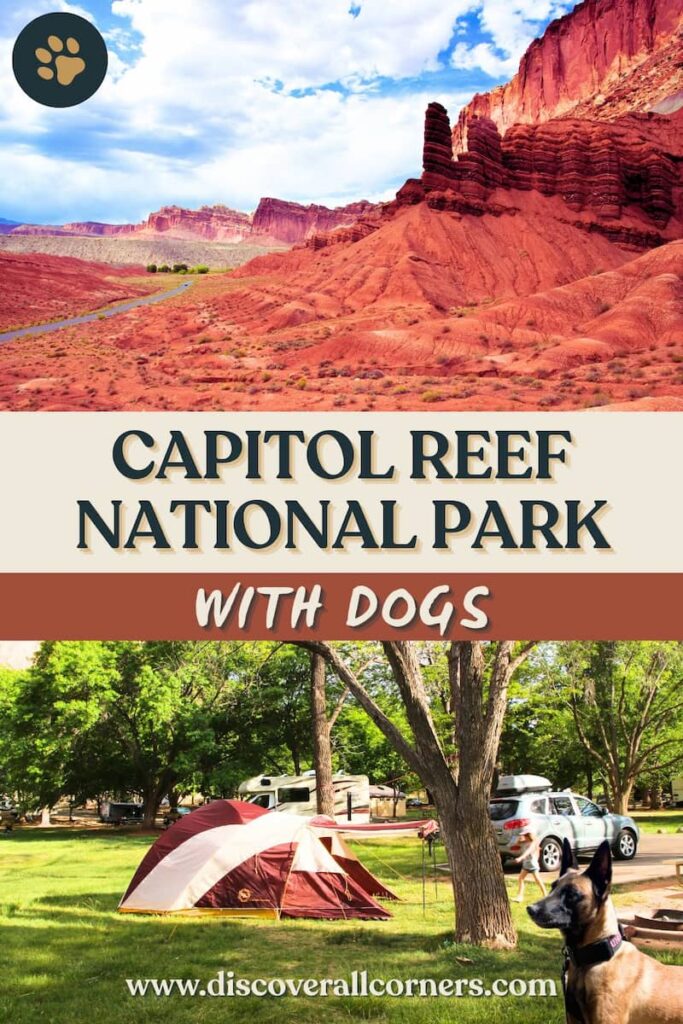
If you’re considering camping in Capitol Reef, Fruita Campground is a great choice. It’s the park’s only developed campground, and yes, dogs are welcome here.

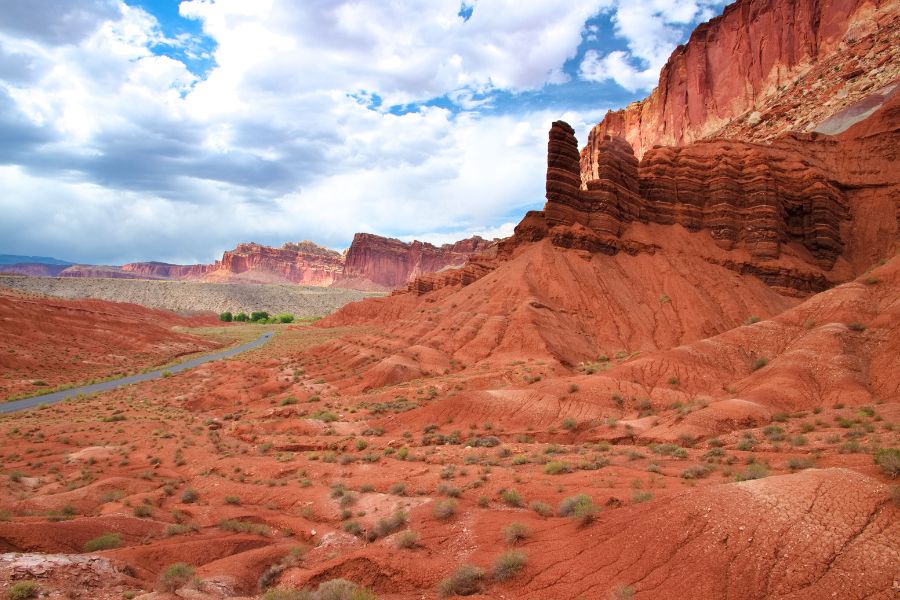
The campground sits in a lush valley, bordered by towering, colorful sandstone cliffs that are part of the Waterpocket Fold, and the location is extremely convenient to several Capitol Reef’s dog-friendly activities.
The downside? It fills up fast during peak seasons (spring and fall). If you can’t snag a spot, don’t worry. Although Fruita Campground is an excellent base for exploring Capitol Reef with your dog, there are other campgrounds and even free campsites nearby that welcome pets, plus a few hotels and other lodging options in the nearby town of Torrey if camping isn’t your thing.
2. Fruita Historic District
The Fruita Historic District — usually just called Fruita — is the historic heart of Capitol Reef National Park. It preserves what’s left of a small Mormon farming community that lived here from the late 1800s through the 1950s, and it’s one of the most interesting parts of the park to explore.
Several original structures still stand today, and every one of them sits right along the road, which matters if you’re visiting with a dog — pets are allowed in parking areas and within 50 feet of the road’s centerline (on both paved and dirt roads). While it doesn’t sound like much, in this case it’s plenty to comfortably see the sights. Just keep in mind that dogs can’t go inside the buildings themselves.

While the Fruita Historic District covers more than 200 acres, most of the historic highlights are clustered in a central, walkable area near the Visitor Center and Fruita Campground, and two additional sites are located a short drive away along Highway 24.
Dog-friendly historic sites in central Fruita (walkable area)
Fruita is the busiest hub of Capitol Reef, but it’s also one of the easiest places in the park to explore with a dog. This lush valley, framed by red rock cliffs and the Fremont River, sits entirely in the park’s no-fee area and packs a lot of history into a small, walkable space.
Dog-friendly highlights in Fruita:
- Gifford House & Fruita Barn (Gifford Homestead)
- Blacksmith Shop

Built in 1908, the Gifford House now serves as a seasonal museum and gift shop (open March 14–October 31). It’s famous for its homemade pies, ice cream, and jams, but unless you’re traveling with someone who can wait outside with your dog, the interior will be off-limits. Pets can’t be left unattended in cars or tied up to anything. The Fruita Barn sits just down the road from the Gifford House and is easy to view from the outside. The Blacksmith Shop is furnished inside but open for exterior viewing only, which makes it an especially easy stop when visiting with a dog.

Location and access:
The Gifford House and Fruita Barn are located about one mile south of the Visitor Center, right along the edge of the Fruita Campground (Loop A). The Blacksmith Shop sits just 0.3 miles up the road — you’ll pass it first when driving in. All three sites have on-site parking, or you can explore this area on foot. The Blacksmith Shop and Gifford House are connected by a short path, and the Fruita barn is an easy walk from the Gifford House along the road.

Fruita parking options include:
- A small, time-limited lot at the Gifford House
- A larger lot across from the Fruita Barn (good for oversized vehicles)
- A small lot at the Blacksmith Shop
- Doc Inglesby Picnic Area, roughly between the Gifford House and Blacksmith Shop, which works well as a central starting point
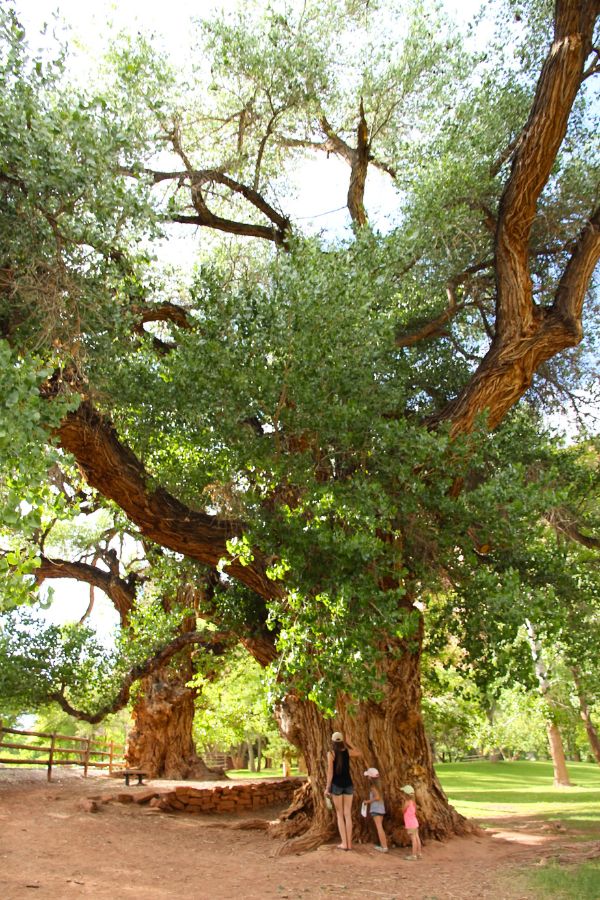
While here, don’t miss the Fruita Mail Tree, a late 1800s mail exchange site for Fruita residents. You’ll find it right along the road at the Doc Inglesby Picnic Area. It’s a cool stop, and dogs are welcome here.
Additional Fruita historic sites (short drive along Highway 24)
Two more historic structures associated with Fruita are located outside the central, walkable area and require a short drive along Highway 24. Depending on your route, you may pass these sites on your way into or out of the park.
Dog-friendly pioneer-era stops along Highway 24:
- Fruita Schoolhouse
- Behunin Cabin
The Fruita Schoolhouse is a small, one-room pioneer schoolhouse used from 1896 to 1941. Its interior isn’t always open, but you can peek through the windows to see inside. The Behunin Cabin is a tiny, single-room sandstone dwelling and one of Fruita’s earliest homes, built in 1883.
Location and access:
Both sites are located east of the Visitor Center along Highway 24 toward Hanksville, Utah. The Fruita Schoolhouse is about 0.8 miles away and the Behunin Cabin another 5 miles farther east. Convenient pullouts and parking areas make it easy to stop and explore with your dog, but dogs aren’t allowed inside.
Optional stop:
If you’re traveling with someone, you can also squeeze in the Capitol Reef Petroglyphs just east of the Fruita Schoolhouse, accessed via two very short boardwalks.
3. Fruita Orchards
The Fruita Historic District is home to several orchards dating back to the late 1800s, a cornerstone of the original Mormon pioneer settlement. Set against towering red rock cliffs, these lush orchards are one of Capitol Reef’s most picturesque features.
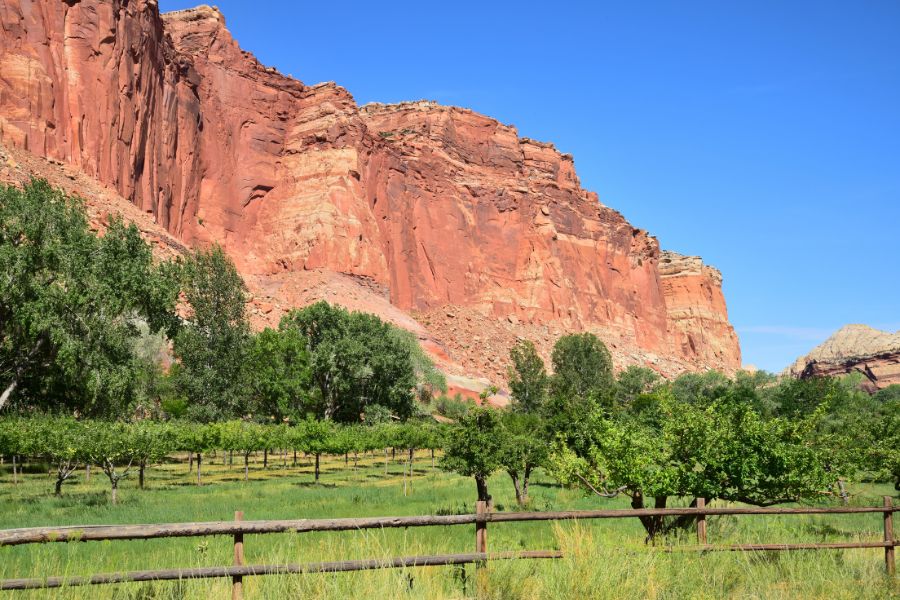
Around 2,000 fruit trees grow here — apples, cherries, apricots, peaches, pears, plums, and more, which supply the pie-making at the Gifford House. Many trees are unique and heirloom varieties, and you’ll also find various nut trees here as well.
Leashed dogs are welcome in all unfenced and unlocked orchards, so you can enjoy a leisurely stroll among these famous trees together with your dog. Keep an eye out for deer, which are plentiful here.
The orchards are especially popular during bloom and harvest seasons, and yes, you can try the fruit! Orchards marked for picking allow you to eat fruit for FREE while onsite, with a small self-pay fee if you’d like to take some with you. For up-to-date orchard status and dog-accessible areas, check the park’s official orchard guide or confirm details at the Visitor Center.
Fun fact:
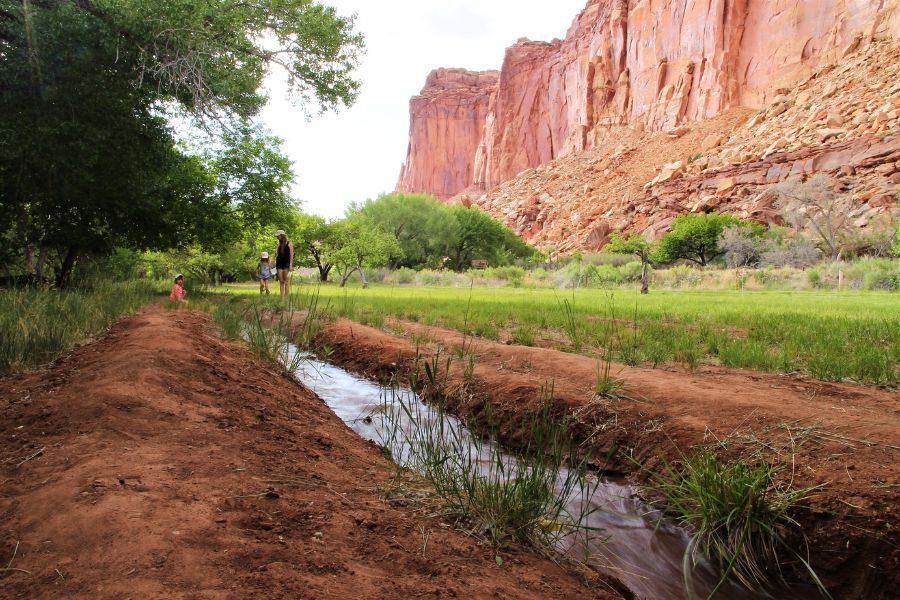
The orchards are still irrigated via the original pioneer-designed ditch system that diverts water from the nearby river and creek, a method that has been in use for over a century.
4. Dog-friendly trails in Capitol Reef National Park
Like most national parks, Capitol Reef isn’t very dog-friendly when it comes to hiking. That said, there are a couple of short trails in the Fruita area that work well if you’re exploring with your dog:
- Fruita Trail
- A dog-friendly segment of the Fremont River Trail
The good news is that these trails connect and can be combined into one longer walk, offering up to 1.7 miles one way of dog-friendly exploring.
Fruita Trail
The Fruita Trail is the most flexible dog-friendly trail in the park. It links the Visitor Center and Fruita Campground, passing the Gifford House, Blacksmith Shop, and picnic areas along the way. The trail begins just south of the Fruita Campground amphitheater at the Fremont River Trailhead, heading in the opposite direction from the Fremont River Trail.

- Distance: ~1.4 miles one way
- Terrain: Easy, mostly flat
The trail splits into two distinct sections:
- The first ~0.5 miles near the campground are lush and green, following the Fremont River.
- The remaining ~0.9 miles to the Visitor Center run alongside the road and are more exposed and desert-like.
The transition happens near the picnic area. The Blacksmith Shop sits on the drier side, while the Gifford House, Fruita Barn, and picnic area are tucked into the greener section.

The greener side of the Fruita Trail 
The drier section near the Blacksmith Shop
Best place to start:
The picnic area or the Fremont River Trailhead (vs. the Visitor Center). Parking is easier, the scenery is better, and the historic sites are clustered nearby. The greener Fruita section is also the most comfortable choice if you’re walking with a dog. (The larger lot near the Fruita Barn works well for oversized vehicles, with a short walk back to the trail.)
Dog-friendly section of the Fremont River Trail
The Fremont River Trail starts as a flat riverside path before climbing toward viewpoints farther up, but only the lower portion is open to dogs. The pet-friendly section covers about 0.3 miles and stays easy and level.
Along this stretch, you’ll pass:
- Fruit orchards
- Hattie’s Field, a historic horse pasture
- The Fremont River, mostly hidden behind dense vegetation
Just south of the pasture, a wooden fence with a narrow pass-through marks the end of dog access and your turnaround point.

Access options:
- Trailhead near the amphitheater in Loop C of Fruita Campground
- Gifford House (adds ~0.4 miles round trip)
- Doc Inglesby Picnic area / Blacksmith Shop (adds up to ~0.6 miles round trip)
- From anywhere in Fruita Campground, follow the river path upstream
The dog-friendly section isn’t the most dramatic hike in Capitol Reef, but it’s a pleasant, peaceful walk with classic Fruita scenery.
5. Picnic areas
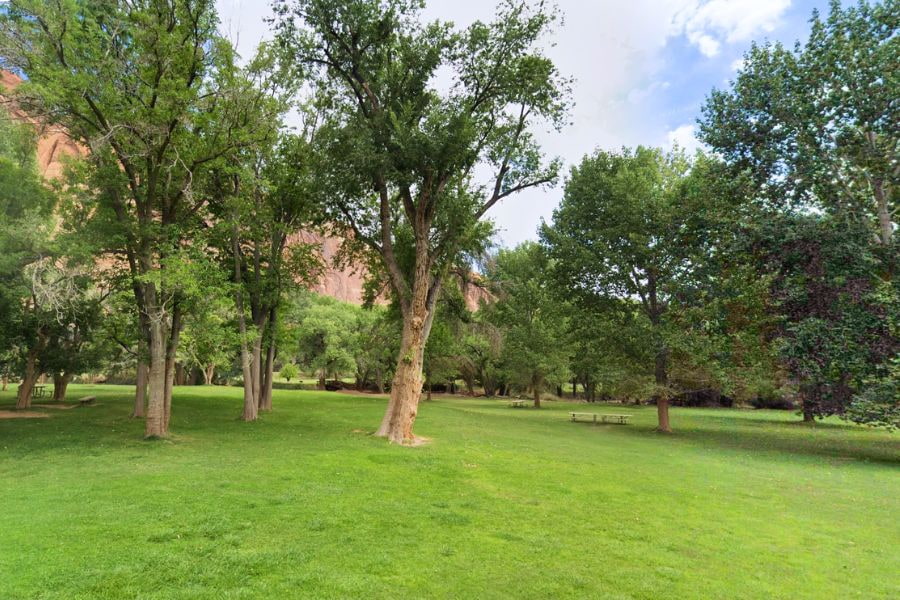
There are two dog-friendly picnic areas in the Fruita Historic District: Doc Inglesby Picnic Area and the smaller Chesnut Picnic Area directly across the road (yes, that spelling is correct).
Both offer plenty of shade, making them a great stop on hot days. Picnic tables, drinking water, and restrooms are available, with parking located on the Doc Inglesby side.
From either picnic area, you can easily walk to nearby historic buildings via the dog-friendly Fruita Trail, which connects several key sites throughout Fruita.
6. Capitol Reef Scenic Drive
The Capitol Reef Scenic Drive is one of the best dog-friendly ways to experience the park. The drive starts at the Visitor Center (the only paved road beyond it), winds through the historic Fruita district, past orchards and pioneer sites, and continues deeper into more remote areas with spur roads to Grand Wash/Cassidy Arch and Capitol Gorge hikes (not dog-friendly), offering stunning views of sandstone cliffs and the Waterpocket Fold along the way.
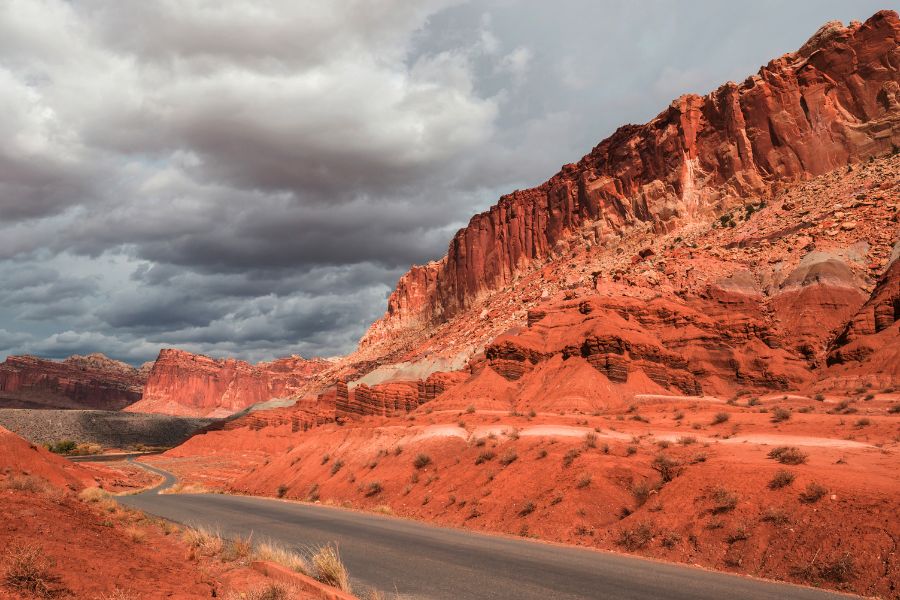
The first 7.9 miles are paved. After that, the route continues as Capitol Gorge Road, a graded dirt road that runs through a narrow canyon for the final 2 miles to the Capitol Gorge Trailhead. This last stretch is the highlight of the drive. You can’t hike the Capitol Gorge Trail with a dog, but if you’re traveling with another adult, you can take turns walking a short distance into the canyon to view historic pioneer carvings (Pioneer Register).

Road notes:
Most vehicles, including RVs under 27 feet, can handle the dirt section in dry conditions.
Plan on about 30 minutes one way from the Visitor Center to the end (not including stops at scenic viewpoints). It’s not a loop, so you’ll come back the same way. This is the only area of the park that requires an entrance fee, payable at the self-pay station just past Fruita Campground (cash only) or at the Visitor Center (national park passes are accepted).
Safety note:
This area is prone to flash floods. During monsoon season (July–September), check weather and road conditions at the Visitor Center before heading out.
Dog-friendly areas near Capitol Reef National Park
If you have extra time and a dog who’s itching for more freedom, several incredible areas surround Capitol Reef National Park and allow dogs with far fewer restrictions.
Top nearby options include:
- Dixie National Forest – vast, scenic, and largely dog-friendly
- Fishlake National Forest – alpine scenery, cooler temps, and wide-open space
- Goblin Valley State Park – otherworldly rock formations and dog-friendly trails
- San Rafael Swell – remote, rugged terrain with endless exploring opportunities (here is our guide on what not to miss in the Swell!)
- Grand Staircase-Escalante National Monument – wild landscapes and wide-open space with minimal pet restrictions
Best time to visit Capitol Reef National Park with a dog
- Spring (April–June) and fall (September–October) offer the best conditions, with cooler temperatures ideal for camping and walking with a dog.
- Summer is very hot, with monsoon storms, making flash flooding a real risk in canyons and on dirt roads.
- Winter is quieter and colder but still accessible in many areas, especially around Fruita.

Final tips for visiting with your dog
Location & services:
- Capitol Reef National Park sits in south-central Utah between Torrey and Hanksville. Arches, Canyonlands, and Bryce Canyon are just over two hours away, while Zion is roughly a four-hour drive.
- There are no services or restaurants inside the park. When available, fruit pies and other baked goods from the Gifford House are about as close to a meal as it gets.
- Torrey, Utah (11 miles west of the Visitor Center) is the closest town for gas, groceries, and basic supplies.
Fees & hours:
- Capitol Reef N.P. is open 24 hours a day, year-round.
- There is no entrance fee except for the Scenic Drive ($20 per vehicle; annual passes accepted). Fees can be paid at the self-pay station just past Fruita Campground or at the Visitor Center.
Dogs & safety:
- Pets cannot be left unattended, and there are no kennels inside the park. If you plan to hike dog-restricted areas, the closest boarding option is Color Country Animal Welfare in Torrey (dogs must be spayed/neutered and current on vaccinations).
- Wildlife to be aware of includes venomous midget faded rattlesnakes and mountain lions, though encounters in developed areas are rare.
Pet rules reminder:
- Dog access is mostly limited to developed areas and roads. When in doubt, ask a ranger. They’re genuinely helpful.
- Dogs must be leashed at all times (6 feet or shorter).
- Always pack out pet waste.



Hi, I’m Marketa!
Mom of two, Malinois wrangler, and the voice behind this blog. I share places worth the detour across the U.S., from remote backroads to favorite Chicago-area finds. Always chasing good views, great memories, and dog-friendly stops. More about us →